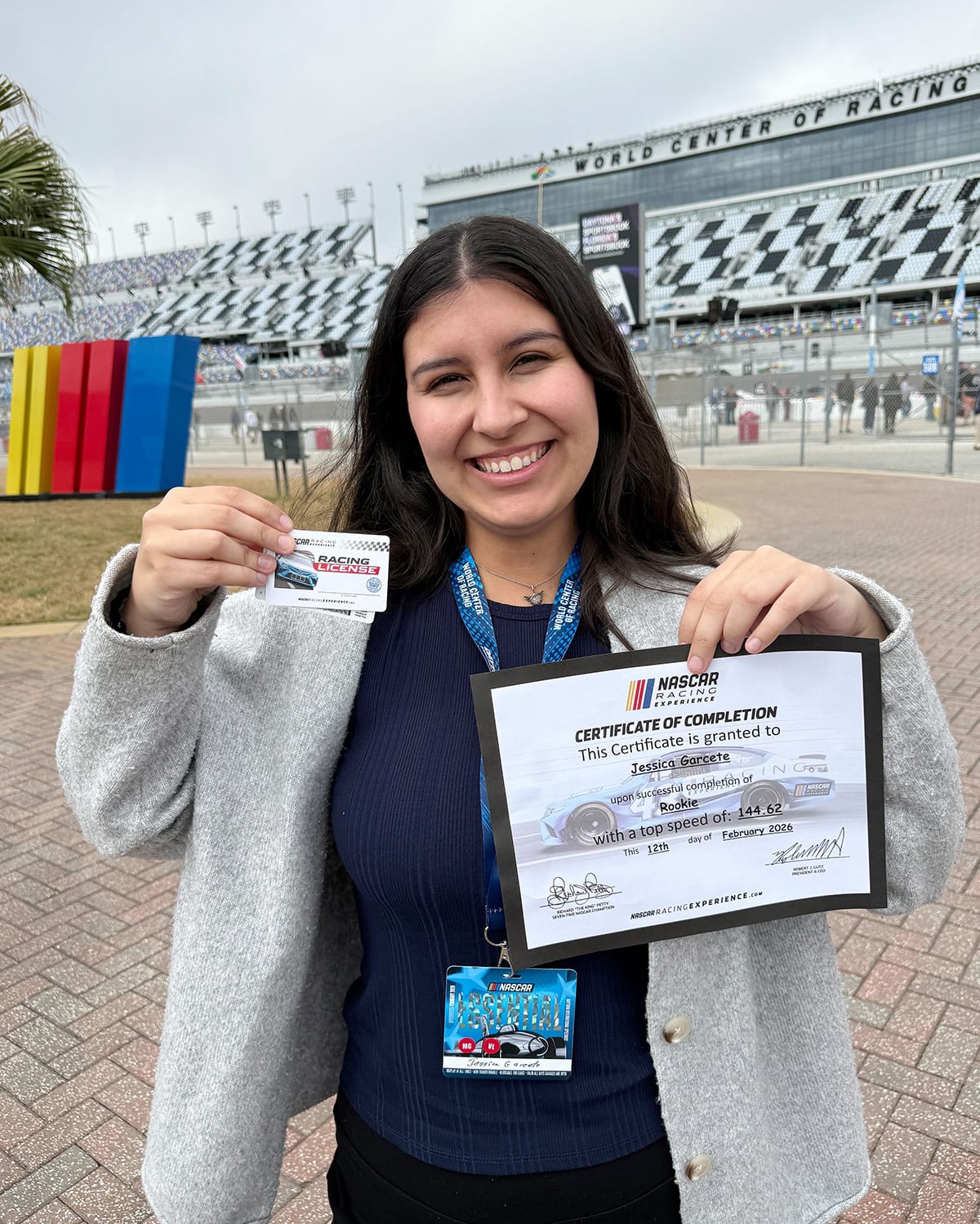
Going 144.62 MPH at Daytona
NASCAR drivers make it look easy, whipping around turns at more than 180 mph within inches of one another. So how would a student journalist without a car fare on one of the world's most famous tracks?
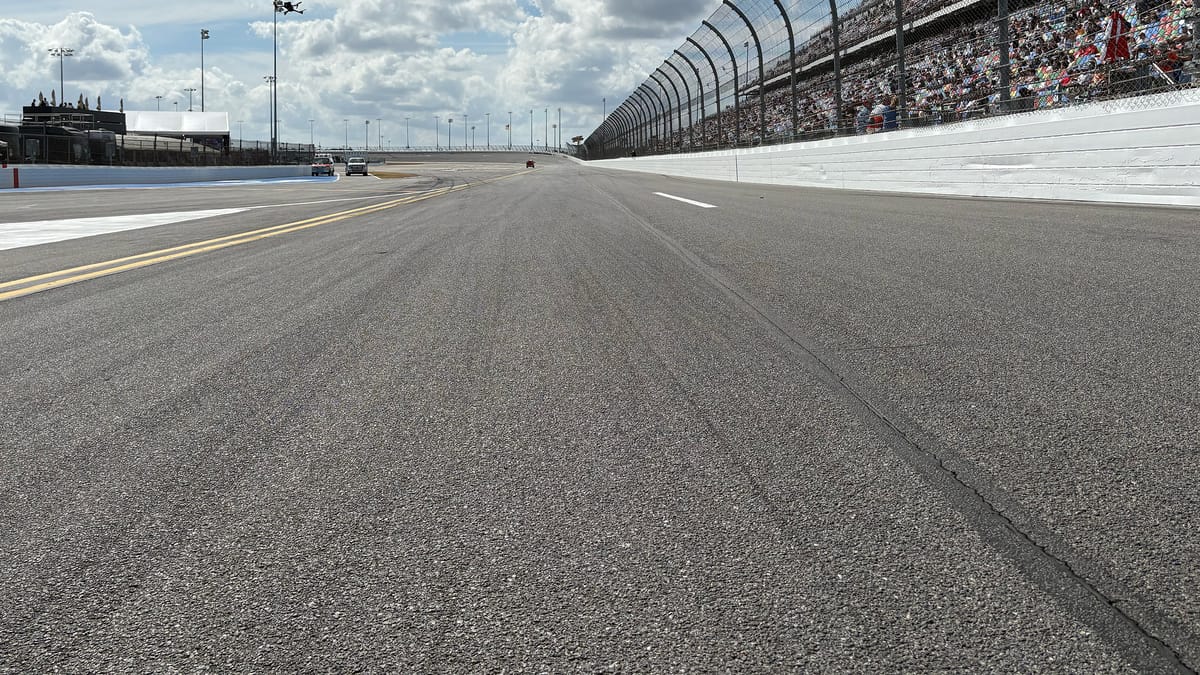
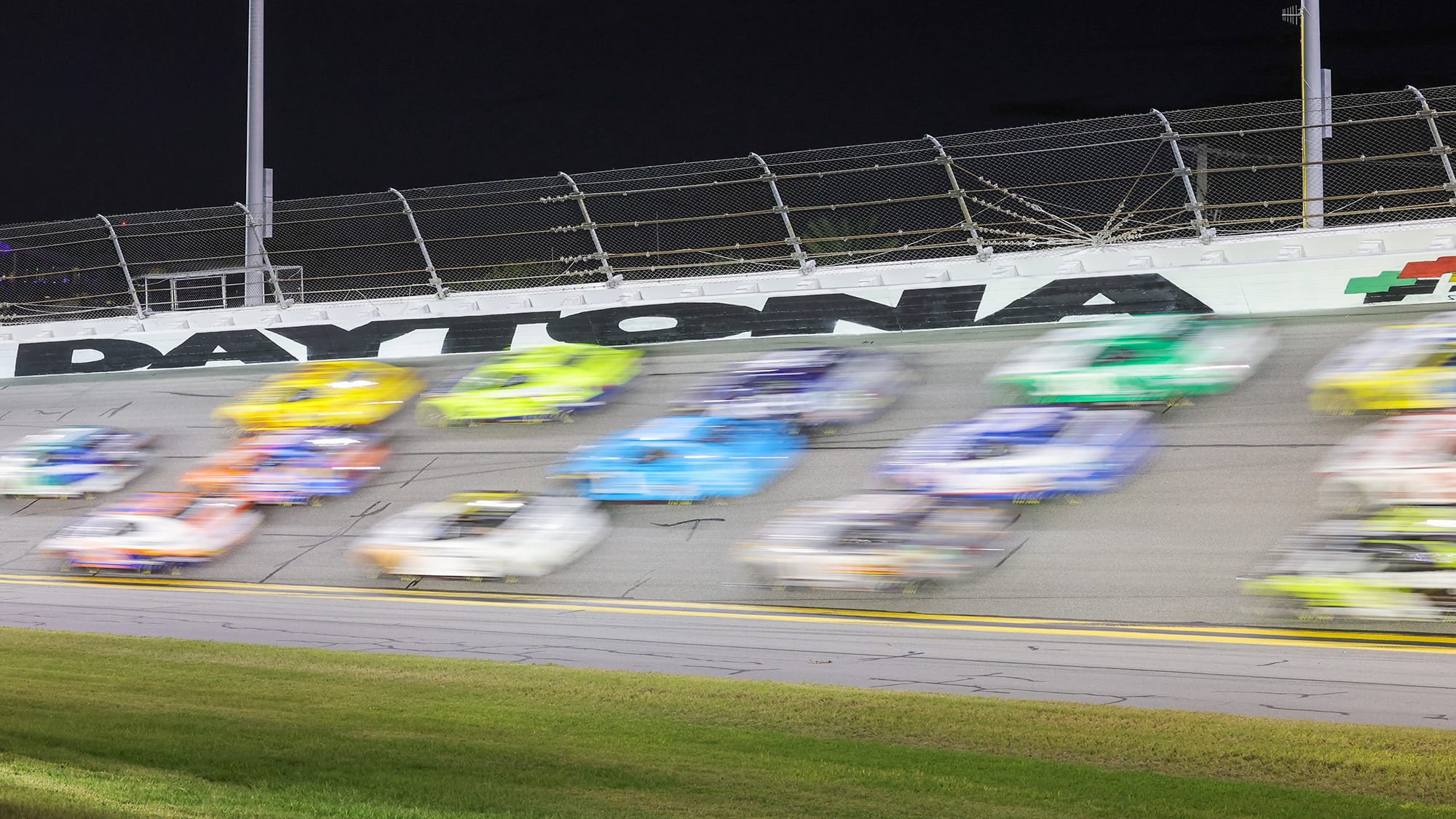
DAYTONA BEACH – The world tilted. The engine hummed through my ribs. Wind whipped against my face as the concrete wall marked “DAYTONA” rushed past.
I don’t even own a car. But there I was at Daytona International Speedway hitting a top speed of 144.62 mph. Less than 24 hours earlier, two-time NASCAR Cup Series champion Kyle Busch had taken pole for the Daytona 500 at 183.925 mph on that same asphalt.
The opportunity came through the NASCAR Racing Experience, a program that allows fans to drive or ride in real stock cars at 17 major tracks across the country.
“These are cars that have been raced by real drivers, and then we buy them, and the only thing we really do is put our own engine in them, and then we add a second seat,” said Chris Daniel, director of operations for the experience.
Daniel has been with the company for 20 years, starting as a mechanic at 19 before working his way through multiple roles, including driving ride-alongs, and eventually moving into leadership.
When race teams introduce new car designs or regulations change, older chassis are retired from competition. Those cars are then purchased by the NASCAR Racing Experience and added to its fleet of about 150 vehicles.
The experience promises to be “as real as it gets.”
“I think it’s extremely important to be able to replicate what goes on on a Sunday,” Daniel said.
“You can’t go out onto the Dallas Cowboys field and play football a couple hours before the Cowboys game on a Sunday or anything like that.”

My alarm went off at 5 a.m. By 5:30, Shelby – my friend and photographer for the day – picked me up from my dorm. She drove us from Gainesville to Daytona while I sat quietly in the passenger seat, the nerves already awake even if I tried to ignore them, keeping me company the whole ride.
By 8:40 a.m., we arrived and as I looked up to the gray, overcast sky, a part of me hoped it would be enough to stop what was coming. An excuse to take the easy way out.
What was I doing? I had never even driven a go-kart by myself. Surely this was an accident waiting to happen.
The confirmation email for my eight-minute drive around Daytona was the last thing I saw before I tried to sleep the night before. If five hours of tossing and turning counts as sleep.
My drive around the track lasted only 10 minutes. Ten minutes and I would walk away having done something I never thought I could. Ten minutes and I would have the best “two truths and a lie” story of my life.
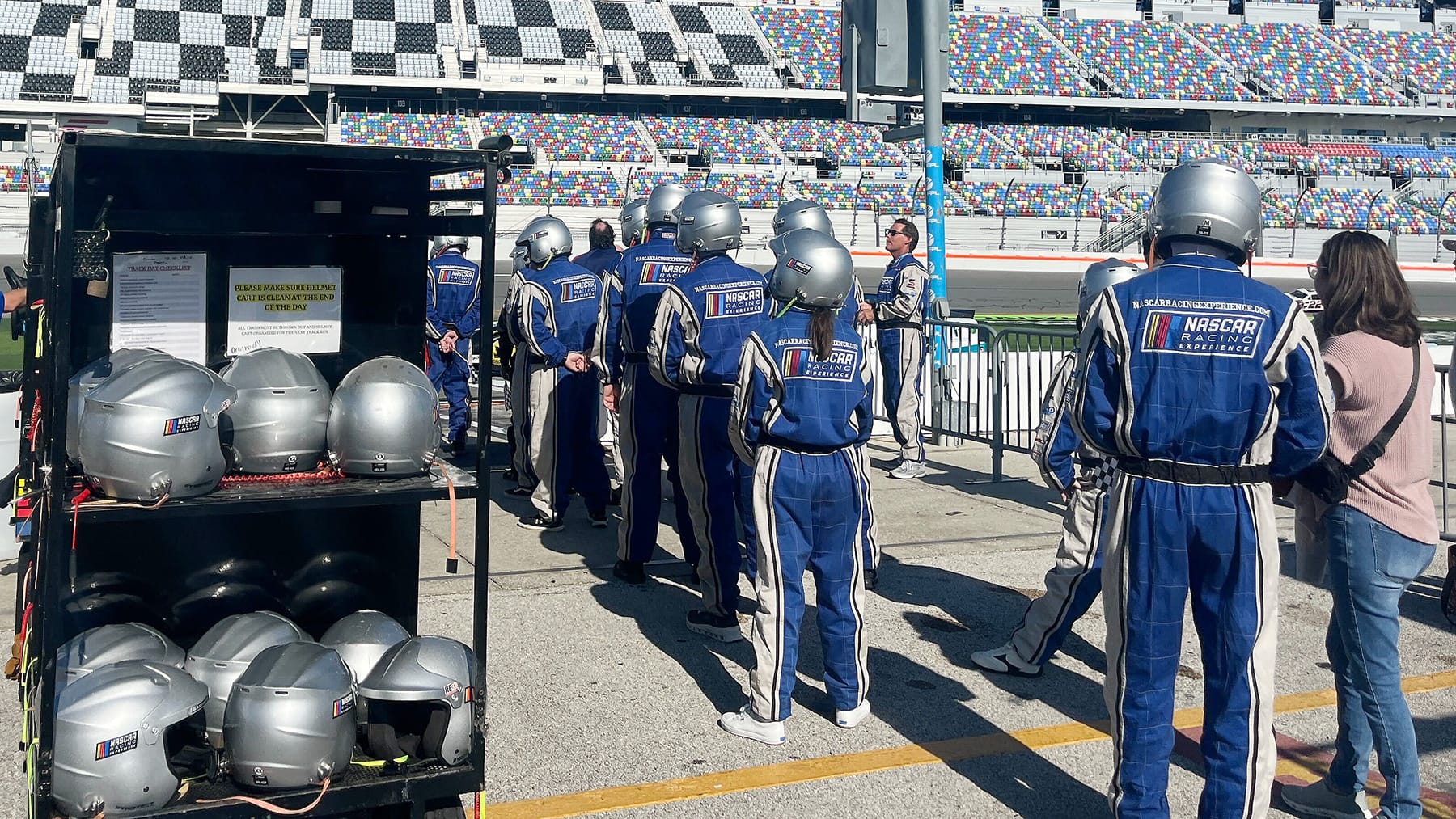
So I checked in, handed over my 1-year-old driver's license, pulled on a blue and gray fire suit and joined about 15 other drivers for a 20-minute safety briefing.
I tried to focus on the video. It walked us step by step through what would happen, how to exit the car in an emergency and repeated one rule more than any other: stay at least five feet above the double yellow line.
I heard the instructions, but my mind was already racing as the reality set in. There was no turning back. My breakfast, a 16 oz. Wild Berries Red Bull and a Wawa hash brown, sat heavy in my stomach. My chest tightened as the video finally ended. Then it was time to head out.
By the time we reached pit road, the sky finally gave in to a light drizzle. It lasted maybe 20 minutes, just enough to stretch the waiting and wind my nerves tighter. We lined up along pit road. One by one, drivers put on their helmets and climbed into their cars.
I was last.
The pavement trembled beneath my feet as cars thundered past, their vibrations traveling up my legs and settling deep in my chest.
After what felt like endless waiting, my turn finally came. Daytona native Matthew Fuller strapped me in.
Fuller is the last person most participants see before they drive. He spends his shifts buckling drivers into their cars, securing a Head and Neck Support (HANS) device, tightening seatbelts and explaining how to launch without stalling.
For everyone’s sake, I requested an automatic transmission, but Fuller said plenty of first-timers still climb in with no experience at all.
“It can be intimidating,” Fuller said. “Especially when you get on the banks.”
Daytona International Speedway is a 2.5-mile tri-oval. Its 31-degree banking is second in NASCAR only to Talladega’s 33-degree turns.
“As long as you trust the car, then there’s literally no issues with it whatsoever,” Fuller said.

When I finally sat inside the No. 92 car, a Kyle Petty-driven Dodge from the early 2000s with roughly 650 horsepower under the hood, the world shrank. The black and blue stock car had been at the track for two years and was the only automatic in the Daytona fleet.
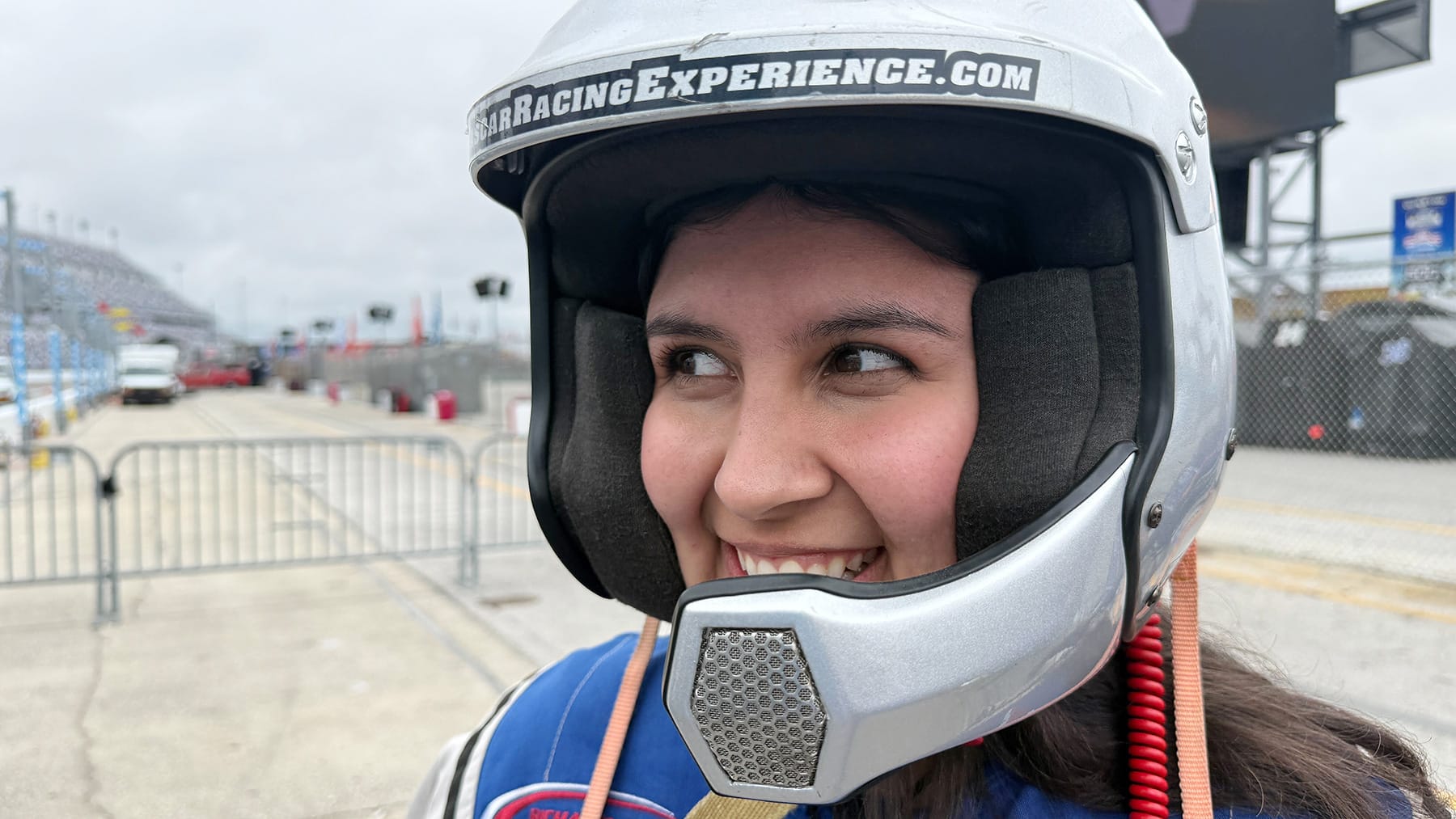
The helmet narrowed my vision. It felt like sitting in a stock car video game, except the engine vibrated through the seat, where Fuller had to wedge a cushion so I could reach the pedals.
Before rolling out, my spotter’s voice crackled through the helmet.
“Driver, do you copy?”
Calm. Measured. Somewhere high above the grandstands, binoculars trained on me on pit road. My spotter. My eyes in the sky. Every NASCAR driver relies on one, a steady voice guiding them through every lap. The spotters for the experience are professionals, many of them veterans of real race teams.
I wobbled leaving pit road, my hands clenched tight around the steering wheel. I barely had time to think as the car crept forward, then faster. The engine climbed. The deep rumble of the engine filled the cockpit, vibrating through my seat and up my spine.
Stay low on the apron for now. Easy on the throttle. Build the RPM.
I followed instructions. Turns 1 and 2 loomed ahead. The track began to rise to the right of me. My eyes widened inside the helmet. This is really happening. Just listen. Just breathe. Just keep going.
“Bring it up…4,000 RPM”
The engine roared louder. The wheel trembled in my hands. I merged onto the backstretch, building speed for a few long seconds. Then the banking came.
When I hit it for the first time, it felt like I was steering my own roller coaster, only painfully aware that I was the one in control.
There was no checking the rearview mirror. I completely trusted the voice in my ear.
“You have a car on your right in 3…2…1.”
Ride-along cars whooshed past me on track, professional drivers carrying passengers at speeds topping 180 mph.
Daytona hosts more NASCAR Racing Experience track dates than any other venue with 80 dates each year, followed by Las Vegas Motor Speedway and Charlotte Motor Speedway with 30 apiece. During Speedweeks, operations ramp up significantly, with as many as 56 drivers and 100 ride-along passengers rotating through every hour. To keep pace, the program fields 10 ride-along cars and 16 student cars at the track.
“Going through Turn 3 and 4, the G-force really started to hit you,” said 19-year-old Miguel Banuelos, who experienced the track from the passenger seat. Originally from Vermont, Banuelos came to Daytona with his dad to watch his first Daytona 500.
“This has always been a dream of mine to get out on this track and run a few laps around here,” Banuelos said.
The first lap felt the longest. It was a mixture of intense focus and utter shock. There was no time to think about anything but what was directly ahead. The scariest part of the banking wasn’t the turn itself. It was right before, when the track rises and it looks like you’re about to drive straight into the concrete wall, until you turn left and sling around the curve.
Before I even got in the car, my only real goal was simple: make it back to pit road in one piece. Finishing the first lap was step one.
By the second lap, the absurdity of it all began to settle in. I started noticing details. The sharp flutter of the window net snapping in the wind. The deep rumble of the V8 engine. I only glanced at the speedometer a handful of times, too afraid to take my eyes off the track for long.
By the third lap, I trusted the car. By the fourth, my eyes were watering from the wind.
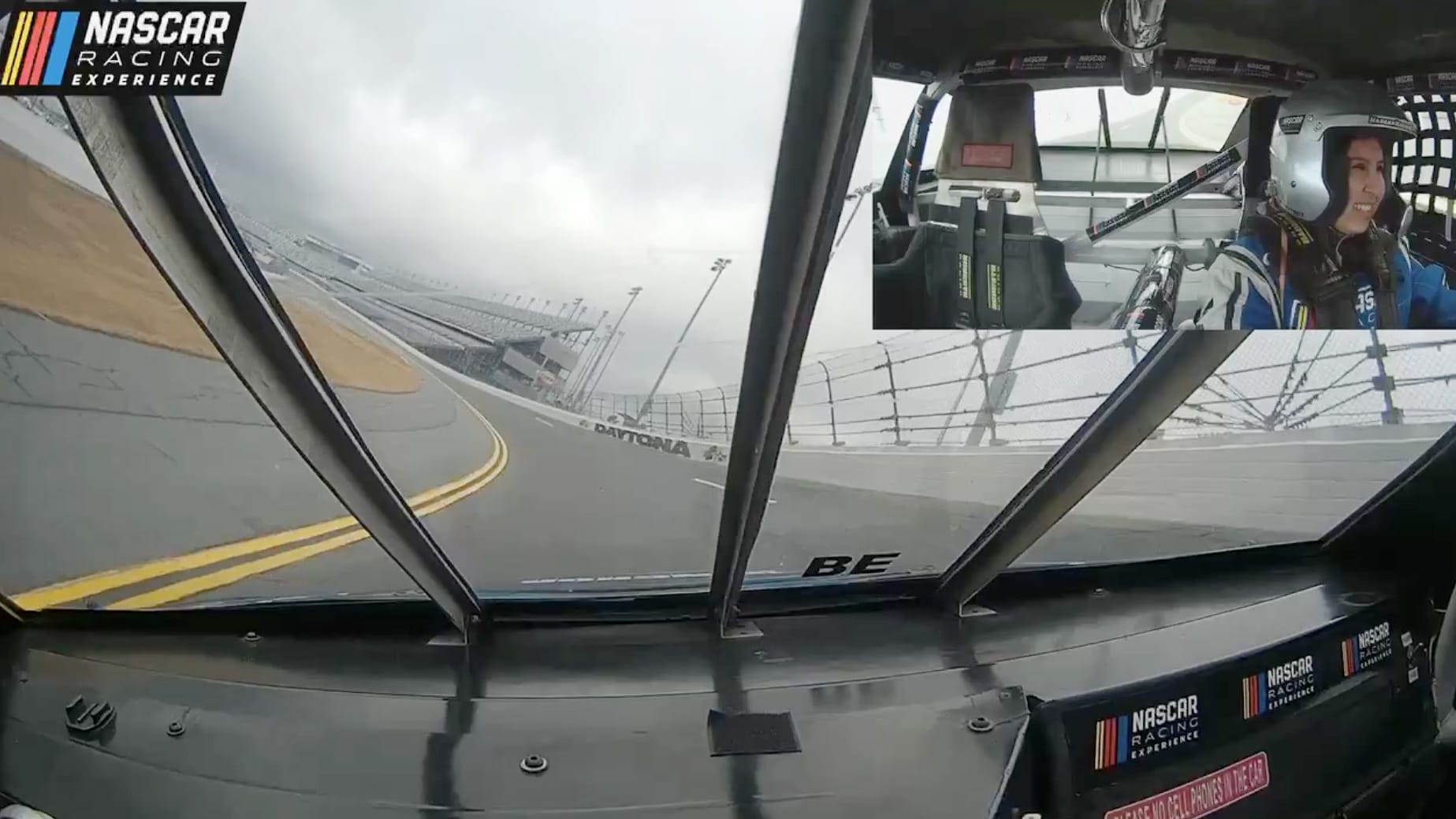
On the fifth and final lap, I knew I was pushing my limits. I wanted more speed, but the fear hadn’t disappeared and my body felt the strain. I wobbled slightly through the turns, my foot trembling on the throttle, as the vibration fed back through the car.

Martin Farrow flew in from London for race week and chose to drive after riding along on a previous trip. He completed a 24-minute session, split into three eight-minute runs with pit-stop breaks in between.
“It was easier than I thought, but you have to concentrate very hard,” Farrow said. “How they do it with 39 other cars around them is beyond me.”
The Daytona 500 is the Super Bowl of stock car racing. Winning it etches a driver’s name into motorsports history and receiving the Harley J. Earl Trophy marks one of the most prestigious moments of any racing career. It’s a victory that defines a legacy regardless of championship totals.
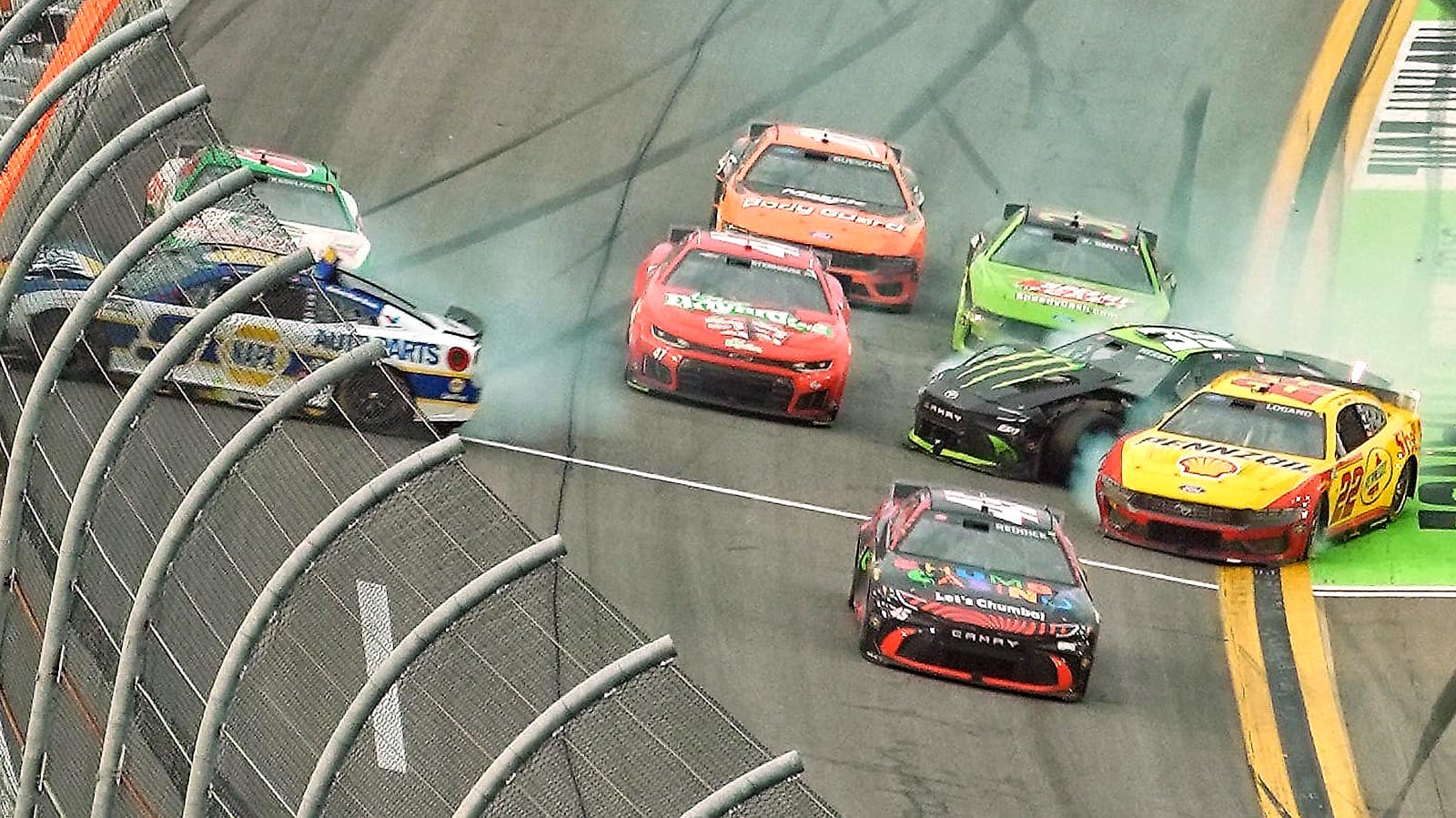
Those stakes, combined with razor-thin margins for error and relentless speed, are what make the Great American Race so difficult to not just win, but to survive. One small mistake can trigger a chain reaction that ends half the field’s day in seconds.
“It was treacherous today,” said Haas Factory Team driver Cole Custer, who was caught up in the 20-car pileup on lap 125 in Sunday’s race before finishing 24th. “I mean with how fast we’re going, 200 mph, you’re inches apart.”
Tyler Reddick didn’t know if he’d ever win this race. On Sunday, he didn’t lead a single lap until the final one, the only one that mattered. For years, the idea of conquering the sport’s biggest stage felt distant, almost unreachable. Long before victory lane, before the roar of the crowd or the weight of the trophy, there was simply the overwhelming reality of being on the track at all.
“I just remember going out there in an ARCA test and thinking this is crazy fast, and it just seems so surreal,” Reddick said.
Before arriving at the track, I was worried I’d be too nervous to push the car to speed. By my final lap, I couldn’t stop smiling.
When I pulled back onto pit road, the adrenaline hit all at once. My hands shook. My ears rang. My face burned hot as I peeled off the race suit, relief washing through me in waves. Only later did the soreness settle in, a quiet reminder of how tense I had been from start to finish.
Inside the car, those 10 minutes stretched endlessly. The moment I climbed out, they collapsed into a blur. I couldn’t put any of it into words. The shock was still humming through me and it only grew when I saw the number on my certificate: 144.62 mph.
More than double the speed I have ever driven anything in my life.

Even in just five laps, I understood why the Daytona 500 is so hard to win, and I left with a deeper respect for drivers who do it in traffic, for 200 laps, with everything on the line.
“I’ve watched so many races here as a kid growing up, and I’m finally on the racetrack,” said Reddick, still in the afterglow of celebrating his 500 victory in Victory Lane. “I’ve always dreamed of being able to drive off of Turn 4, through the tri-oval and see the stands. Yes, they were empty when I tested here, but just seeing this place, just stuff I dreamed about.”
I never imagined myself behind the wheel here. But I did dream of witnessing the spectacle I’d watched on screens for years.
As a racing fan, I don’t even remember when I first learned about Daytona. It feels like it has always been there. Making it to the track not just as a fan, but as media, already felt unreal. Driving it was something else entirely.
Crossing the start-finish line felt out of body. When I watch the footage now, I still have trouble believing it’s me. My nerves had narrowed my world to the strip of asphalt in front of the hood. Only afterward did I realize what surrounded me – the grandstands rising along the front stretch, empty but immense, holding the promise of the roar they’re built for.
A motorsports reporter who doesn’t even own a car.
The irony isn’t lost on me.
But climbing out of that race car, legs unsteady, hands still trembling, heart still racing, I felt something clearer than irony. Relief. Pride. Awe. The kind of adrenaline that leaves your senses sharpened and your thoughts quiet at the same time.
I came to the track chasing a story. I left knowing I had lived one.
Read more:
* Racing's Virtual Revolution: Inside the Growth of Sim Racing