The Legend of Big Daddy
It's a nondescript building off Interstate 75 that Florida students pass routinely traveling south. But for drag racers, Don Garlits and his museum tell the most complete story of the sport.
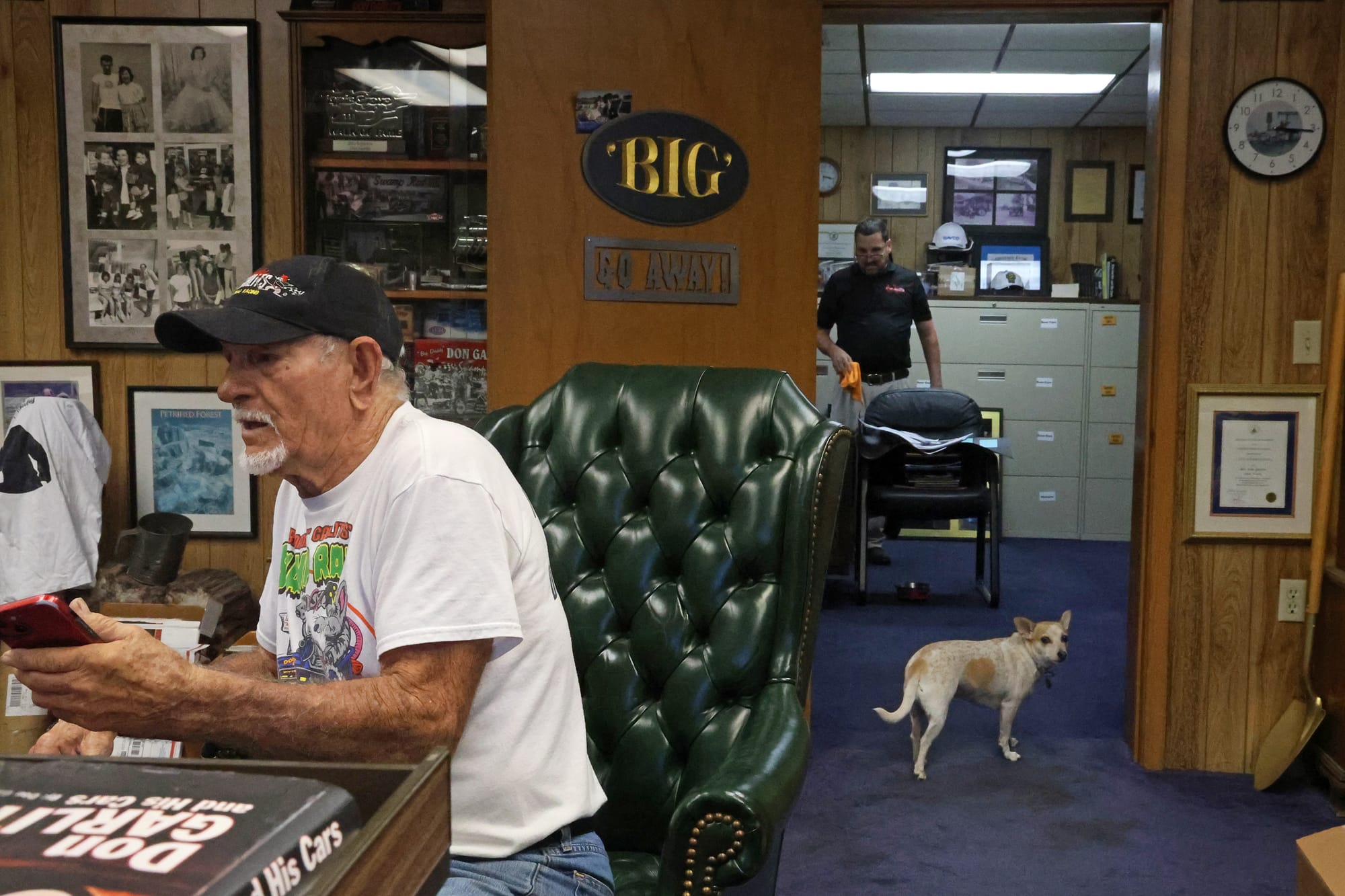
A desk crowded with decades of drag racing history sits at the center of the room. Coffee mugs, magazines, trophies and stacks of papers compete for space. Every inch of wall behind it is covered with photos, awards and art. Knick-knacks, including a Rat King nutcracker, perched on the dresser in front. A life-size cutout of the sport’s most recognizable figure stands nearby, watching over the room.
The real Don Garlits sits behind the desk.
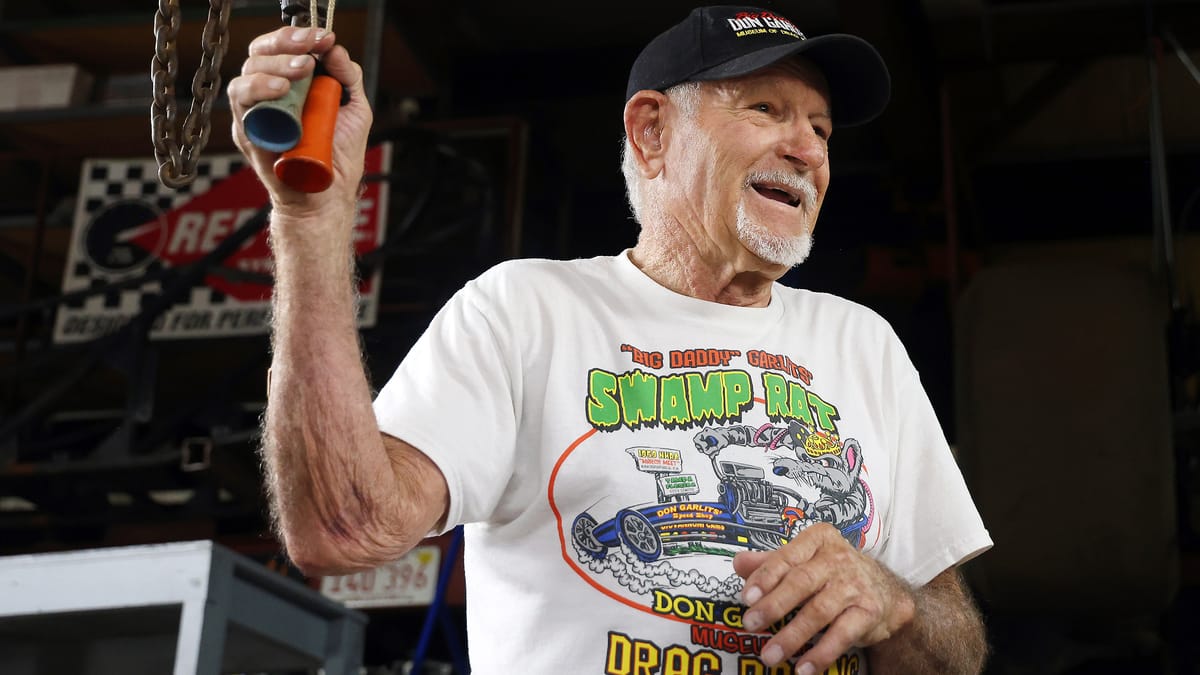
At 94, the man known as “Big Daddy” speaks in a deep, gravelly voice that carries the weight of the sport’s earliest days.
“You can tell I come in here every day,” he said, gesturing around his office. “This isn’t something with cobwebs in it. This is my own personal little museum.”
The office sits inside the Don Garlits Museum of Drag Racing in Ocala, about 80 miles south of where the Gatornationals roared to life this past weekend at Gainesville Raceway. As the National Hot Rod Association marked its 75th anniversary, the sport is celebrating its past. Few people have done more to shape and safeguard that history than Garlits.
“I’ve been in the sport since it started,” he said.
Drag racing is the driving equivalent of a 100-meter dash: a short sprint where two vehicles go from 0 to 300 mph in 1,000 feet. It traces its roots to the 1930s, when hot rodders modified their cars and raced on public roads and dry lake beds in California. What began as informal street racing eventually evolved into an organized motorsport.
In 1951, writer and motorsports pioneer Wally Parks founded the NHRA, bringing structure and legitimacy to the rapidly growing sport.
Garlits entered his first official NHRA race in 1955 in Lake City – and won.
The three-time Top Fuel world champion may not be the sport’s most decorated driver – that distinction belongs to John Force – but Garlits’ influence stretches far beyond the record books.
“Force got the numbers for the wins and all that stuff,” said Joe Amato, a five-time Top Fuel champion. “But Don’s the backbone of the sport.”
Amato remembers watching one of Garlits’ defining moments as a young fan at Island Dragway, where Garlits became the first driver to officially exceed 200 mph in the quarter mile.
“‘I want to do that.’” Amato recalled saying as a kid.

Garlits built his first dragster under an oak tree outside his Tampa home, a place he still remembers down to the exact street address. The car eventually became known as Swamp Rat I, the beginning of a lineage that would stretch to nearly 40 machines.
His fascination with mechanics began early. His father worked as an engineer for Westinghouse Electric Corp. in the early 1900s and helped develop early electric household appliances like fans and irons.
Garlits never considered himself a born racer. Driving was always secondary. But he couldn’t find a driver he considered to be good enough, so Garlits decided to get behind the wheel himself.
“It’s a thrill,” he said. “Especially in a close race when you’re looking right out there at him, and you’re going down, and you’re shifting the gears. Maybe you’re getting a little ahead, or maybe he’s getting ahead of you.”
Garlits was a huge advocate for a variety of safety equipment in the sport such as fire suits and parachutes – partly because he had experienced firsthand the consequences of not having those items. But none impacted Garlits more than his last front-engine dragster, Swamp Rat XIII.
From the 1950s to the 70s, Top Fuel dragsters had a front-engine “slingshot” design. The driver sat far back, perched over the rear axle between two massive tires, while the engine sat in front of their feet on top of a chassis (the vehicle’s internal supporting frame) that stretched forward to the small front wheels. It created a low, stretched “slingshot” silhouette.
On March 8, 1970, at the now-defunct Lions Drag Strip in Southern California, Garlits was driving Swamp Rat XIII when its transmission exploded. The blast severed half of his right foot.
While recovering in the hospital, he began sketching ideas for a new type of dragster. The result was Swamp Rat XIV.
Though others had experimented with rear-engine dragsters before, Garlits was the first to make the concept work consistently. By moving the engine, transmission and fuel system behind the driver, the design protected racers from the catastrophic explosions that had long threatened drivers in front-engine cars. Rather than a slingshot, the modern dragsters resemble more of an obtuse triangular shape.
Today, that design he perfected is the standard configuration for every Top Fuel dragster.
The 94-year-old is still experimenting more than five decades later. His latest project is Swamp Rat 38, an electric dragster he continues to test in exhibition runs.

Today, Garlits’ legacy is preserved just off the highway in the museum that bears his name. But the idea for that museum did not begin in Florida – or even in drag racing.
It began with a pair of nail clippers in a British car museum.
In 1976, Garlits and his wife, Pat, traveled to England for a three-week racing tour. During a break between events, the two visited several automotive exhibits. One display at Lord Montagu’s museum caught Garlits’ eye: a small case containing the nail clippers used by Stirling Moss the morning before he won the Mille Miglia.
Garlits asked his friend Les Brooks why something so ordinary was in a museum. The explanation made it meaningful.
The thin steering wheels used in British race cars required Moss to grip tightly with his large hands. If his fingernails were too long, they could dig into his palms until they bled, making the wheel slick. Clipping them before the race had become part of his routine.
Standing there, Garlits realized he had similar pieces of drag racing history stored away.
“I’ve got a lot of stuff like that. We ought to have a drag racing museum,” he recalled saying.
Brooks’ reply was simple: Why not build one?
The idea stayed with him on the flight back to Florida. Pat immediately pointed out the obvious challenge: museums don’t make money.
Garlits didn’t disagree. But, he still owned many of his old race cars and parts, largely because he had never sold them. He preferred his innovations close rather than letting competitors study them. So, why not? Those machines and artifacts became the foundation of the museum.
“Sometimes, honey, it ain’t about the money,” he said. “It’s about doing something you really love.”
The first museum opened in 1976 on a property in Seffner, a suburb of Tampa, that had been left to him by his father. For six years, however, few people visited. Most guests were relatives, friends, racers, sponsors, photographers and journalists.
Eventually, Garlits realized the problem wasn’t the museum itself. It was the location.
He initially considered moving the collection closer to Interstate 4, about five miles from his property.
Pat suggested a different location: Interstate 75, the highway that cuts through north-central Florida before curving west toward Tampa. Her reasoning was simple. Interstate 4 carried commuters traveling between Tampa and Orlando. Interstate 75 carried tourists who were more likely to stop.
In 1982, shortly after Garlits turned 50, the couple decided to move. After reviewing their finances, the two set the budget at exactly $80,000. A day spent searching near Brooksville turned up nothing within their budget. That night, staying at a roadside hotel, they prayed for guidance.
The next morning, they exited Interstate 75 near the town of Wildwood at Exit 341. There, almost hidden in a roadside ditch beneath a small bush, Garlits spotted a sign about the size of a notebook advertising 16 vacant acres for sale.
He called the number from a nearby phone booth.
The woman who answered introduced herself as Shirley – a moment that briefly caught him off guard. Just months earlier, legendary drag racer Shirley Muldowney had beaten him for the NHRA world championship, and hearing the name made him pause.
But this Shirley was the landowner, and the price was exactly what they could afford.
“Eighty thousand cash,” she told him.
“I’ll take it,” Garlits said.
Thirty days later, the property was his. The first car displayed is, of course, Swamp Rat I.
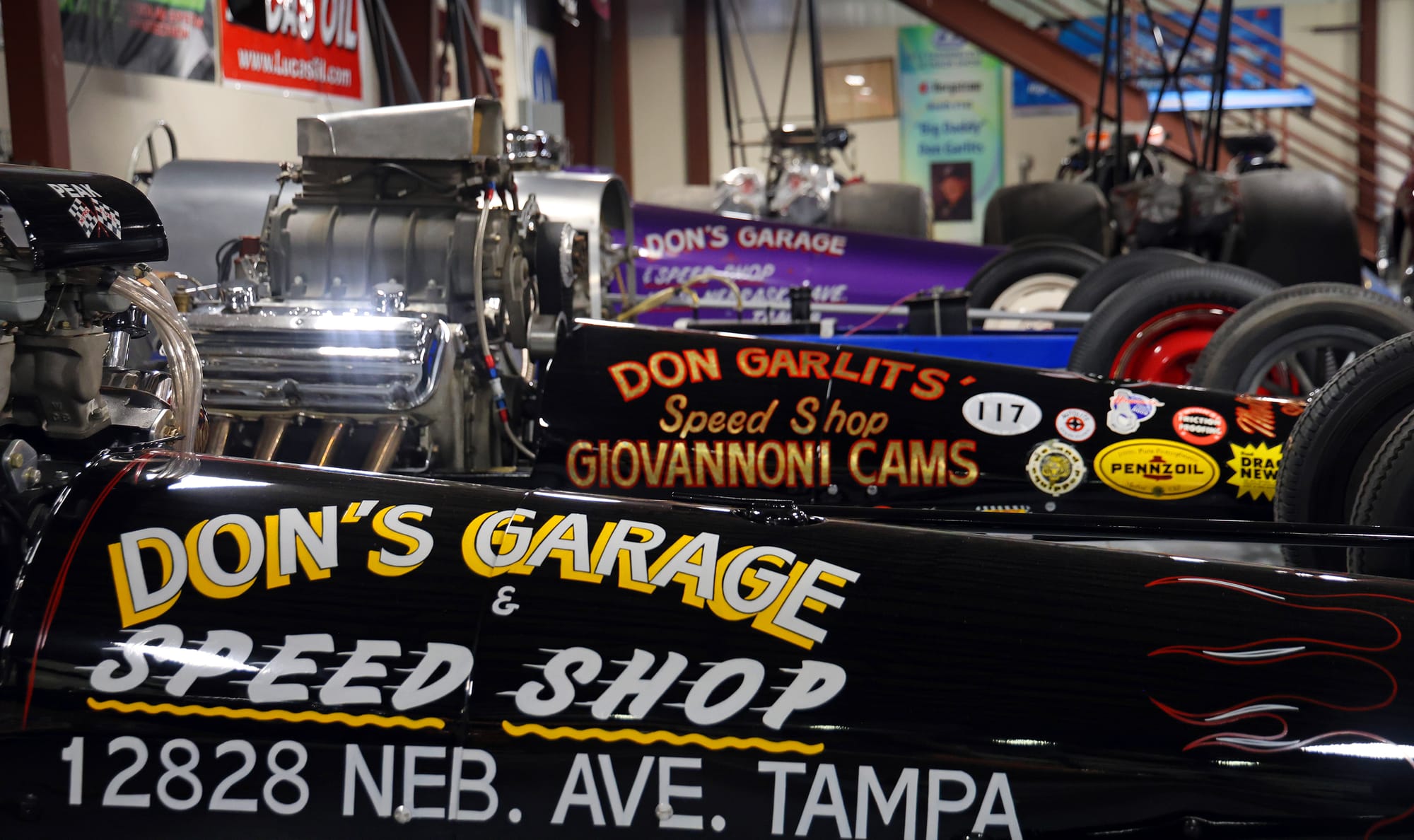
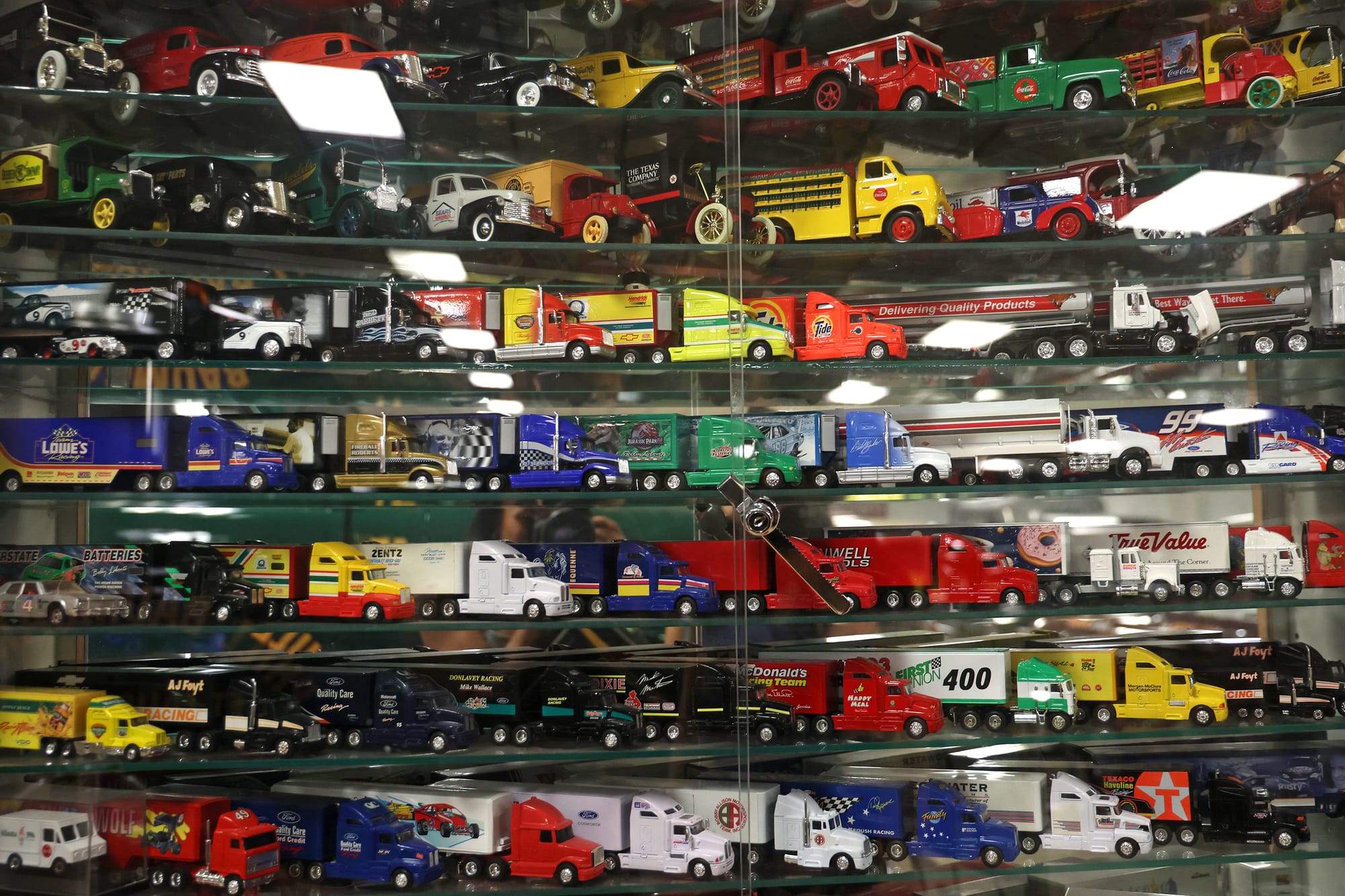
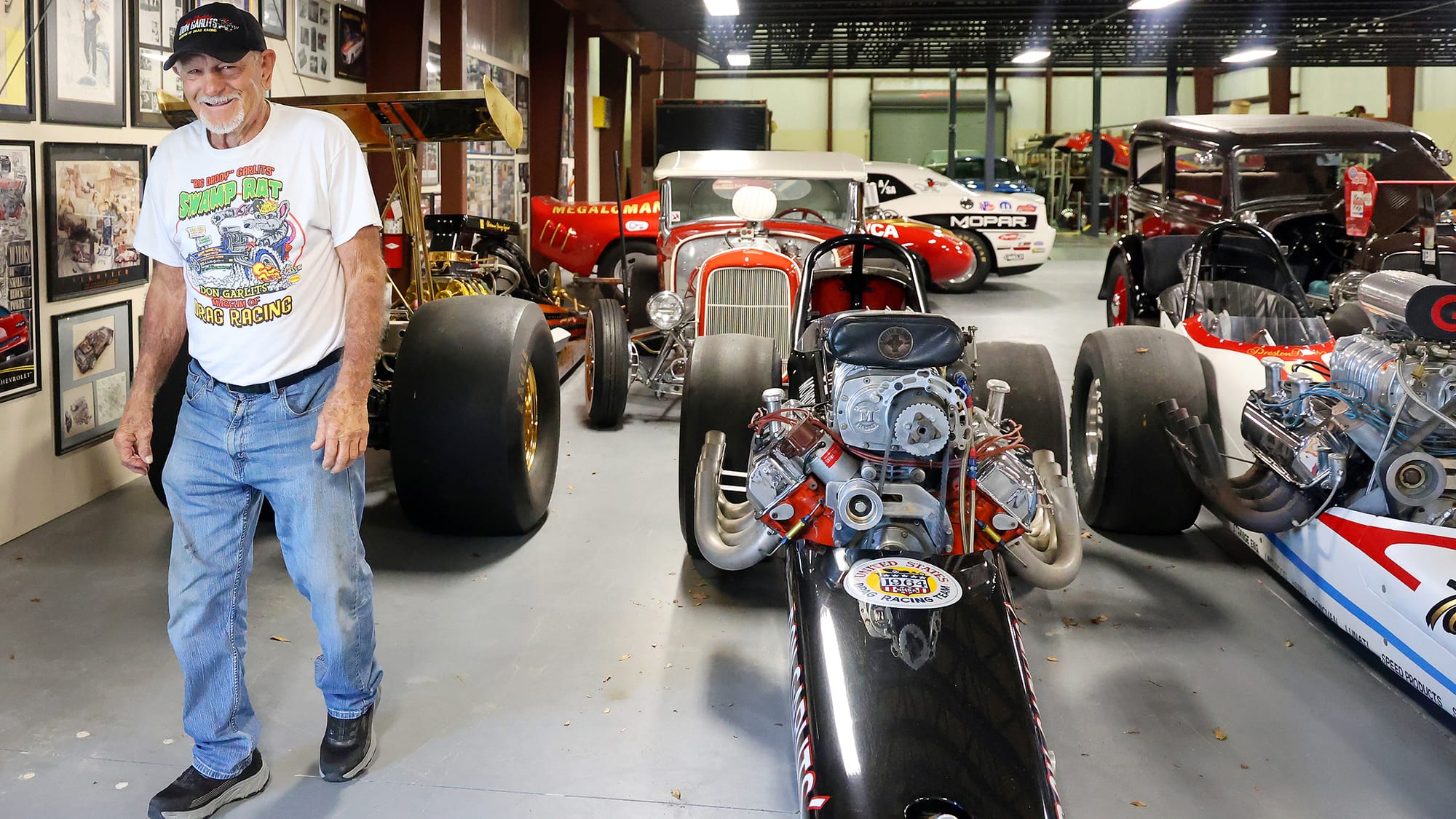
Inside the museum, rows of dragsters line the aisle, their polished bodies gleaming beneath the lights. Each car is roped off with placards explaining its history. Mannequins in race suits, newspaper clippings, and picture frames surround the vehicles, documenting the sport's evolution alongside Garlits’ career.
“This is the car that blew my foot off,” he said matter-of-factly, pointing to Swamp Rat XIII.
A trophy case spanned an entire wall, filled with decades of awards from Garlits’ career.
For many in the sport, preserving that history is exactly why the museum matters.
“Really, it’s fantastic,” said six-time NHRA champion Kenny Bernstein. “You keep that stuff going, and maybe it’ll inspire some young kids to walk in here and say, ‘I want to do that too.’”
Bernstein knows what it means to be part of that history. For decades, Garlits had set the pace, becoming the first driver to surpass 170, 180, 200, 240, 250 and 270 mph before retiring from full-time racing after a serious “blowover” accident in 1987. It wasn’t until 1992, when Bernstein broke the 300 mph barrier during qualifying at Gatornationals. One of his dragsters is on display at the museum.
Current Top Fuel driver Josh Hart, who lives in Ocala, credits Garlits in shaping his own career. Hart first met the drag racing pioneer at a local car show, and the two quickly developed a friendship. Hart’s Burnyzz Speed Shop sits only about seven miles apart from the museum, which also houses Garlits’ working garage.
“There’s no better mentor than somebody like the guy that created the car that you want to drive,” Hart said.
Garlits invited Hart to collaborate on projects, including his electric dragsters. Working side by side with the legend, Hart learned the nuts and bolts of drag racing from perfecting reaction times to understanding the mechanics of beadlock tires.
“The innovation that comes out of him every time he talks or works on something, it’s hard to even put into words,” Hart said. “He’s the real deal.”
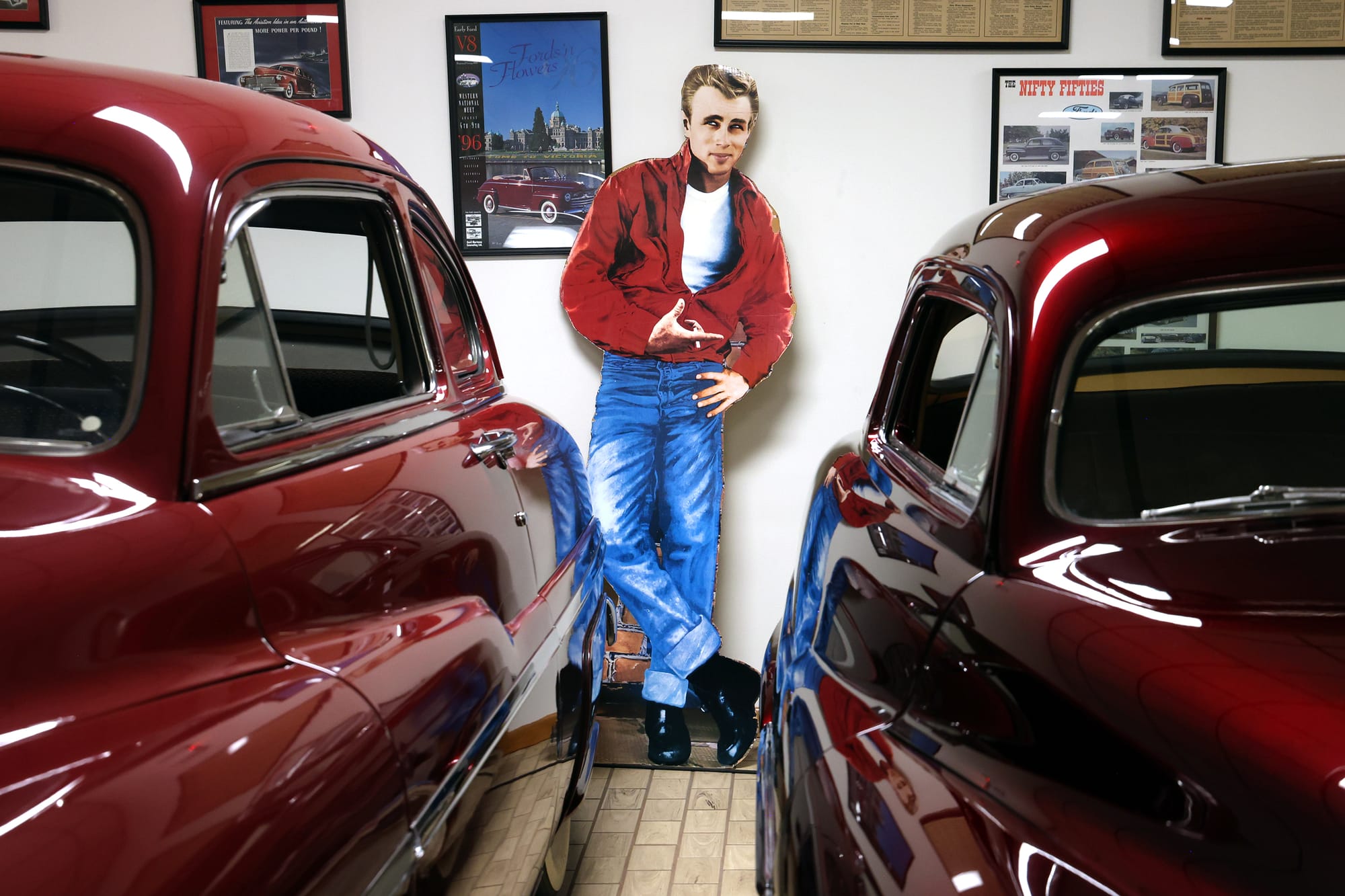
When he toured the museum for the first time, Hart was overwhelmed.
“It kind of takes your breath away,” he said. With so many cars, artifacts and stories packed into one space, it’s nearly impossible to take it all in during a single visit.
At 94, Garlits still spends his days among the machines he built, continuing to experiment while reflecting on a lifetime in the sport he helped create.
His philosophy is simple.
“The key to all of this is going through life doing what you love,” Garlits said.

More From Grandstand:
* Racing's Virtual Revolution: The Rise of Sim Racing
* What It's Like Going 144.62 MPH at Daytona