Going Global
Now more than ever, international recruiting has become a prevalent force in roster construction. In almost every sport, Florida has had to scout all corners of the world to find talent and stay competitive.
“You don’t want it!”
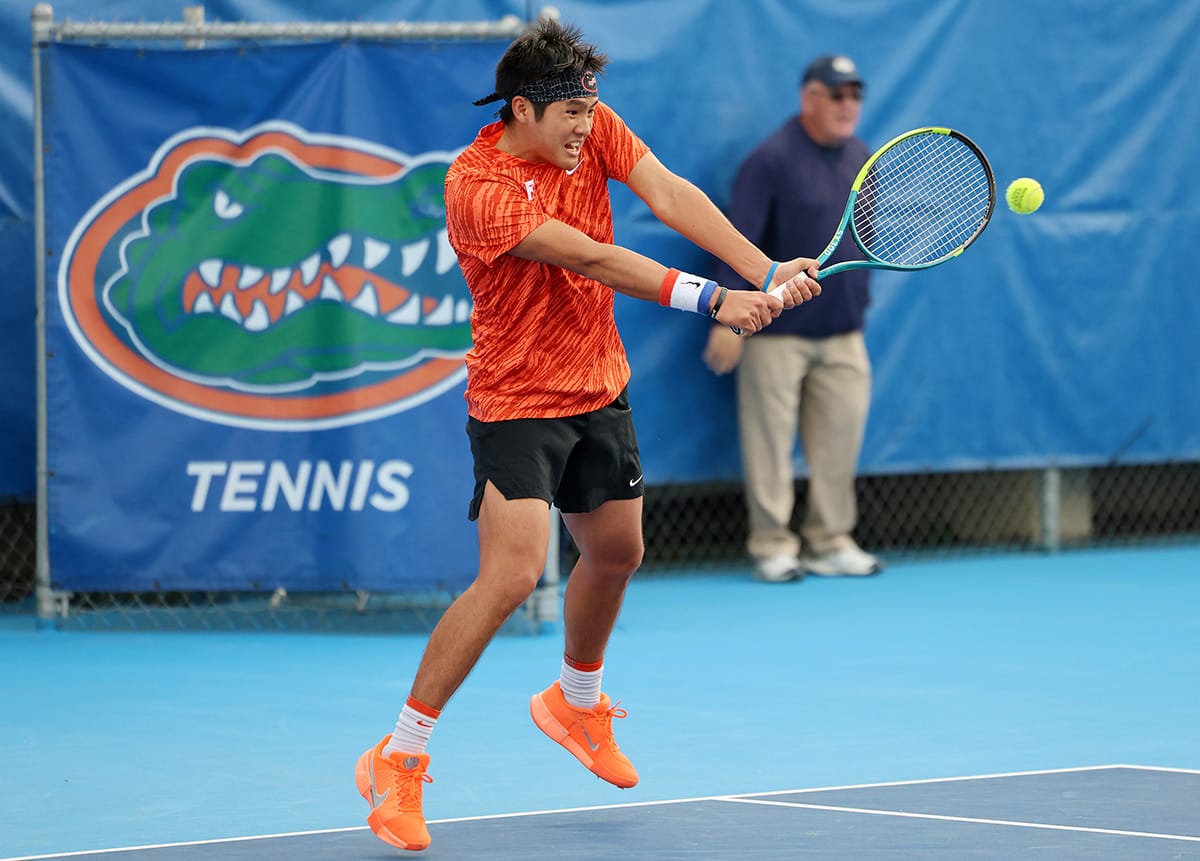
A member of the Southern Methodist men’s tennis team shouted at then-UF freshman Jeremy Jin. “You’re choking!” another chimed in. Jin had just arrived in Gainesville as a freshman and was in the middle of his third collegiate match with the Gators. En route to his 6-4, 6-2 win, Jin secured a double break, looked to the SMU bench and cried, “Who doesn’t want it?”
This was the first time Jin — a native of Sydney, Australia — experienced the intensity of American college tennis. He decided to attend UF to experience the intense training, shared team culture and guaranteed competitive matches provided by today’s collegiate tennis landscape — a decision being increasingly made by internationally born athletes.
From American-created team sports like basketball to internationally popular individual ones like tennis, collegiate sports programs are increasingly attracting top talents from across the world. The underlying question in today’s sports landscape is not where you grew up playing, but how your circumstances built you into a competitor capable of thriving on a big stage.
In recent years, American universities have increasingly looked beyond the United States’ borders to identify and develop athletes. International recruiting has become a prevalent force in roster construction because global talents specialize more and are further developed in niche areas than their American counterparts. As a result, many colleges view international-born athletes as immediate contributors who have the potential to elevate their programs.
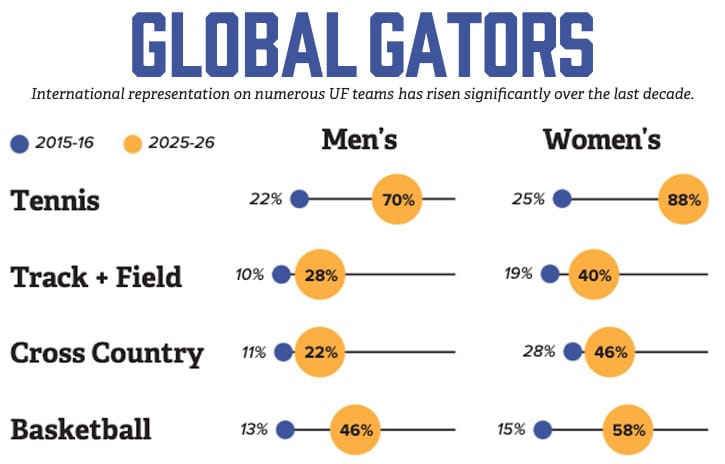
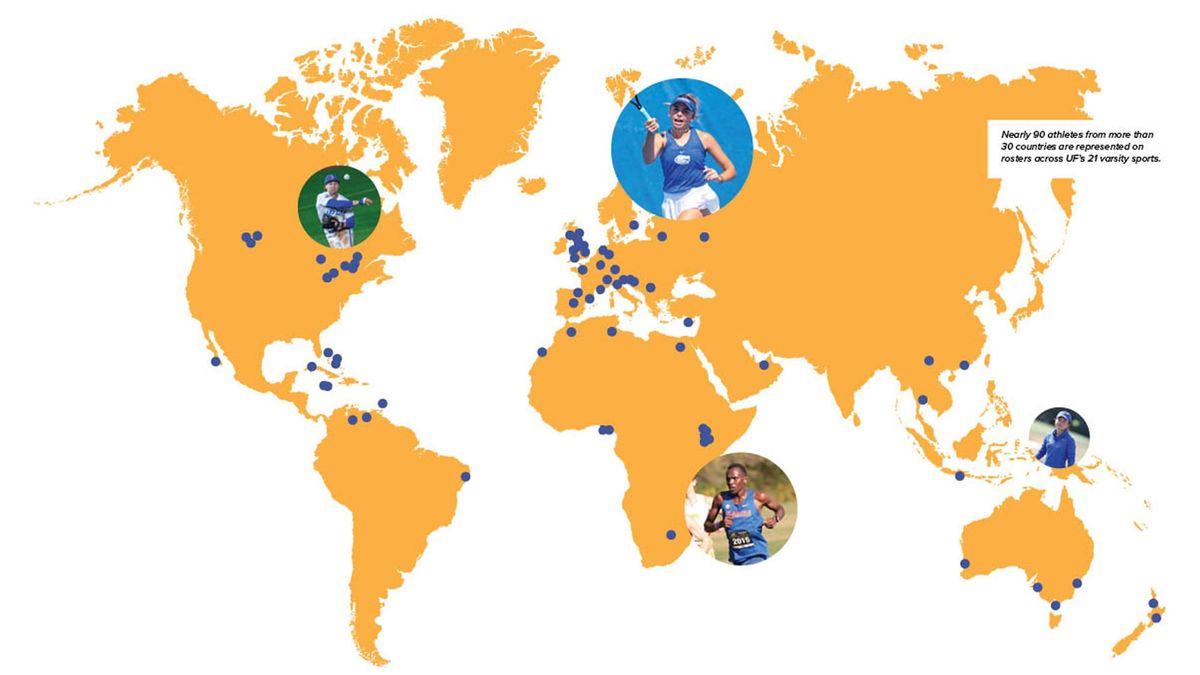
The recruitment of international athletes has become a staple at UF. Athletes from more than 70 countries are represented on rosters across the school’s 21 varsity sports, with nearly 90 international-born athletes enrolled in 2025-26 alone. Some sports – such as tennis, basketball and track & field – have doubled or tripled their international personnel on both the men’s and women’s teams since 2015.
“I think the biggest thing, especially with the international athletes — sometimes they’re a little more advanced than the American athletes,” said Florida men’s and women’s track and field/cross country head coach Mike Holloway, winner of 14 national championships during his career in Gainesville. “You can dig your heels in the sand or put your head in the sand and say, ‘I’m not gonna recruit international athletes,’ and you’re gonna be at a disadvantage against everyone else.”
Name, Image and Likeness (NIL) compensation also reshaped schools’ recruiting abilities and priorities. With universities looking to take advantage of the competitive edge the global talent pool can provide for a team, more and more schools are playing follow-the-leader and using other teams as case studies of how to go about international recruiting.
In a collegiate athletics climate focused on results (i.e., wins), the discovery of foreign talents with more training and higher ceilings has made recruiting much more important.
“All it takes is one school to go out and find a great Kenyan, or a great Jamaican, or whatever, and then all of a sudden, everybody wants to go looking in that same area,” Holloway said.
Recruitment in the 21st century trends towards the globalization of talent pipelines. Data sets, professional programs and scouting technologies are essential foundations of athletes evaluation, regardless of geography.
However, global scouting isn’t much easier now than it has been in the recent past. Film, social media and international tournaments have been used as recruiting tactics for years. The difference is that fans are paying more attention to it and the recruiting patterns across schools, sports and geographical location.
Now, the global race for talent has become impossible to ignore, and international recruiting has shifted from a quiet, backburner process to a prominent storyline across sports media.
“It used to be just a few schools that had Africans or Kenyans. And then now, all of a sudden, everybody has them,” Holloway said. “But at the end of the day, this is not new. … International athletes have been a big thing for the last 15-20 years, but just all of a sudden people are paying more attention to it.”
Though UF women’s tennis head coach Per Nilsson doesn’t believe sheer talent has increased significantly, he said college tennis has become much more appealing as a springboard to professional aspirations for international athletes. Nilsson added that there was a high concentration of international tennis players when he played in college.
NIL and more consistent media coverage have only amplified the appeal of collegiate tennis and made global recruiting more noticeable.
For international athletes, the “Gator Standard” is a major draw: high-level facilities, elite coaching, competitive NIL opportunities and tons of exposure.
But like all colleges, balancing recruiting abroad with a search for local talent is a constant tightrope UF is tasked with walking. Expected to build a roster of the best available talent, coaches' decisions become increasingly complex as they scout talent locally, nationally and globally. Along with an athlete’s stats, metrics and intangibles, programs must weigh how each athlete meshes with a team’s system and culture.
“You have to be careful because not all the international athletes fit what we do here at Florida,” Holloway said. “It does me no good to bring somebody in here — no matter how talented they are — if they’re not going to fit our program.”
UF men’s basketball coach Todd Golden defined Florida’s approach to international recruiting as identifying valuable pipelines and creating a sustainable influence in those areas.
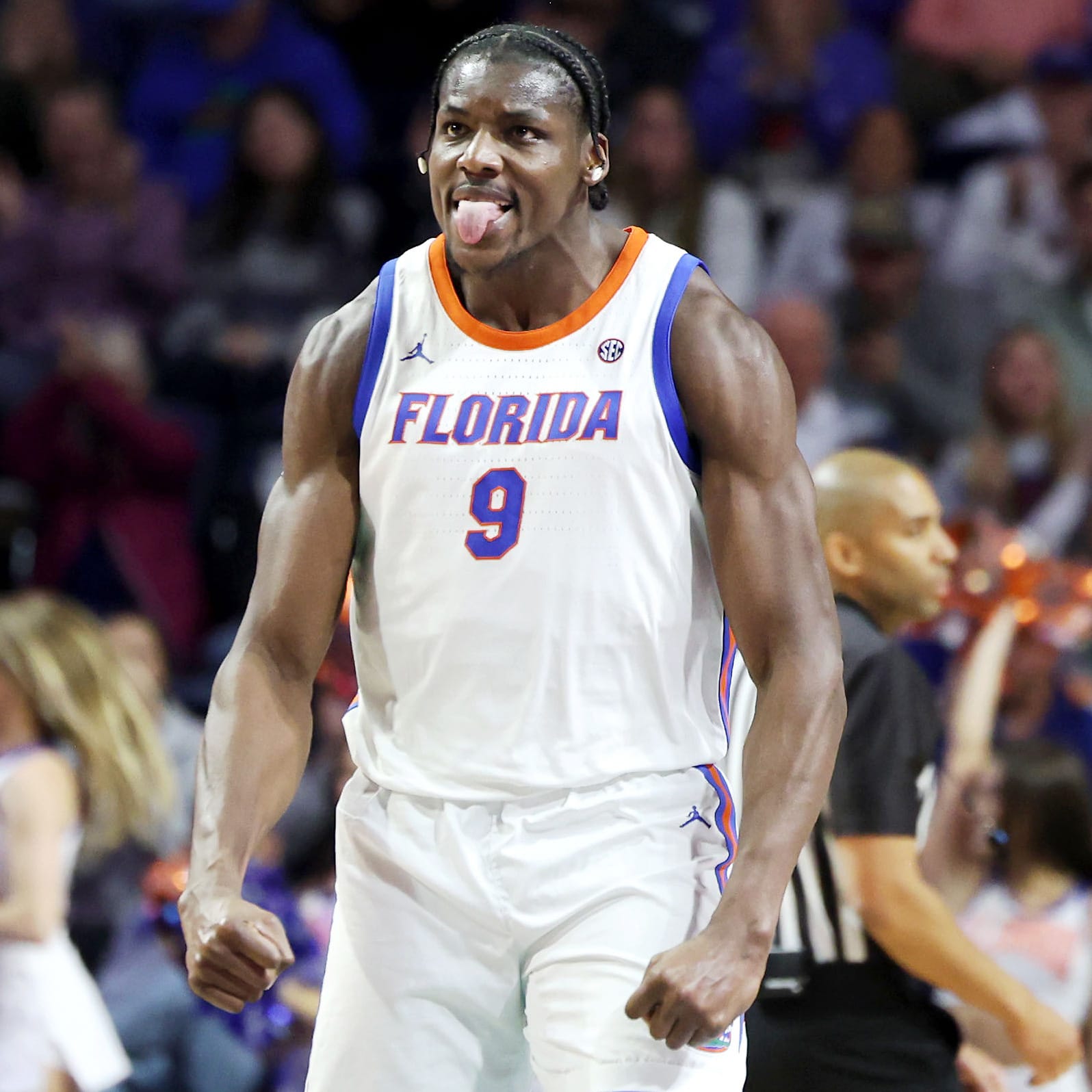
Recognizing these recruiting hotspots, leveraging connections with coaches and athletes and targeting athletes who fit UF’s system are keys to building a talented yet cohesive roster, he believes.
So far, Golden has found success by heavily recruiting areas of Europe.
“If we were able to get our backyard taken care of and the East Coast little bit, that Europe should be a fruitful place for us to go recruit, and knock on wood, it has been,” UF basketball coach Todd Golden said, though his recruiting footprint spans nearly every continent. “Rueben coming from Africa and Alex coming from Australia. We will continue to go and try to find talent that fits our program globally.”
Golden also drew on his experience at St. Mary’s, where consistent international pipelines helped sustain long-term success.
He emphasized that the key to the Gaels’ success wasn’t luck, but strategy and consistency in the recruiting process. By building relationships with coaches and academies abroad, St. Mary’s created a reliable stream of skilled players prepared for the rigors of college basketball in the United States.
“At my alma mater, St. Mary's, I think they were very clearly the first kind of program to get into Australia consistently and do a good job creating that pipeline,” Golden said. “Tommy Lloyd was a big part of that, before he got the Arizona job, recruiting Europe really, really well. And I mean, they've been on it forever.
“It's a big part of why [the Wildcats have] been able to sustain all the success they've had over the years.”
Golden, now in fourth year at UF, takes a similar long-term view, focused on cultivating relationships with international academies and coaches across Europe, Africa and Australia, while keeping an eye on emerging regions that could produce overlooked talent. Shaped by his time as a player at St. Mary’s, along with coaching stops at Columbia, Auburn and San Francisco, Florida’s title-winning coach has developed a recruiting philosophy centered around sustainability, system-fit and identifying high-impact players to elevate the program to new heights and keep the Gators a step ahead of their competition.
As for tennis at UF, the women’s team was an American-focused program that’s only shifted its sights toward international talent in the past five to eight years, Nilsson said.
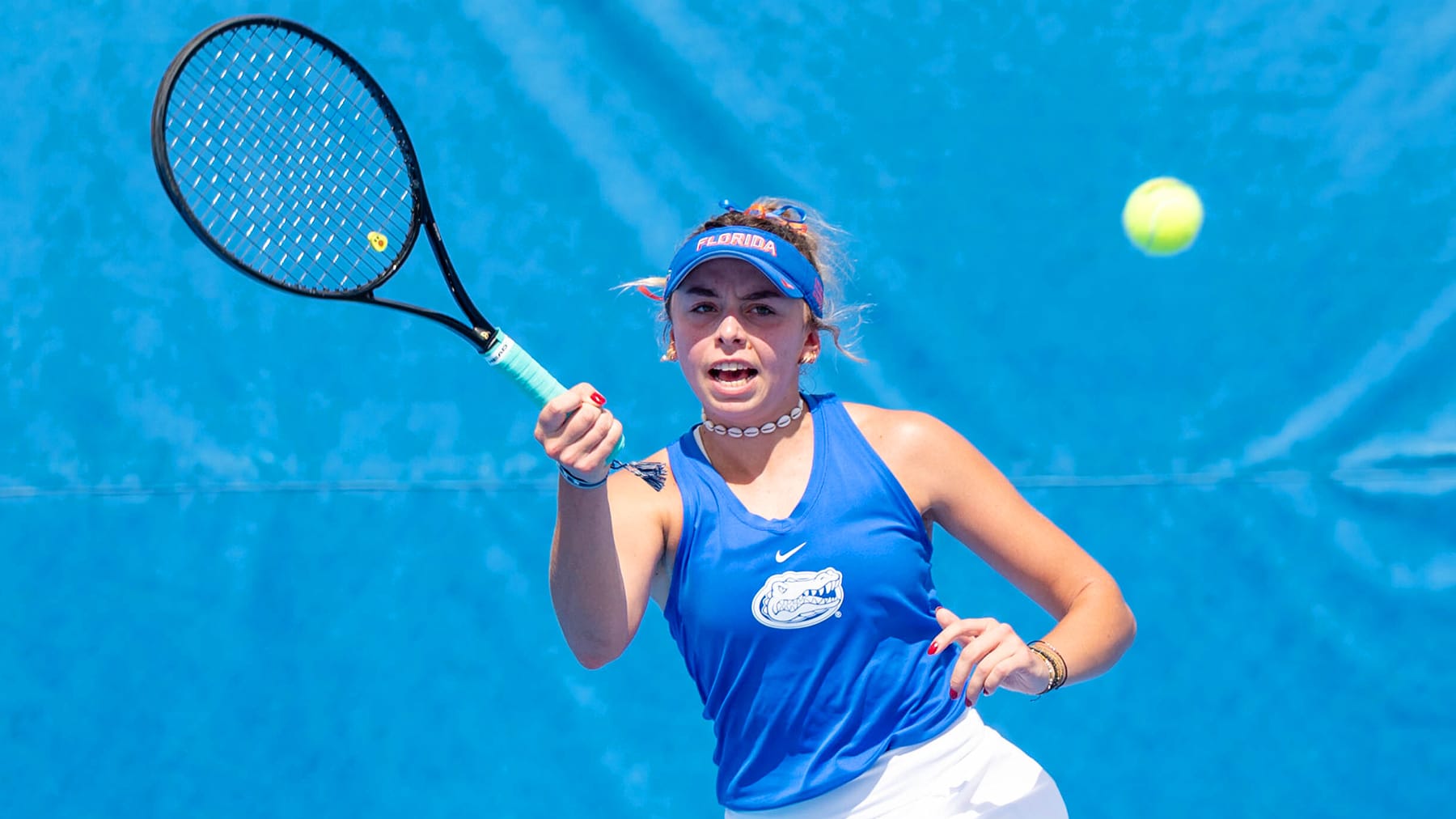
He was adamant that he looks for the best talent that fits Florida’s program, explaining that he starts with the top American talents before branching out into global recruiting. He said there are typically 10 to 15 sought-after Americans in a recruiting cycle, and with the top 10 universities targeting the same small pool, competing schools have been forced to expand their recruiting efforts.
“As a coach, you first look and see ‘OK, who do I have the best chance of getting and where do I need to spend my recruiting resources?’” Nilsson said. “Now that I’m at Florida, I feel like ‘OK, well, we should have a better shot now at getting the top American talent.’”
In his tenure at Pepperdine, Nilsson faced juggernauts like Florida, Georgia, UCLA and Stanford. The level of competition forced the school to delve into the international talent pool to keep up with top programs, which scored the best recruits.
At Florida, Nilsson doesn’t pay attention to how other schools recruit. Instead, he’s focused on proving that Florida is truly an “Everything School.” He first looks into how many American players can be recruited, then assesses where international talent can complement the roster and provide competitive advantages. This has helped Florida stay nationally focused, leveraging international talent to maintain a competitive edge on the court.
The stark influx of international players across many collegiate sports, especially in the SEC, has caused the overall level of play to skyrocket and forced teams to elevate their strategies to stay ahead of the curve.
“The level [of talent in the conference] has gone up drastically,” Nilsson said. “It’s always fun to compete against the best level there is, and so it’s good for our players to see that because they’re always trying to improve … Being able to play against these players is a great experience.”
With new regions emerging as talent hubs and ever-evolving rules regarding recruitment, all signs point to this trend of cross-border talent acquisition continuing and intensifying. Nilsson was adamant that as more global athletes enter collegiate athletics, there will continue to be a large pipeline of international players competing at the collegiate level, across all sports, for years to come.

Still, as Holloway explained, you can get international talent, but that doesn’t necessarily correlate with success.
“Recruiting is the first piece to a championship situation,” he said. “A lot of people get international recruits, but not everybody has been successful.”
With the international recruiting landscape proving itself as a fruitful portal for both track and field and cross country, more schools will want a piece. With a slew of universities targeting the international talent pool rather than a few juggernauts dominating the market and poaching the top athletes, the playing field should remain balanced, and success will depend on how effectively programs develop their international athletes.
“There’s more talent, and you have to recruit to keep up with the talent level,” Holloway said. “We’re all playing by the same rules. It’s not like one school has all the internationals and nobody else can get them.”
As coaches like Holloway, Golden and Nilsson are tasked with building cohesive, championship-level rosters in a landscape where talent comes from every corner of the world, navigating recruitment and instilling a competitive drive into players has become more important than ever. With top programs fighting to keep their legacy alive and others fighting to make their mark, the diffusion of international talent across America is raising the bar for universities that aim to compete for championships.
This story appears in the Spring 2026 print issue of Grandstand Magazine. Click here to see the full issue in its original print format.