Positive Vibes Only
Gymnastics is hyper-competitive. The slightest slip, misstep or degree variation in your landing can be the difference between success and failure. Thus, team and peer support is crucial — and no sport does that better than this.
We were doing so well, but you were scared to be held. Took the easiest way out. I see the tears of a man too proud to reach for a hand. Well, let my love keep you safe now. So please don't…
The gymnasts belt the Olivia Dean and Sam Fender tune, scattered across the training room, while performing the many forms of alchemy that make them far more limber than you or I. These rituals can thread the difference between a spinal fracture and an Olympic nod. In simpler terms: success and failure. Joy and …
Please don’t reinnnn meeee innnnn.
A few notes missed, not that Lee Turner hasn’t heard this rendition before. Her office sits at the corner of the entrance to Florida gymnastics’ training facility, a sun-filled cellar behind the northern section of the O’Connell Center. Glass windows line the western and southern walls of the room, letting Florida’s director of gymnastics operations — a glorified “paper pusher,” the 83-year-old self-depricatingly says — peer out at the most nimble Gators with a better view than any. Through 31 years in the corner office, she’s watched parents and then their children tumble. She’s also developed an opinion she’ll staunchly defend to any curious visitor.
“They all care about one another for who they are,“ she says. “I don’t think there’s a sport better for the soul than gymnastics.”
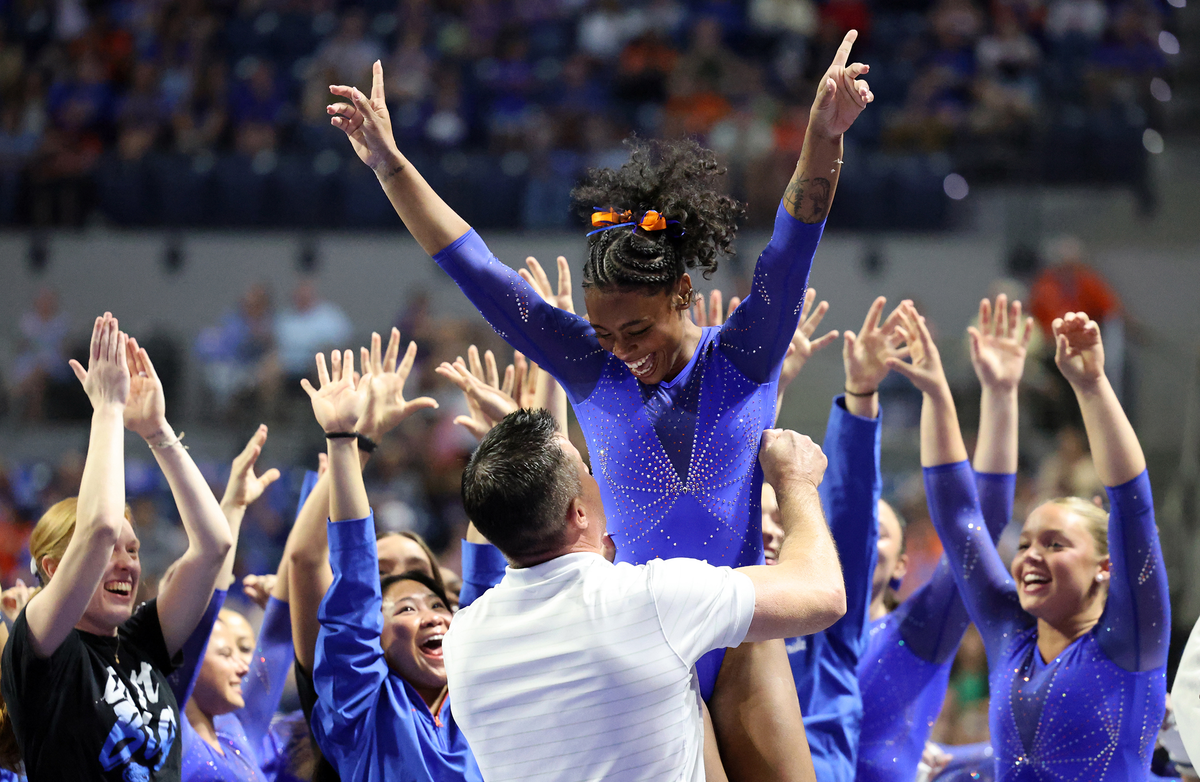
She’s right. Gym meets foment a milieu of positivity. Fans cheer for the spectacle of athletic prowess as much as the color of any leotard. The athletes, distinctly, celebrate with one another after every single performance before a score even plasters the screens. Everyone wants the best for each other. How peculiar?
How … wonderful?

“It’s such a beautiful sport,” Turner continues. “A lot of people are fascinated by that.”
She doesn’t really get why, but that also might be because the principle for this dynamic is hard to pin. The practice — cosplaying as Joy from “Inside Out” — isn’t limited to only Florida’s program, which will compete in the NCAA semifinals on Thursday. Many gymnastics meets, especially at the collegiate level, look the same — fans rowdy for an opponent’s success, athletes jumping up and down and embracing one another whether their teammates stick a landing or stumble. That isn’t limited to the public eye, though. If anything, practice is an even more exaggerated form of the same.
No sport requires more precision or creativity than gymnastics, UF assistant coach Jeremy Miranda contends. Athletes need maintain a focused, clear mental space to avoid dangerous mental blocks like the “Twisties,” in which one can lose spatial understanding with their feet above their head. They also curate their own performances.
Superficially, to accomplish either, having one’s teammates closely surrounding them is an easy way to maintain comfortability while amid a routine, especially if it's fresh. That’s one of the reasons why others gather around and swarm the performer when they’re done with their event. But UF’s staff believes its athletes need to be truly mentally free to perform at their highest — and safest — level. That comes from something deeper.
“It starts with vulnerability,” UF head coach Jenny Rowland says. “We try our very best as a staff, as a support staff, as every person here to show emotion, care and understanding that these young women aren't just gymnasts, that they're human beings and that we're here to help them in any way possible.”
Just above the breakout concert rests a makeshift billboard at the entrance to Florida’s practice gym. “Our Promise,” it reads. At the beginning of the season, the Gators’ athletes outline the core principles they aim to uphold that year. They always lay somewhere in the neighborhood of trust, support and care for each other. This year’s primary message: “A win for one is a win for all.”
The visual cue surely doesn’t hurt.
“In gymnastics, it’s truly individual. You control your performance,” senior Riley McCusker says. “But your performance is just one of many, and if everyone else doesn’t perform their role, none of it matters.
“No one’s ever going to perform their best if they don’t truly feel supported, loved, trusted.”
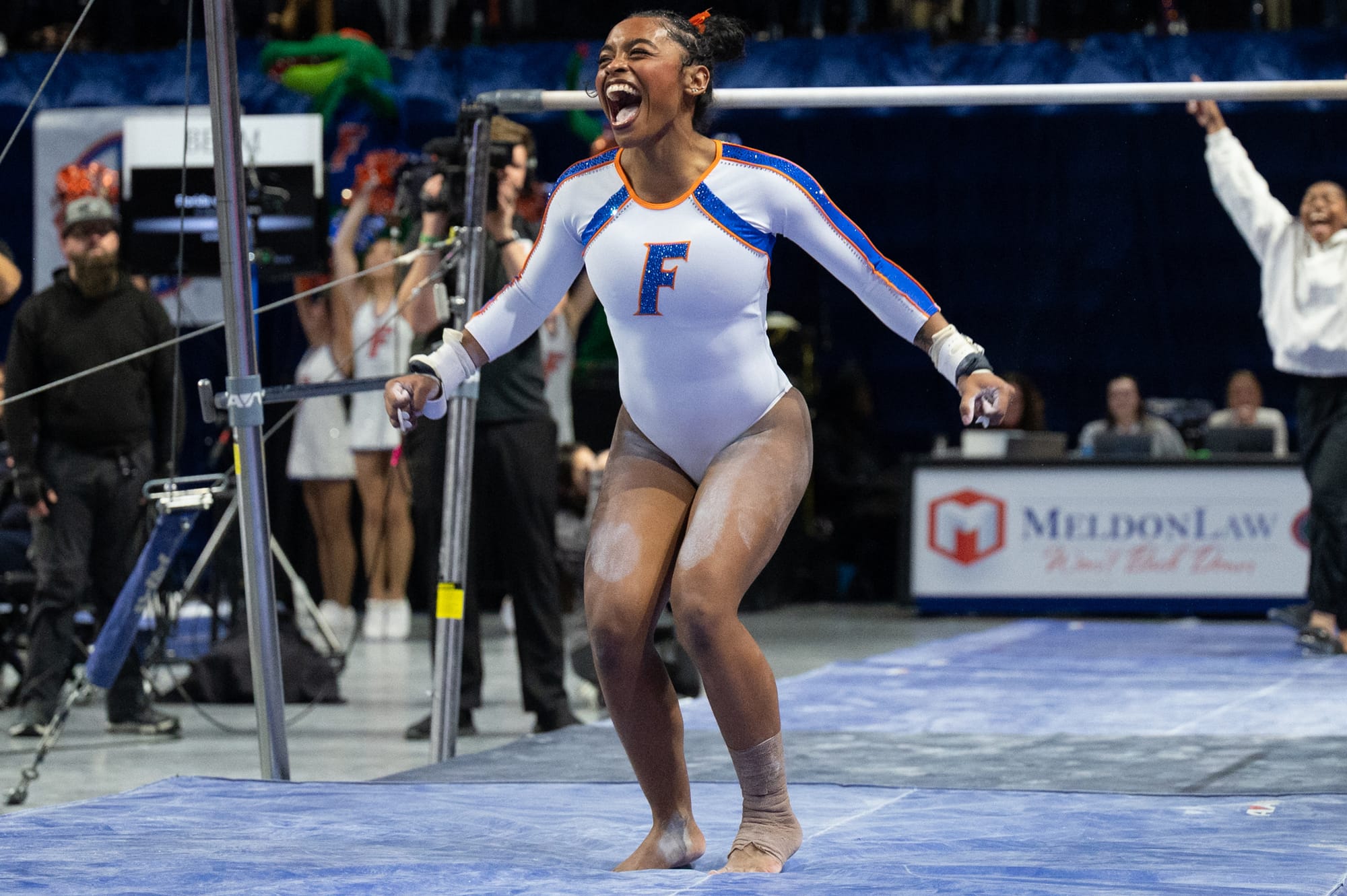
To achieve that freedom, Florida wants its gymnasts to feel empowered to be themselves, true to their own personas. They’re far from defined by athletics, even if they spend four hours, four days a week practicing — not to mention travel and the meets themselves. In the pockets it can find, the Gators coaching staff holds bi-weekly check-ins with every athlete. Their list of questions follows a strict order: How is your life? How is school? How is gymnastics?
Any good interview comes with some background. Florida, similar to the vast majority of gymnastics programs, has a built-out structure of mental health workers, trainers and administrative assistants. “Napier’s Army,” just for the beams and bars and mats, if you will. That’s where the focus on optimistic reinforcement draws from, as Florida’s staff analyzes its roster each year and determines what environment best fits the people it has.
It’s always determined that positivity is the answer.
“We truly believe that supporting them, making them feel like this is a family, is the easiest way … to get their best,” Turner says. “They need to feel comfortable as just themselves.”
The thought, simply, can apply to any sport: athletes perform their best when they don’t exist in a zero-sum environment. The results matter because everyone still competing at the Division I level, no matter how much zen they can muster, still cares about their performance. But the stress, the yelling, the self-deprecation — that all can go. If you want, skim the dozen most referenced scholarly studies on Google about athlete motivation practices. Not a single one directly supports that denigrating a competitor spurs growth.
Not to say that gymnastics hasn’t had its struggles. The sport cultivates a youth training schedule like no other, where athletes’ lives are consumed by intensity. Most collegiate gymnasts commit solely to gymnastics as young as 5 and move across the country for training. McCusker fell in that pool, leaving Connecticut for New Jersey for Arizona, all to practice six days a week for a decade. The environment in those youth training clubs bubbles with fear and stress. Coaches attack athletes for every misstep. In the sport’s worst moments, abuse scandals, like that of Larry Nassar, brand its national image. McCusker’s primary coach at MG Elite Gymnastics in New Jersey, Maggie Haney, was suspended eight years by USA Gymnastics in 2020 for verbal and emotional abuse.
“That past is partially why we try so hard to care,” Miranda says, scanning the practice facility as the athletes warm up. Across the way, a wall covered with mirrors has a few taped signs: FOCUS on what’s important. CAPTURE the good times. DEVELOP from the negatives.
“We want them to feel safe. Many of them come from toxic environments, and sports should be a place for joy, not pain.”
And the Gators, undoubtedly, are joyfully positive in a way no other sport achieves. “We compete better because of it,” McCusker says. The practice and weekly habits, the ice cream socials and nights out watching other Gators, the singing and dancing and cheering: it all shows itself in the meets. That’s what you see. Or, maybe, feel.
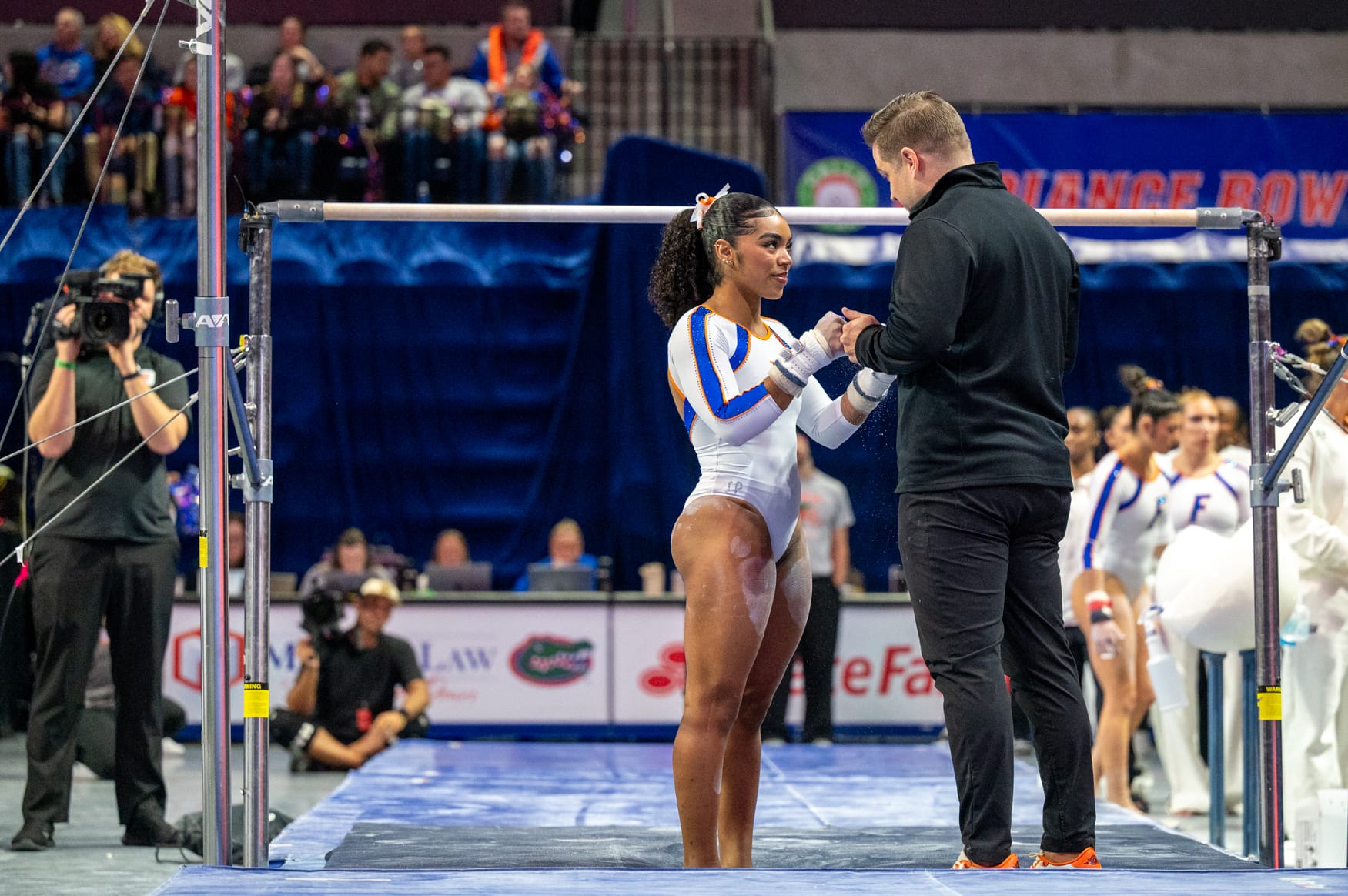
Florida’s all-everything star Selena Harris-Miranda fell from the uneven bars against Missouri in early February, earning a 9.10. It was her worst score at Florida by a stunning half a point, and played a significant role in the Gators' upset loss in Columbia. And everyone on her team knew it. Yet before she had even finished her performance, her entire team had already urgently taken a sprinter’s stance, eager to embrace her from every possible direction. After she escaped the cascade, Miranda briefly brought her in, assuring this, in fact, will dissolve into the background of her illustrious career.
“We’re a huggy group,” Turner says. On Florida’s senior day, it even gave LSU’s soon-to-be graduates flowers and celebrated each opposing athlete separately. Because of course. “If any help is ever needed along the way, that is willingly and happily secured for anyone. … It’s a very enjoyable atmosphere.”
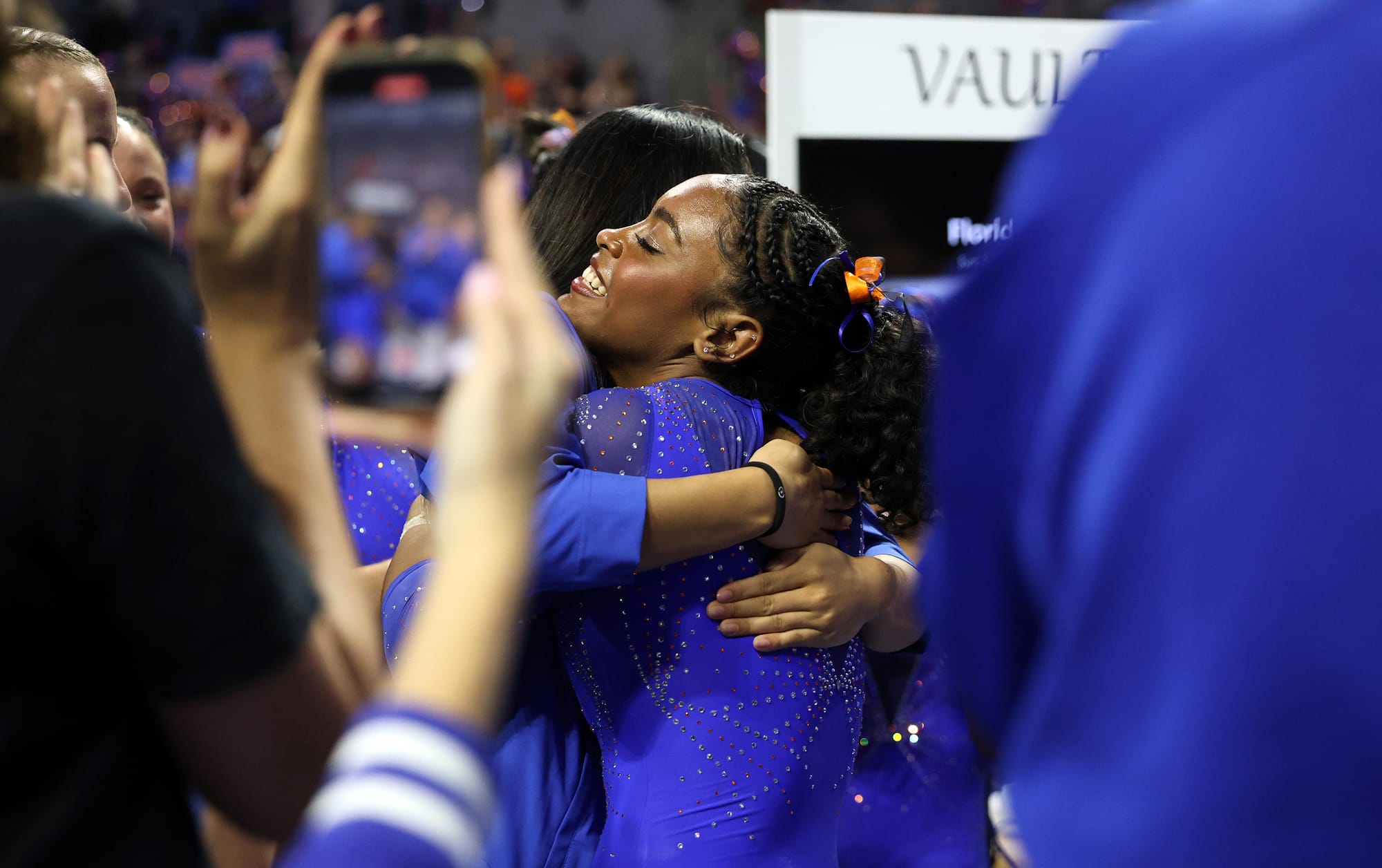
Which billows into the onlooking fans, who celebrate the good and, with greater force, cheer over the sad.
Still, the sport’s counterparts are nothing of the same. On Jan. 30, Kyle Ziegler, a UF student, watched Florida gymnastics throttle — though, they’d opt for outscore — Arkansas. He cheered when the Razorbacks earned their lone event victory on vault. Two days later, he packed into the student section as the Florida men’s basketball team faced Alabama. He was among the first to scream “G-League dropout” at Alabama’s Charles Bediako during warmups, half an hour before the game had even begun.
“I love going to both teams’ things because it's just so different,” he says. “I let my demons out one day, and then I try to be my best self the next.”
Maybe we all should give that balance a try.
Collaboration, creativity, bliss — these are the types of concepts that adorn elementary school classroom walls. Yet so many players and coaches — so many of us — lose sight with such regularity.
Both the gymnasts and the coaches think we’re worse off for it. Because where else do you show up 15 minutes before practice — those moments where these athletes are theoretically doing everything they can to ensure they don’t suffer a catastrophic injury — and a light karaoke battle has commenced … after a loss. But for whatever it’s worth, the band of impressionists beat Georgia two days later, and they’re yet again among the nation’s top contenders. That isn’t abnormal. While the Gators haven’t won an NCAA championship since 2015, they made four consecutive Four on the Floor appearances (the gymnastics Final Four equivalent) until a semifinal loss last year.
They’re doing just fine.
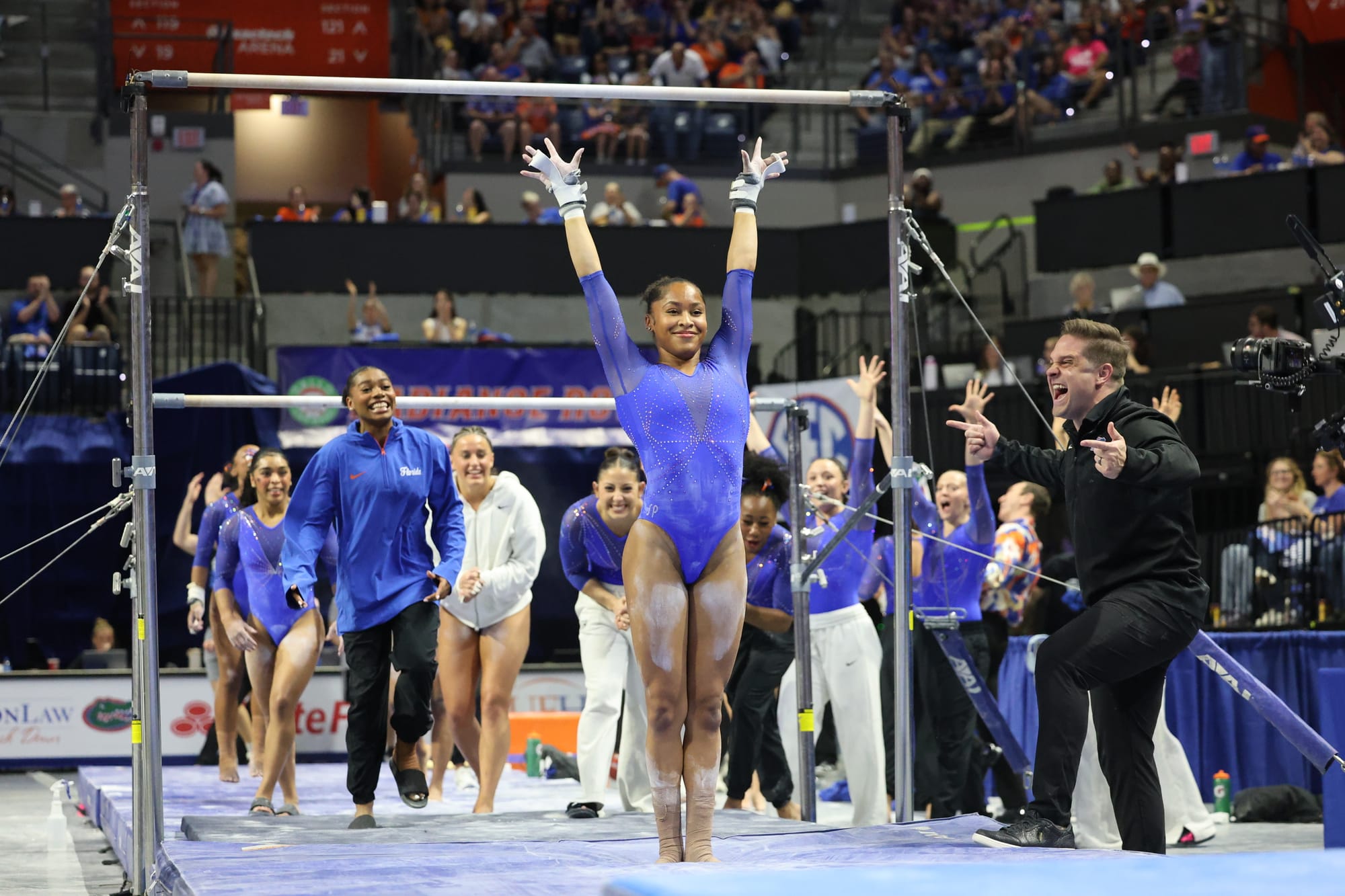
“There are things we can all take from one another, sport to sport,” Miranda says. “I think supporting athletes, encouraging athletes … the positivity, it goes a long way.”
Miranda’s surely a little more hip to the athletes’ discography decisions than Turner, but that’s partially why the administrator has stuck around for so long. This atmosphere, littered with athletes the same age as her grandchildren, gives her life. “This is the best of us,” she says.
So she watches as they mingle and chat and joke with one another before heading toward their three practice vaults for four, otherwise daunting, hours of training. She’s seen this for 31 years, of course. But she still briefly gazes each time. That staunch opinion of hers? It’s a response to a frequent inquiry from the less-acquainted passerby.
Is there something we all can take from this?
“I certainly believe so,” Turner says, with a light sigh. “I certainly, certainly do.”
This story appears in the Spring 2026 print issue of Grandstand Magazine. Click here to see the full issue in its original print format.