Are You Paying For That?
The costs to watch live sports from home continue to rise at staggering rates. It’s unsustainable for many viewers, especially on college campuses. In turn, illegal streaming has never been bigger.
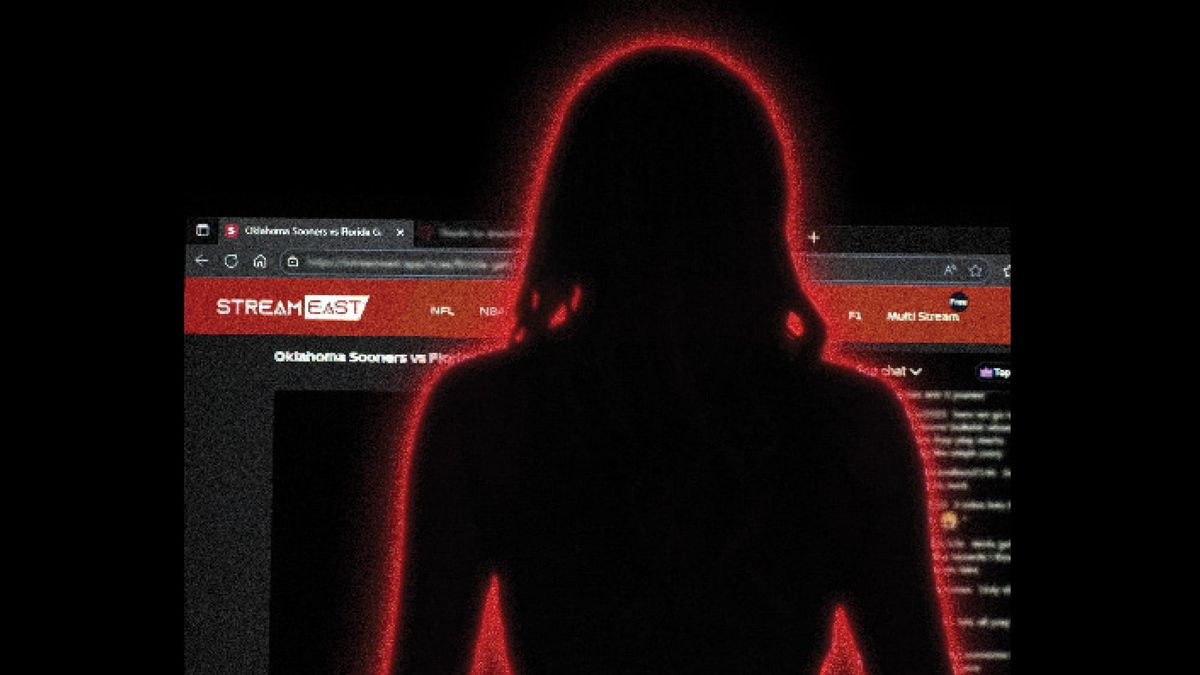
Ringing cheers echo down the fourth-floor hallway of your college dorm room. The ceiling tiles tremble. Cautiously following the commotion brings you to the dorm’s communal lounge. You peek through the window, eyeing three fellas in flip-flops lying on a plush sofa. They pump their beer-can-clenching fists, eyes dead-set on the glowing TV in front of them. Wide smiles reflect the Thursday Night Football game onto their teeth.
The red StreamEast logo blinks in the screen’s corner.
“It’s just a bunch of broke college students using pirated streams,” said Walter, a University of Florida junior.
Rising costs of streaming services are clashing with student budgets, pushing a generation of sports fans into regular piracy. While the practice is technically illegal, it is far too accessible to feel like a crime.
Everyone in this room is breaking federal copyright law. While they will almost certainly never see the inside of a courtroom for it, operators face up to five years in prison and up to $250,000 in fines under the Protecting Lawful Streaming Act.
“The Act fundamentally changed how large-scale illegal streaming is treated under the law,” copyright lawyer Steven C. Vondran said. Willfully operating an illegal streaming service for financial gain is now a felony. This shift gives prosecutors stronger tools to pursue piracy, while keeping the focus on distributors rather than viewers.
On Aug. 24, Egyptian law enforcement found evidence that the people behind StreamEast laundered more than $6 million in advertising revenue. They raided a home 20 miles outside of Cairo, seizing laptops, smartphones and cash. Two men were arrested.
“Many assume they are safe because they did not charge viewers directly, not realizing that ad revenue, donations, sponsorships or affiliate links still count,” Vondran said.
The website offered free, unauthorized streams of almost every major sporting event. It had more than 80 associated domains and received 1.6 billion visits in the previous year. The Alliance for Creativity and Entertainment called it the largest illicit sports streaming operation in the world.
“These aren’t hobbyists uploading links from their bedrooms,” said Larissa Knapp, executive vice president and chief content protection officer for the Motion Picture Association. “These are serious transnational operations that mirror legitimate tech startups. They’re autonomous, decentralized and financially engineered.”
As leagues sign multibillion-dollar media deals and streaming platforms stake their value in live sports bundles, young fans are gravitating toward non-official online broadcasts that are only a few clicks away.
“When a fan wants to watch a game, they’re not thinking about where the money’s going,” said Adam Leventhal, a London-based senior writer and broadcaster for The Athletic. “They’re thinking, ‘I’ve got two minutes until kickoff, where can I watch it?’”
For many students, the cost of monthly subscriptions is just too exorbitant. If a fan wanted to watch every NFL, NBA and MLB game this season, it would cost $2,621. Subscriptions to YouTube TV, Netflix, Peacock, Paramount +, Prime Video and Disney/ESPN+ run a total of $1,830. It costs another $791 for NBA League Pass, NFL Sunday Ticket and MLB TV.
“It’s confusing,” said Nicholas, a sophomore at the University of Florida. “You can pay $70 a month, and then only get certain streams. I guarantee if some company made it $50 a month to get every college football game, every NFL game, they’d have an insane amount of subscribers.”
After the NBA signed an 11-year, $76 billion deal to bring games to Prime Video, Peacock and ESPN, NBA League Pass subscriptions increased by $10. Since the NFL signed an 11-year $110 billion TV deal with Prime Video, CBS, NBC, ESPN and YouTube TV in 2021, NFL Sunday Ticket increased from $293 to $480. ESPN’s MLB.tv package offers “out-of-market” games for $149.99 annually. However, it still locks local fans out via team territories, forcing “in-market” viewers to buy separate subscriptions to watch their local team.
“Everyone’s just fighting for more money, more revenue, more growth,” Leventhal said. “They’re getting further and further away from the consumer and from the fan.”
According to the U.S. Bureau of Labor Statistics, the median salary for individuals between 20 and 24 was $41,382 in 2025. Legally following their favorite NFL, NBA and MLB teams would require these college-aged Americans to spend 6% of their yearly paycheck on sports streams. For context, Americans typically spend 13% of their yearly income on food, per the Census.
“Stuff’s expensive,” said Evan, a freshman.
The Athletic surveyed more than 5,000 sports fans on how they watch European football. It found that 47% used illegal streams and 70% weren’t worried about cybercrime risks or funding organized crime.
"The youth today don't perceive piracy as a criminal activity,” Knapp said. “Free isn’t free; everything comes at a cost. You may not feel it today, getting the instant gratification, but when your phone is bricked or you’re losing personal information, there will be a consequence."
“A much more common risk is exposure to malware, scams and data theft since many illegal streaming sites are designed to harvest personal information,” Vondran said.
In May 2024, retired Air Force veteran Franklin Valverde Jr. became the first person sentenced under the Protecting Lawful Streaming Act. He spent one year and one day in federal prison for selling access codes that unlocked Dish Network and Sling TV’s full libraries. He also faced more than $270,000 in financial penalties. When contacted, Valverde said his story was “heading to Netflix.”
Valverde’s case signals the new norm in a streaming society: prison time.
“Copyright laws were written before modern streaming technology existed,” Vondran said. “The imbalance often comes not from the law itself, but from the leverage it gives rights holders.”
As distributors are arrested and sites are taken down, students find a new URL to watch the game. On college campuses, illegal streams are an open secret. Students feel untouchable while the distributors face prison sentences.
Back in the dorms, the cheers keep rolling. StreamEast may be dead, but iStreamEast.app drew 18.28 million visitors last November. For the students on the couch, there’s always a free signal as they stay one click ahead of the law.
“Every season there’s more subscriptions that you need to get,” said Hunter, a senior. “There’s always going to be a website out there people will use to watch sports.”
This story appears in the Spring 2026 print issue of Grandstand Magazine. Click here to see the full issue in its original print format.