When The Lights Go Out
For so many athletes -- including former Florida football signee Randy Russell -- the goal of playing college sports is a lifelong pursuit. Sometimes, though, the dream ends just as it’s meant to begin. But now Russell has found his second chance in football.
In January 2018, just days after arriving at the University of Florida as an early enrollee, Randy Russell filed into the infirmary, joining an assembly line of routine physical evaluations — bloodwork, electrocardiograms, echocardiograms and meetings with orthopedic and general‑medicine doctors.
Everything ran smoothly until the EKG. His new teammates — future SEC football players like him — entered the exam room one by one and walked out within minutes. But when Russell began his test, he didn’t leave as quickly. He lay there for nearly 20 minutes, wired to a humming machine, unsure why it was taking so long. His mind raced. Maybe faulty equipment or the result of a long day for the nurse.
When the test finally ended, Russell – a freshman safety from Opa-locka, Florida – didn’t walk out and continue on with his day. The nurse administering the EKG noticed an abnormality and asked him to bring the test results to the trainer at the football facility.
There, Paul Silvestri, the team’s senior director of sports health and performance, explained that the EKG had flagged a few abnormalities – no cause for concern quite yet. But it meant another round of evaluations. This time, the medical professionals expedited his echocardiogram. The result: abnormal measurements in Russell’s heart. He then underwent a cardiac MRI to further evaluate the structural abnormalities. It confirmed the diagnosis Silvestri feared: hypertrophic cardiomyopathy.
HCM is a disease in which the heart muscle becomes abnormally thick, making it harder to pump blood to the rest of the body and potentially triggering dangerous heart rhythms. Many athletes with the condition never experience symptoms and only learn of it through screening ... or an emergency. Because warning signs are typically rare, hypertrophic cardiomyopathy is one of the leading causes of sudden cardiac death in young athletes.
“It was very clear that his measurements were not conducive with him continuing athletics,” Silvestri said. “His measurements were really extreme, and he was a very lucky young man that he never had any kind of episode prior.”
The diagnosis meant his collegiate football career ended before it ever began.
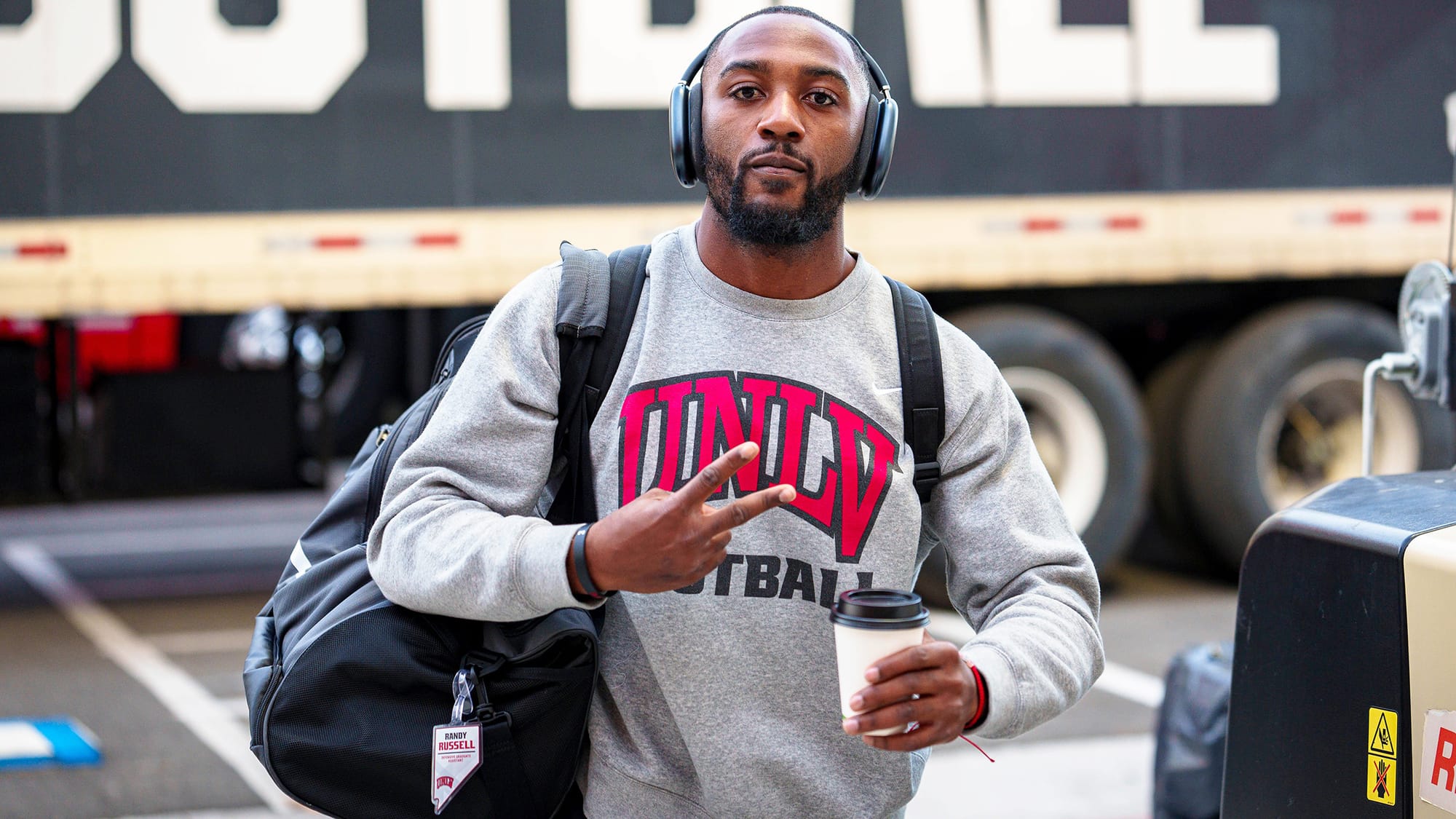
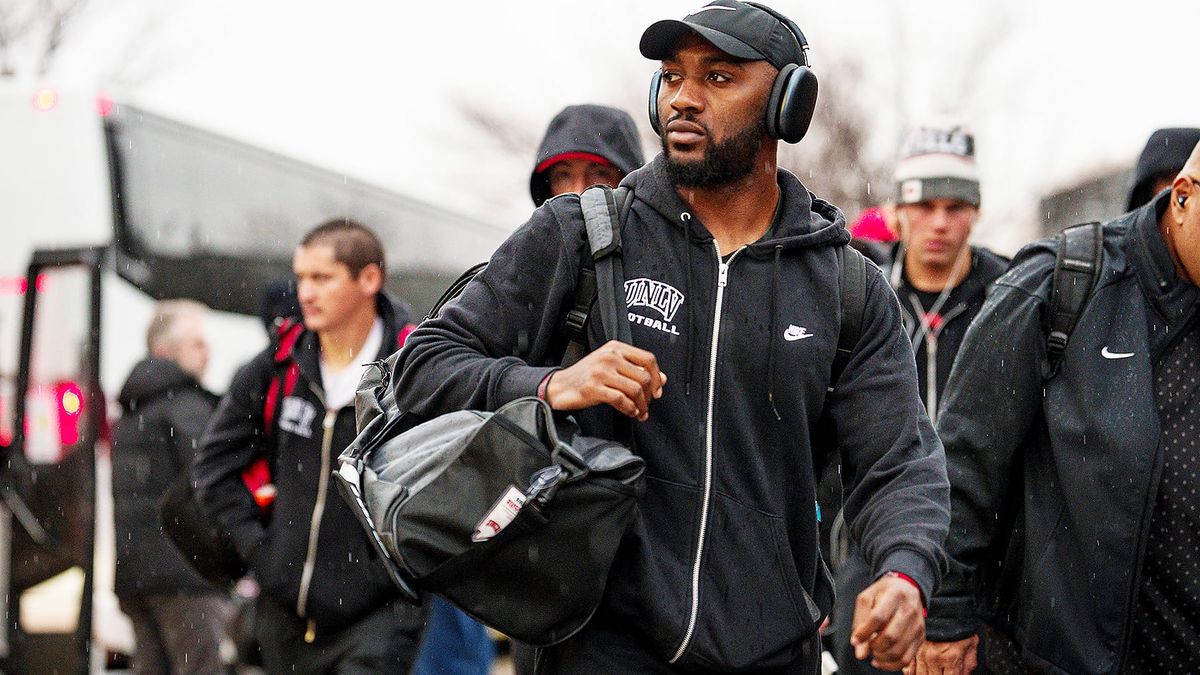
Eight years later, Russell is still around the game. As a defensive analyst and recruiting assistant at UNLV, Russell has rebuilt his life, still tethered to the sport he was once forced to leave behind.
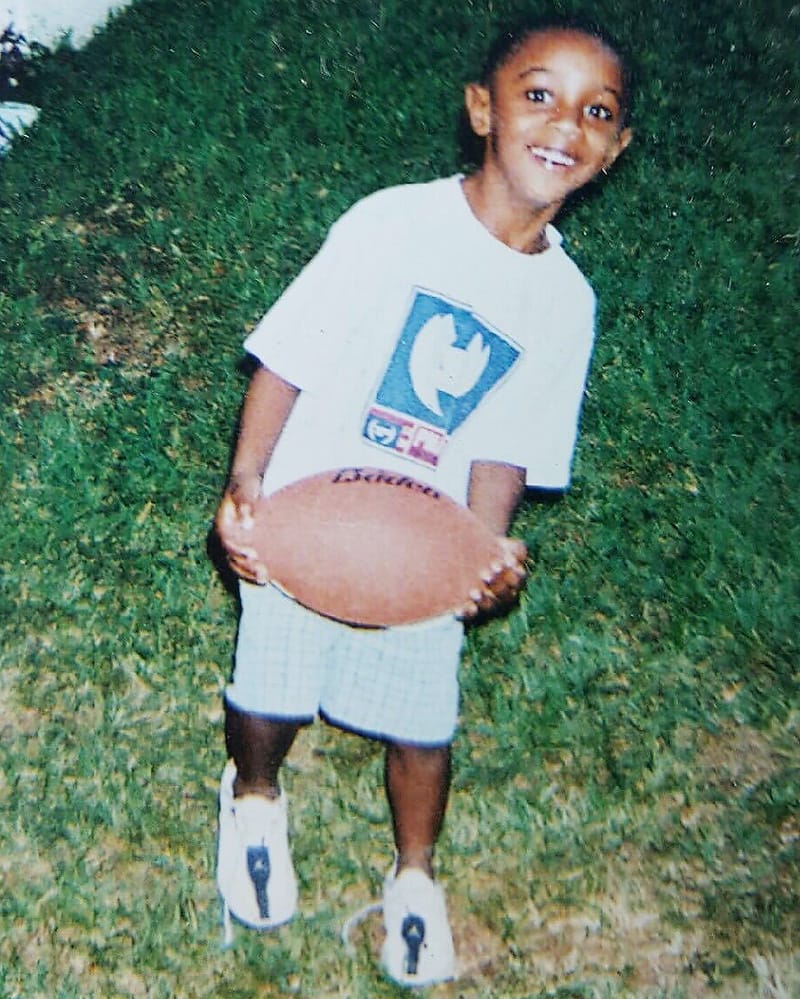
Football had been a part of Russell’s life since he was 4. His father, a Miami-Dade County police officer, brought him to an open house where there was a youth football sign-up stand. Two weeks later, Russell started playing full-contact, tackle football. He never looked back.
“I was very motivated at a very young age,” Russell said. “Fixated, rather. Whenever I finished my work in school, I’d always be drawing on the back of a paper – drawing routes – or imitating what we did in practice the day before.”
Russell’s mother, Keisha Carnegie, supported his love of football from the start. Truthfully, she only wanted him to pursue his dreams, whatever they may be. If he didn’t enjoy the game, that would be the end of it. It never came to that.
“Even when he was playing youth football and the kids were running around and playing and tossing the ball, you can see him just really being isolated and just trying to focus on game day at his young age,” Carnegie said. So Russell kept playing, and Carnegie kept signing him up each year. It didn’t take long before he recognized his own potential.
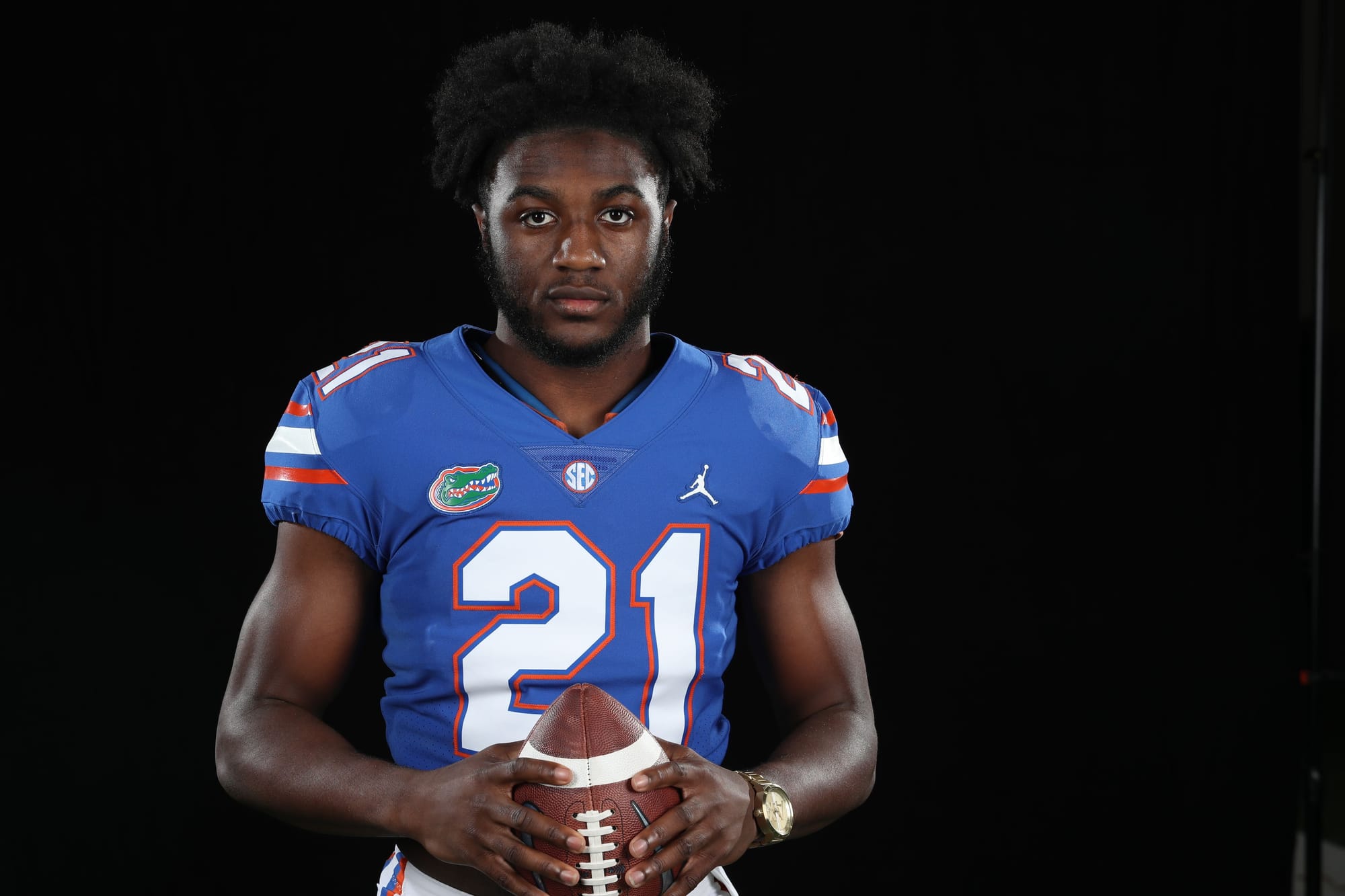
He played at Benjamin Franklin K-8 Center before moving on to Miami Carol City High School. There, Russell grew into a 5-foot-10, 180-pound defensive back and a four-star recruit. In his sophomore year, he got his first collegiate offer – from Miami (Ohio) – while at the movie theater with his mom. That was the moment he realized he could play in college.
After originally committing to Miami, Russell, then a junior, received an offer from Florida. He took other recruiting visits, but no other school felt the way UF did. The academics were an additional bonus.
Russell told his mother that he wanted to enroll early at Florida and get a head start on his college career. Together, they made sure that he would have the credits to graduate early, and Russell made it official on signing day.
“I remember crying that day,” Carnegie said. “Like, I boo-boo cried that day. I don't know if it was just my emotions that he's actually going away to college, but it was a very emotional day.”
Russell said goodbye to his friends, teammates and coaches, packed up his belongings and began the drive to Gainesville with his parents. During the trip, he tried to come to terms with his new reality, but he couldn’t shake a strange feeling. He kept thinking about his last high school game – a one-touchdown loss to Miami Northwestern that kept Carol City from the state semifinal.
That feeling lingered.
“For whatever reason, I don't know if this was God saying, ‘Hey, you probably need to appreciate this moment, because it's probably going to be [the] last,’” Russell said.
He arrived on campus on a Sunday in early January 2018. As reality set in, he completed academic onboarding, met with his advisors and became familiar with the training facilities.
That Thursday, everything changed.
Silvestri knew the news would need to be delivered with care. So he reached out to Russell’s mother, who was at work when she learned her son wouldn’t be able to play. Carnegie left work early and took a Greyhound bus to Gainesville. While she traveled, Russell tried FaceTiming her multiple times. He remembers seeing a strange background, what he thought looked like a train car, that she was trying to hide.
He wasn’t sure where she was going and wondered if something was wrong. "It was kind of just creating some arrows in my head," Russell said. "But obviously not thinking anything related to a diagnosis."
When Carnegie arrived, Silvestri met her at the bus stop and brought her to a hotel. The next morning, they delivered the news to her son with Florida head coach Dan Mullen.
Russell had no inclination that anything was wrong when he received the call from Mullen to come to his office.
“I was just excited that my coach even knew my name at this point,” he said. “I'm not thinking this is going to be the worst news of my life.”
Russell walked into the office and saw his mother, tears already in her eyes. The moment he saw her face, he knew something was wrong.With Carnegie and Mullen beside him, Silvestri and team physician Dr. Jay Clugsten delivered the news. His heart would not be able to withstand playing football. His collegiate career was over before it ever started.
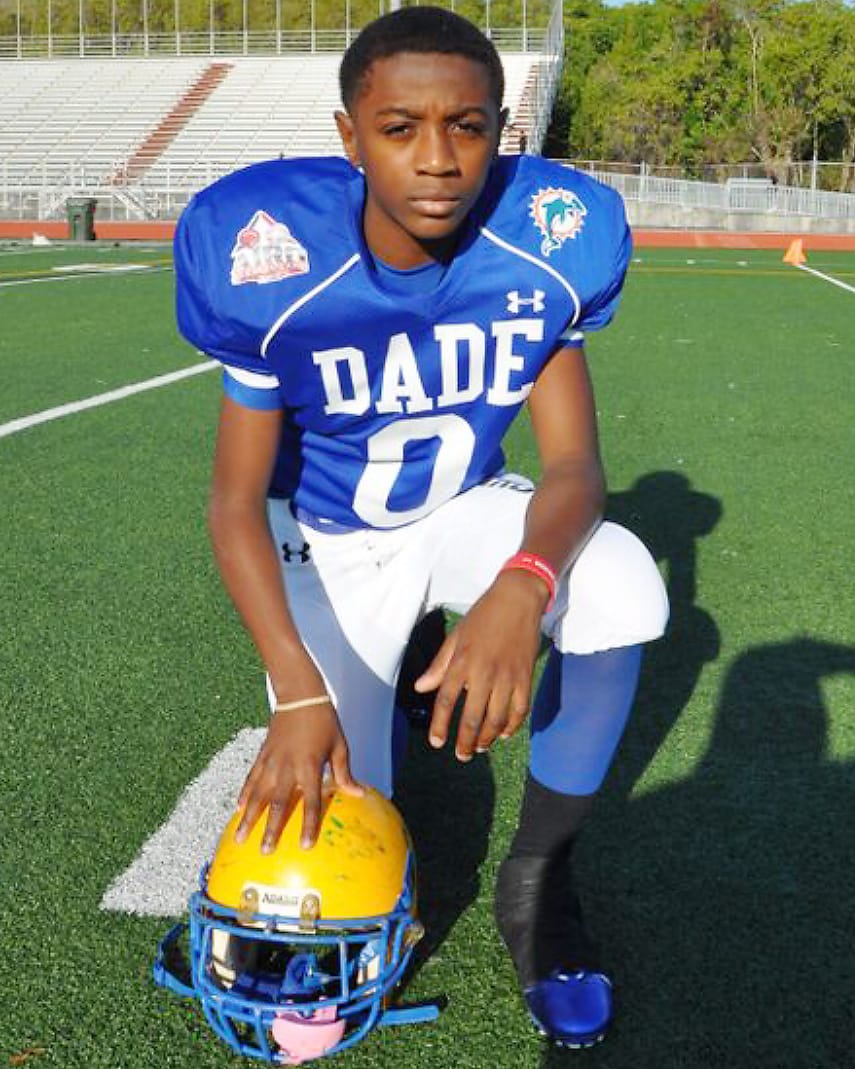
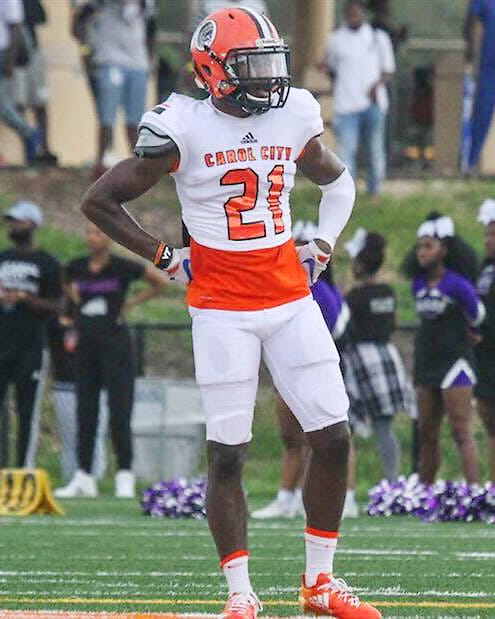
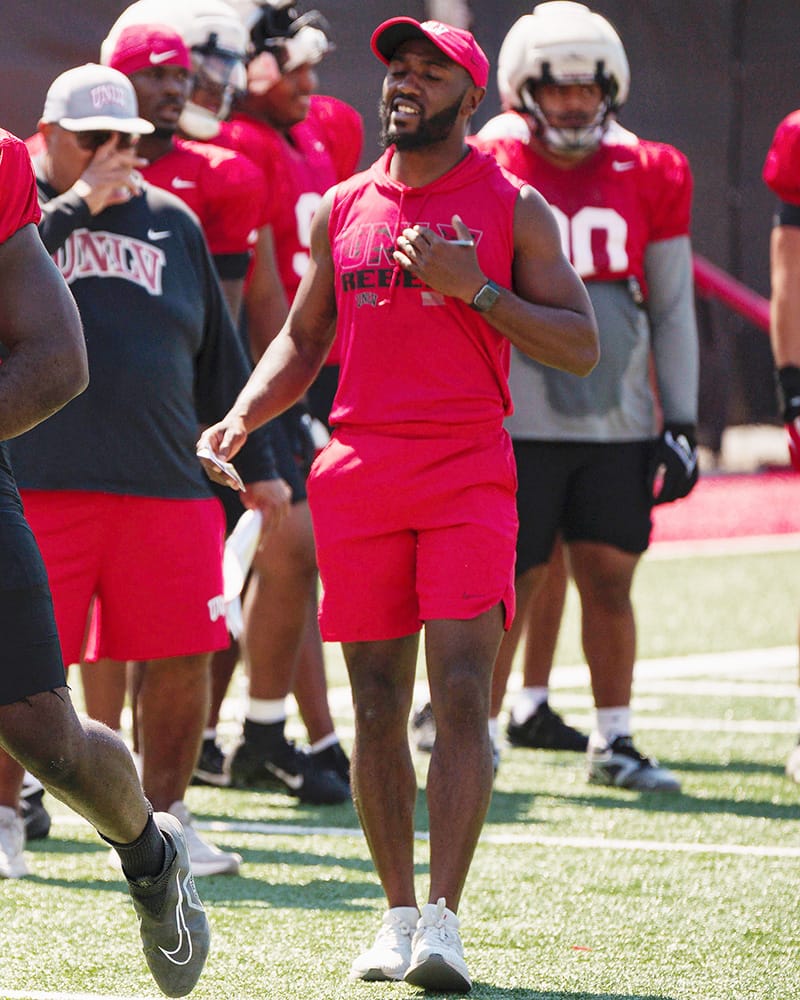
Through multiple iterations, football has never left Randy Russell's life. | Courtesy of Randy Russell
“I watched my dreams shatter right in front of my eyes,” Russell said.
Days into what he thought was his new future, Russell suddenly had to find another one – facing the fear, anxiety and denial that came with it.
He was desperate to work around the diagnosis. Though it prohibited him from playing football at UF, Russell wasn’t entirely out of options. He could have transferred and undergone another school's medical evaluation, chasing the slim chance of a different outcome. But with a case as severe as Russell’s, that path felt more like denial than possibility. Carnegie remained firm in prioritizing her son’s health and well-being above all else.
Russell, though, wasn’t ready to say goodbye. “I was going out, I was drinking, to kind of not think about the fact that I can't play the one thing I was good at,” Russell said. “... The one thing I played my whole life.” The distractions made it easy for Russell to bottle up the confusing emotions that followed him, but no one understood his struggle better than his mother.
“He’s always been an independent child of mine,” Carnegie said. “I didn't want to keep badgering him with questions and different things. And then when he's ready, then he'll call and it's like an open floodgate. And then he'll catch me up on everything.
"But I just try to respect his space.”
Three years after his diagnosis, in early 2021, he finally underwent the procedure to install the implantable cardioverter‑defibrillator (ICD) doctors had recommended. When the day finally arrived, Russell could no longer outrun the truth. The procedure marked a turning point – acceptance and an effort to find a new dream.
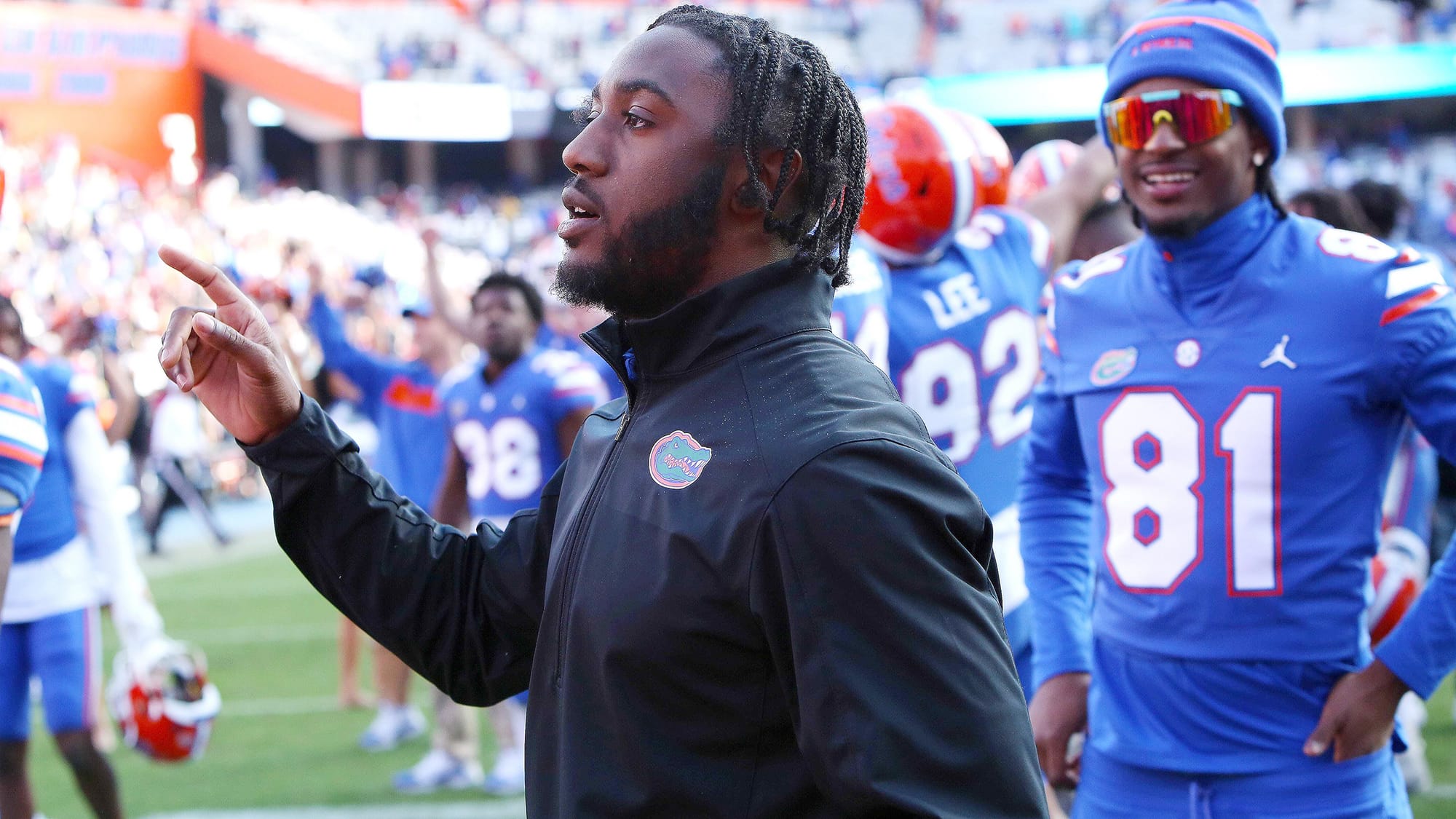
Even sidelined, Russell remained part of Gator football for the rest of his time at UF. Russell attended practices, games and team-building events. “Once you've committed to the program, you're part of the family,” said Mullen, who coached the Gators from 2018-21. “Even though he couldn't play anymore, he was still a critical part of our football family. And so he grew, and it was just a journey leading in a lot of different directions, figuring out where he wanted to go in life.”
That meant he joined the Zoom meetings Mullen organized to keep the team engaged through the offseason. One of these Zooms featured UF alum and Philadelphia Eagles general manager Howie Roseman. When Roseman talked about his journey from an internship to the general manager position, it sparked something in Russell.
With Mullen's help, Russell connected with Roseman, which eventually led to an internship with the Eagles in July 2022, following his graduation. The role was rotational, exposing him to multiple facets of the professional football industry from recruiting and scouting to front-office operations. He lived in Philadelphia and worked for the Eagles until the internship ended in January 2023, then returned to Miami.
“That was kind of my first taste or whiff of life outside of football – having a career, or a goal set on something that wasn't me physically playing,” Russell said. “That was a really good learning experience.”
The time at home following the internship was anything but easy. Without the distraction of school, work or his teammates, it was hard for Russell to ignore that his reality was different from the life he once imagined. Many of his friends were in the NFL — and he couldn’t help but feel he could’ve been there too if not for his diagnosis. And while everyone he knew in football was achieving their dreams, Russell was trying to figure out who he was supposed to be.
With football still being his true passion, he turned to coaching.
In July 2023, he joined Miami Country Day School, working with both the middle and high school teams as a defensive backs coach and co-defensive coordinator. He spent nearly two years there, until his phone rang on Dec. 27, 2024. He’d stayed in contact with Mullen, and when the former Gators coach was hired at UNLV, Mullen called.
“I got a job for you in our recruiting department,” Mullen told him. “Pack up everything, and I'll see you in 48 to 72 hours.”
Russell was immediately in Las Vegas.
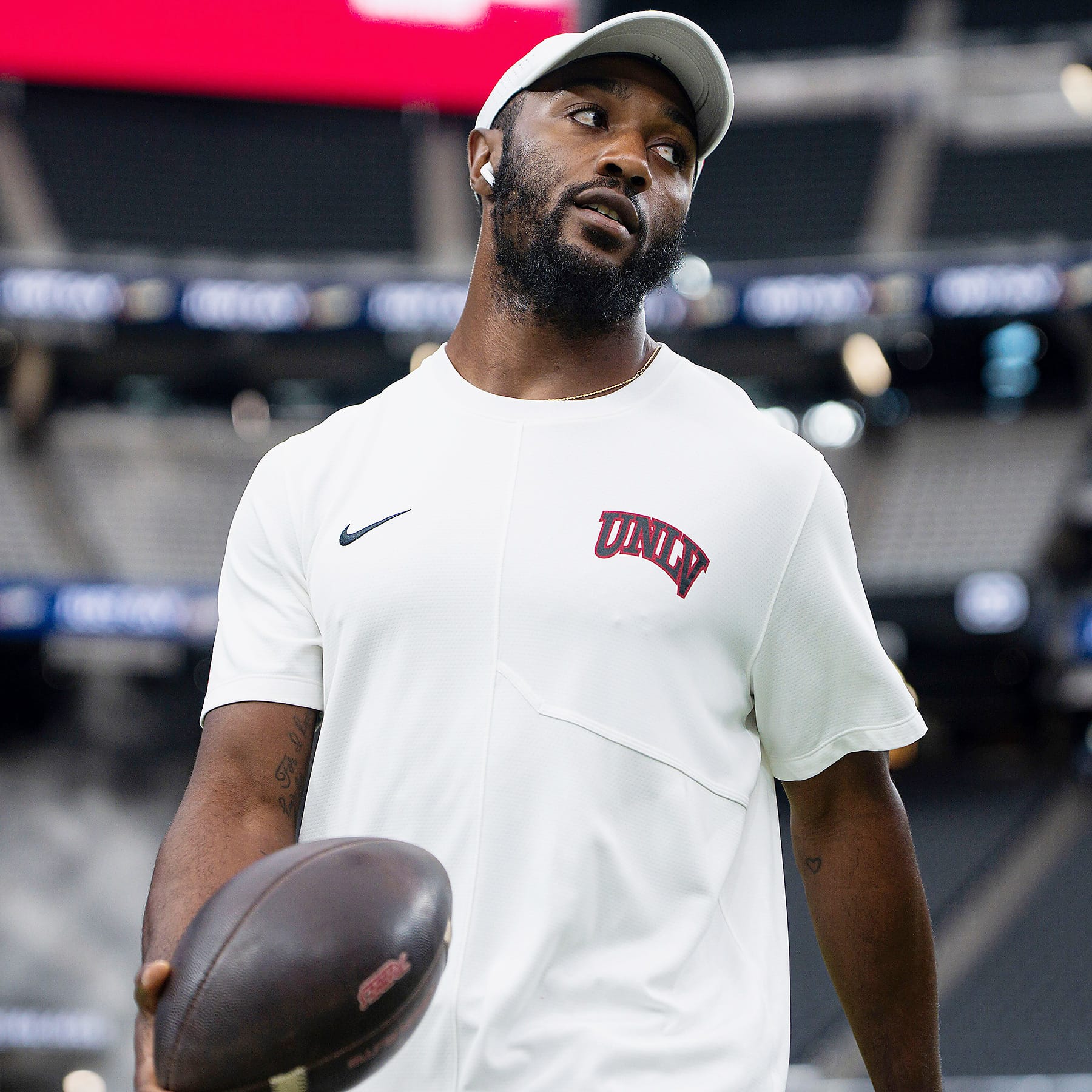
“He had to drop his life, come blindly, to show up and go to work across the country,” Mullen said. “I think that commitment, that understanding just says a lot to me for his path and his future.”
For Russell, it was never a question.
He had already lost one dream and wouldn’t let this opportunity slip away. Through his close connection with Mullen, Russell found a true second chance at football, this time with a clipboard and pen in his hand. “I have a lot of love, honor and respect for Dan, because he didn't have to [do that],” Carnegie said. “He didn't owe Randy anything.”
At UNLV, Russell has added defensive analyst to his title. He’s growing into a coach who sees the game beyond the field, building deeper connections with players and making a difference he never expected.
“He really knows the game well and has a passion for it,” said Jake Pope, a senior safety at UNLV. “He treats the players right, he can relate to them and he's going to take steps forward in the coaching world because he's already making a huge impact on people.”
Russell’s love for the game has become an essential part of his coaching journey. Because the opportunity to play football was taken away from him, he approaches the game with a deeper appreciation and respect. He still has goals. When he looks ahead to the next five to 10 years, he wants to have his own room, position group and maybe even his own defensive unit. His ultimate goal? To be one of the best coaches in the game.
Looking back, Russell said the loss of playing football felt like a death — as if part of him had been taken forever. For a long time, that weighed heavily on Russell. It took time and healing for him to understand that it may have been a blessing.
What once felt like it was the end has become the foundation of a new life, a new career and a new perspective.
“If he was actually playing football or possibly made it to the NFL, I don't believe that he would have met the people that has,” Carnegie said. “It may sound crazy, but I appreciate the whole incident, because it has made him into the man that he is today.”