The Fabric of the World Cup
On soccer's biggest stage, each nation's jersey is far more than just a shirt. They're reflections of countries, colors, cultures and histories. The process of crafting that identity -- a unique, memorable look the whole world will see -- is one of the biggest responsibilities in the sport.
When Drake Ramberg sits in his office chair in Oregon, he’s immersed in sports and fashion history.
He has hundreds – maybe thousands – of soccer jerseys in his office. Some he bought as a fan, some were gifted. The others he designed, including Borussia Dortmund’s 1994-95 home jersey, which it wore when it won its first Bundesliga title since the league’s creation in 1963. The jersey was baggy and bright yellow with black eagle-wing patterns on the sleeves, inspired by the German city’s flag.
“It became such a bold, iconic expression of Dortmund,” Ramberg said.
He's designed hundreds of jerseys during his career, which started shortly after he graduated from Portland State University with a bachelor’s in fine and studio arts in 1985. Ramberg first got a job nearby at Nike as a freelancer. The next year, he was hired at Nike full time. Little did Ramberg know he would spend nearly 37 years at the company and help completely revolutionize design and fashion in soccer.
“When I was starting in the early '90s, Nike was just a small player in the world of soccer,” Ramberg said. “There was just more skepticism like, ‘What do these American guys know about football? They call it soccer.’
"We had to show them."
The 2026 FIFA men's World Cup, which begins Thursday, will be a runway for jersey designers, and the players are the models.
It’s the world’s biggest soccer stage, and this year, it’s bigger than before. This will be the first year the tournament will feature 48 teams, an expansion from the previous 32-team format, which started in 1998. Teams will play a record 104 matches across host nations Canada, the United States and Mexico. The United States will host 74 of the 104 matches, including the final on July 19.
It’s the first time the United States is hosting the World Cup since the women’s World Cup in 1998 and the men’s World Cup in 1994. And it’s an opportunity for the U.S. to prove itself against international powerhouses, something that Ramberg had to do when he joined Nike in the '90s.
A lot has changed since then. The world of soccer apparel, fashion and jerseys is a much different place now. Jerseys are no longer baggy, thick polyester shirts. They’re breathable, sleek and fitted.
Nike is also no longer just a small player in apparel and fashion. At the 1994 World Cup, not a single team wore a Nike jersey. At the 2022 World Cup, Nike supplied jerseys for 13 teams. This year, only Adidas (14) will sponsor more teams than Nike (12). In all, the 48 nations are represented by 13 different manufacturers, each meticulously tailoring their uniforms to the wearer.
“Our process kind of showed that we were going to be true to them,” Ramberg said. “We're going to be authentic, and we're going to shake things up and not be afraid to take their identity, their brand, their kit, the jersey to someplace new.”
And, because of those on the frontline like Ramberg, the role of fashion in soccer is growing now more than ever.

For Adidas, creating the kits that its teams will wear at this year’s World Cup started three years before the event.
The design process is split into two parts, according to Sergio Afonso Mareco Jr., the senior designer of football apparel at Adidas. First is the jersey’s base style, a silhouette that'll eventually become the canvas to display the patches, colors and designs of each team. Although a lot of eyes are on the designs of each nation’s jersey, the creation of the base style is equally as detail-oriented and rigorous. The base style must undergo quality testing before it’s approved for design.
“We start really early because we need to test everything that we do,” Mareco said. “If you imagine a jersey, I think the main component is the fabric. The supplier of the fabric tests if it's breathable [and] if it dries quick. … Then, after that, we run the sample, and a player tests if it's comfortable.”
The base style goes through other testing, too. For example, companies have to make sure patches stay on the jerseys, numbers don’t peel and fabric doesn’t rip when pulled.
“They have to go through anything that you can think of, like making sure the product is machine washable, these kinds of things,” said Tom Symons, Adidas' design director of football.
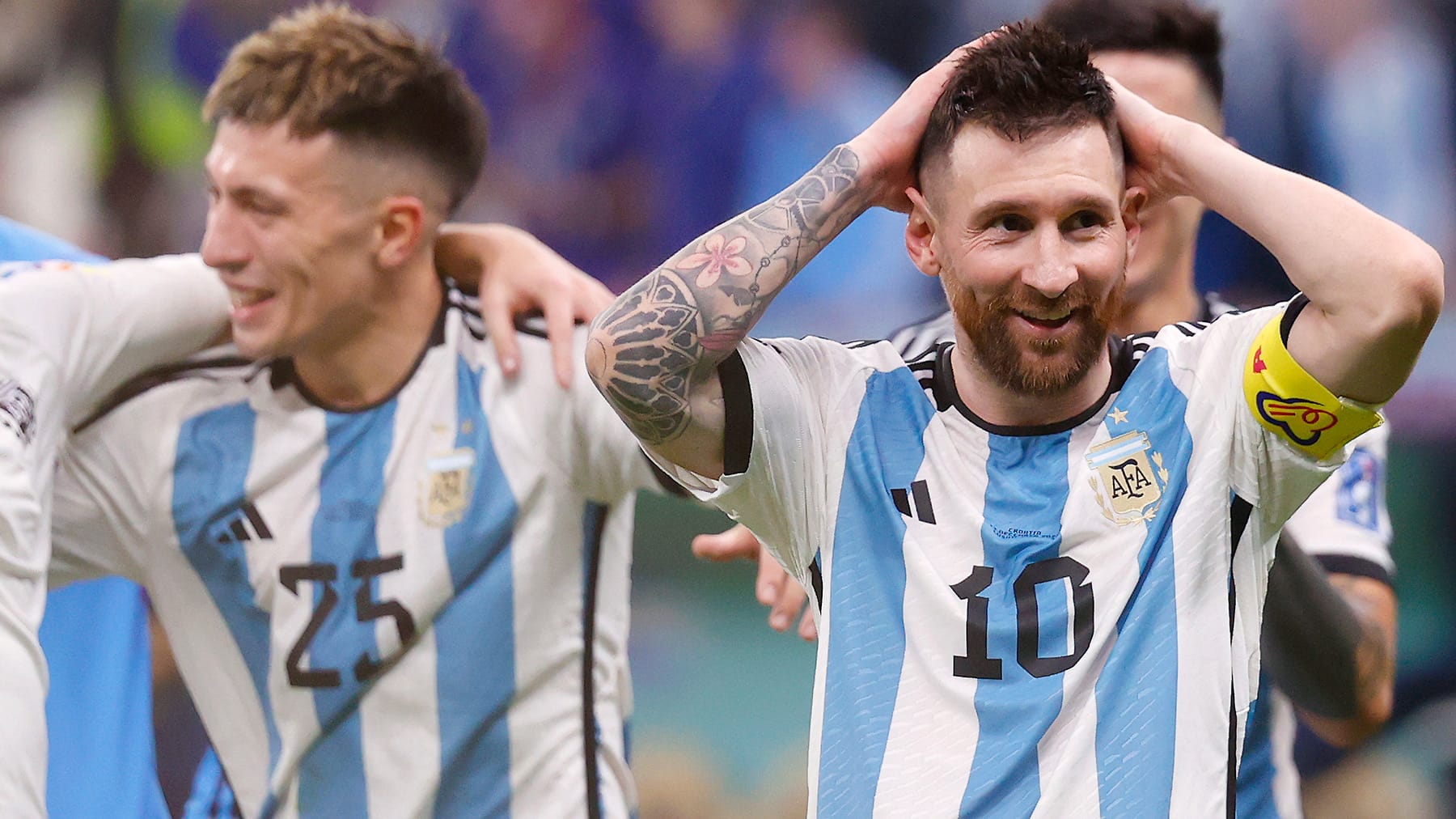
Once the base style is approved, the designers can begin their work. Each jersey starts with a briefing from the team or country, outlining certain requirements. The designers create designs for the jersey. Then, the approval process starts. It’s a long, back-and-forth, multilayered checkpoint.
“If the federation said ‘I want a striped jersey,’ you do a striped jersey,” Mareco said. “You can, of course, try to make it in a different way. ... But in the end, it needs to be striped.”
The federation or team must approve the shirt sketches and samples to determine if they fit the design criteria and expectations outlined in the briefing, but even that's not as simple as it sounds. Just because a sketch was approved earlier in the process doesn’t mean that the new, 3D version will be approved, as well. Even if both of those sketches are cleared, the federation might not approve of the sample jersey, and it’s sent back to the company to edit even further. And so on.
“It's just a lot of rounds of continuing to update," Ramberg said, "to refine it, to work with the factory and just make sure that you're really dialing in the final design."
But that's because creating a team’s jersey – even more so, a country's – is a huge responsibility. They're reflections of cities or countries, their cultures and their histories. Although designers have briefings on the jersey designs, they still do their own research into each team’s culture and find ways to incorporate that background into the jersey designs.
“The foundation is understanding who that team is, their city, their region, their culture, the fans, the players, their legacy, the trophies,” Ramberg said. “If you do your research and you're presenting back to them basically who they are, their identity, they can't help but like it because you're honoring them and you're being authentic.”

Alexi Lalas, a former United States national team player, said a great World Cup jersey has to have a connection to its country, whether it’s overt or subtle.
Lalas is best known for being part of the 1994 World Cup squad, which was hosted in the United States. His signature long, red hair and beard, paired with a memorable denim-patterned Adidas jersey, caught eyes and reserved a significant standing in U.S. soccer culture.
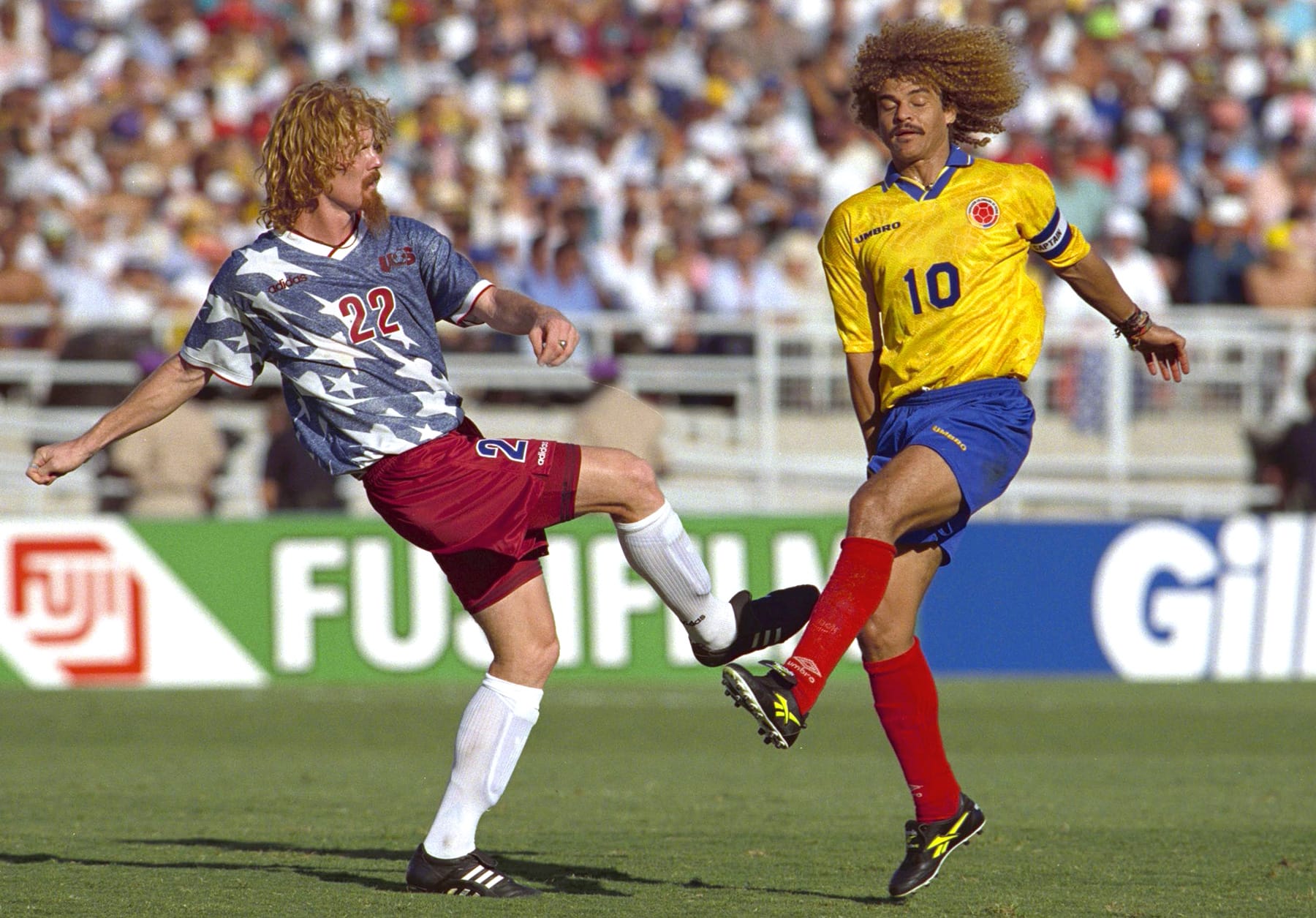
“It could be something that involves soccer or something that doesn’t involve soccer,” Lalas said. “But there has to be, ultimately, a personal and human connection with the aesthetic that you see."
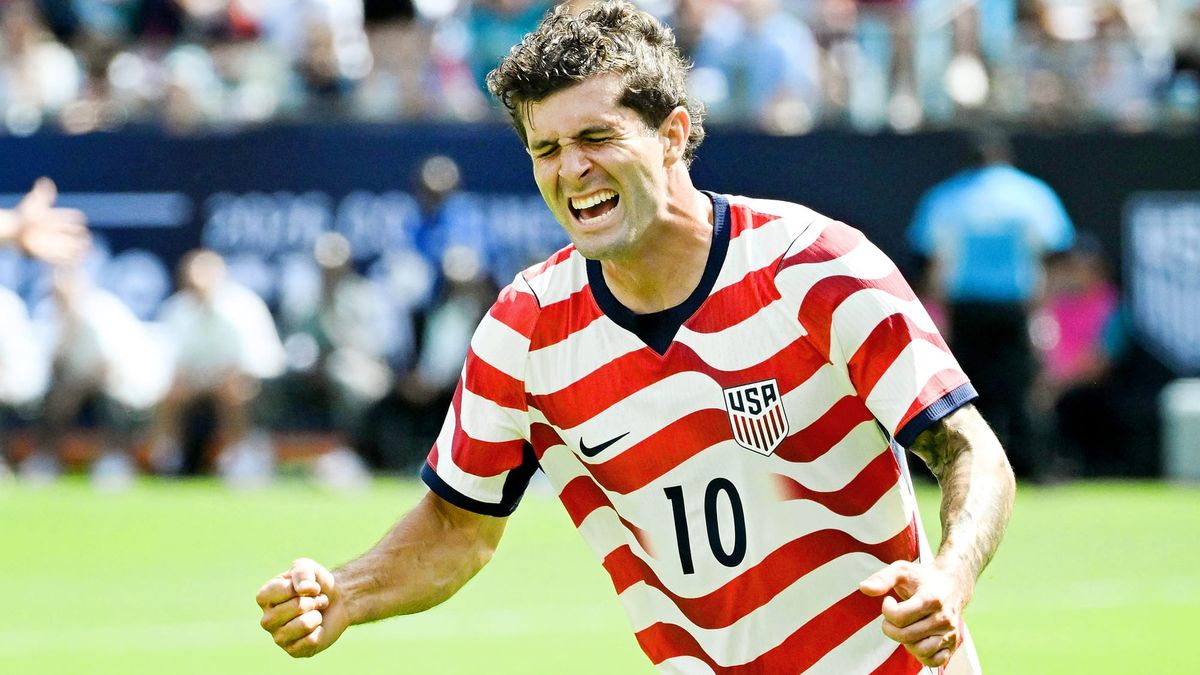
This year, the United States’ Nike-produced home jersey features wavy, horizontal red and white stripes. It mixes the curved lines of the team’s 1994 home jersey with the horizontal lines of the 2012 “Where’s Waldo” kit.
* MORE FROM GRANDSTAND: Five of the Most Memorable U.S. Soccer Jerseys *
Hundreds of millions of people will watch the World Cup and see the jerseys for each team, including the host's. According to FIFA’s Global Engagement and Audience Report, the average global live audience of the 2022 FIFA World Cup in Qatar was 175 million.
However, despite the thrill and size of a World Cup, Mareco and Symons said that they don’t feel greater pressure to design for a World Cup because they design by season. To them, World Cup jerseys aren’t necessarily more important than seasonal club jerseys or those for international friendlies.
Instead, there’s just more work because of the size of the event. More staff, more products to design, higher production numbers – but no more pressure or more responsibility.
“You have to not get too caught up in the big moments because football is always, always on,” Symons said.

Last November, Adidas released 22 home jerseys for Adidas-licensed national teams that qualified, or could, at that time, still qualify for the World Cup. Although some of the jerseys Adidas designed, such as those for Chile and Venezuela, won't be worn during the World Cup, it still had to design the jerseys in case the teams actually qualified.
Even then, Adidas will produce jerseys for 14 of the 48 countries in this summer's World Cup, including iconic kits worn by Argentina, Colombia, Germany, Japan, Mexico and Spain.
Colombia has never won a World Cup, but it’s looking like a serious contender this year. Though often overshadowed by traditional South American soccer powers like Brazil, Argentina and Uruguay, a two-year, 28-match unbeaten streak and players such as Luis Díaz, Daniel Muñoz and James Rodríguez are upping the country’s hopes.
Colombia will hope to make a statement at the World Cup, just like its jersey will.
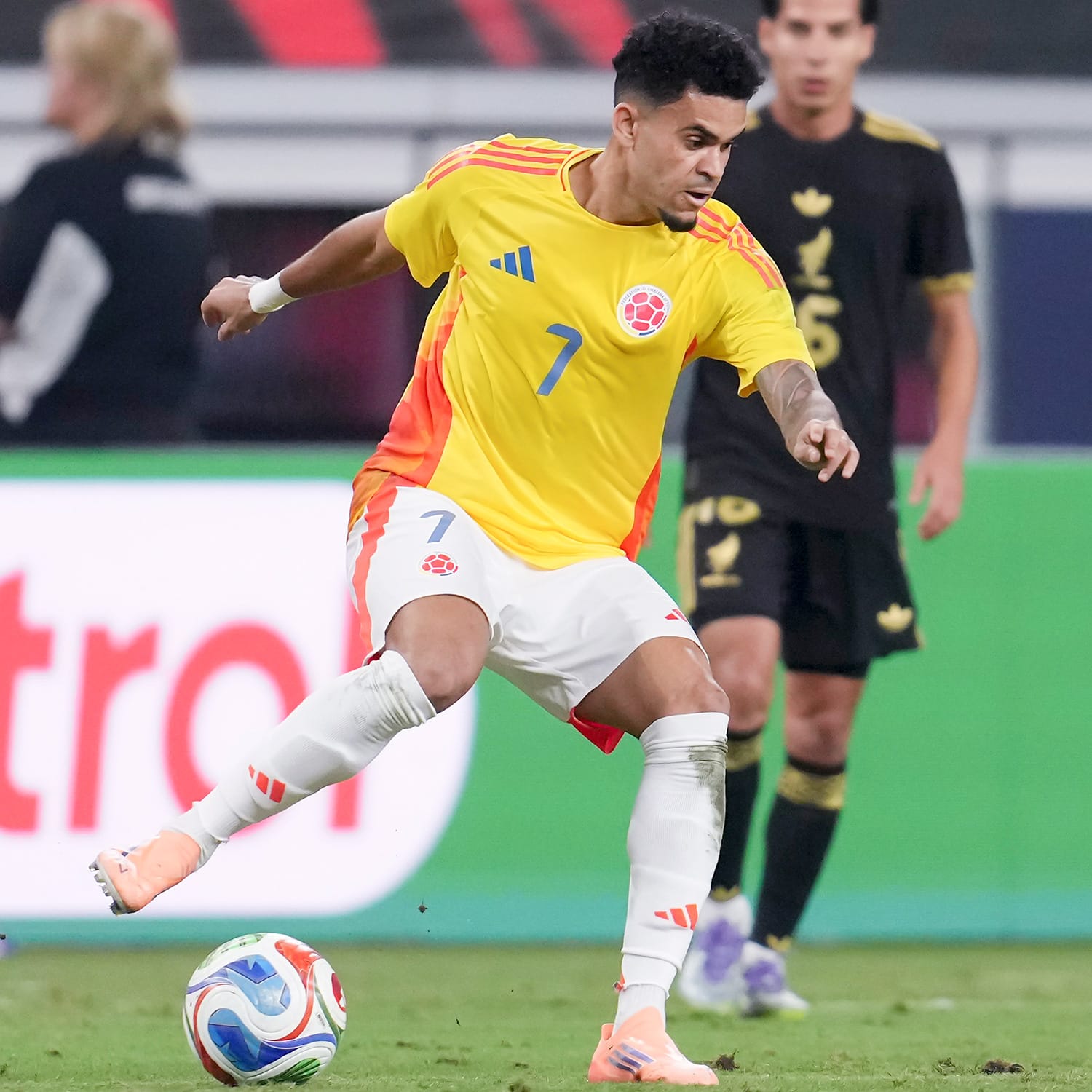
At first glance, the Colombia home jersey doesn’t look that different from its predecessors. The shirt is the country’s iconic yellow color with red Adidas stripes on the shoulders and blue linings on the collar and sleeves.
However, upon closer inspection, a faint, golden-yellow design paints the jersey with intricate patterns: butterflies. The jersey took inspiration from the yellow butterflies in Gabriel García Márquez’s “One Hundred Years of Solitude,” a magical-realist novel, and a staple of Latin American literature. The novel pits themes like love, family and identity against Latin America’s history of colonization and civil war.
Similarly, Adidas’ World Cup jersey for Saudi Arabia includes cultural inspirations in its accents. The angular, geometric patterns were inspired by Saudi Arabian doorway architecture, with light purple colors incorporated, referencing the country’s vast, northern lavender fields.
“That's the sort of stuff that gets us excited,” Symons said. “We like to deep dive into these stories.”

These days, Ramberg no longer works for Nike. He left the company in January 2024, looking for a change.
“It's not the same place as it was when I started,” Ramberg said. “Things change. ... I'd done everything I wanted to do there.”
But he still designs jerseys, working as a design consultant. In December, Ramberg designed Venezia FC’s fourth jersey, a red jersey with lion graphics leaning into the history and mythology of Venezia, Italy.
“It's fun to see how people have been inspired by football,” Ramberg said. “Now you see musical artists and NFL players, NBA players, you see all these different people from all walks of life that are wearing [soccer] shirts… It's become fashionable, it's become part of streetwear. And I don't know when it's going to end. All things are cyclical, but it's great to just see there's a love and interest in it.”