Racing's Virtual Revolution
Sim racing -- short for “simulated racing” -- has exploded in popularity in the past decade. But this is far more than just a video game; it has become a legitimate proving ground for aspiring race-car drivers.
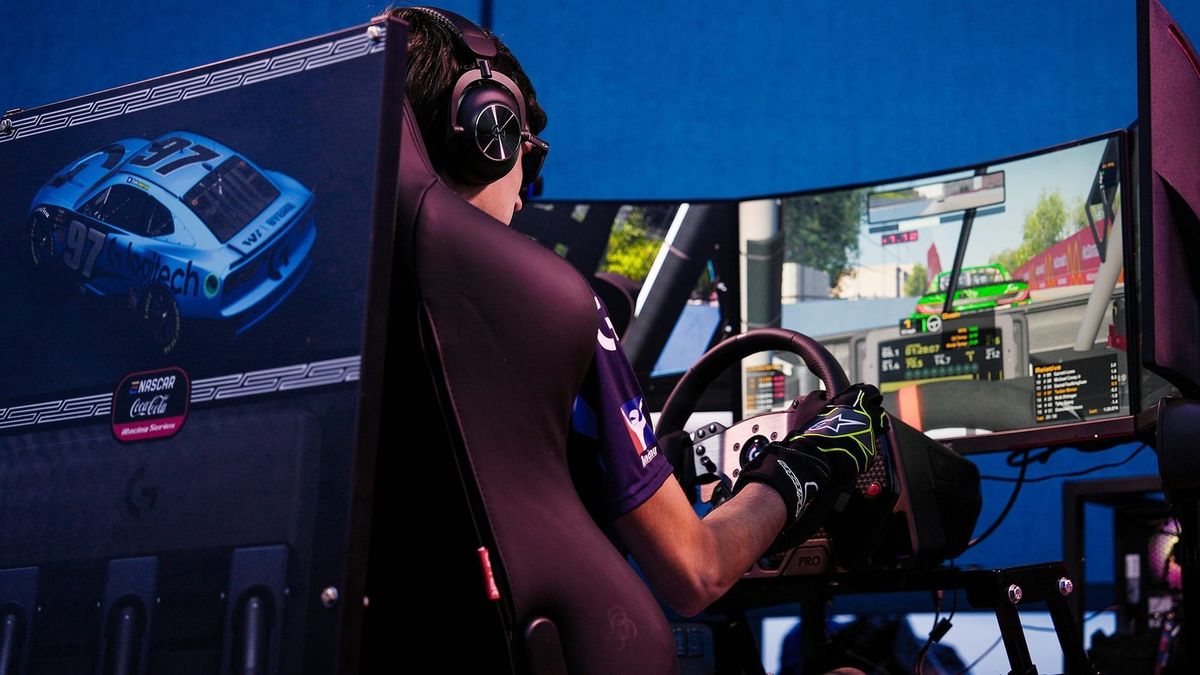
The sound of 40 V8 engines roars as they race around Charlotte Motor Speedway. At the front of the pack, Tucker Minter leans into the final turn, his whole body following the motion of his steering wheel. After nearly two hours, 240 miles and 160 laps, Minter pumps his fist in the air as he takes the checkered flag.
Minter just won a NASCAR race from home.
At 24, he is one of the top drivers in the eNASCAR Coca-Cola iRacing Series, a professional online league backed by the sport's governing body. What looks like a video game to outsiders is a serious digital doorway into motorsport for Minter and thousands of competitors worldwide.
Sim racing, short for simulated racing, has exploded in popularity in the past decade. One of its leading platforms, iRacing, is used by major series like NASCAR, IMSA and IndyCar. Its laser-scanned tracks, officially licensed cars and skill-based matchmaking create a level of practicality that makes it more than a game. With more than 300,000 users, it has become a proving ground for aspiring racers and a gathering place for racing fans without access to traditional tracks or expensive equipment.
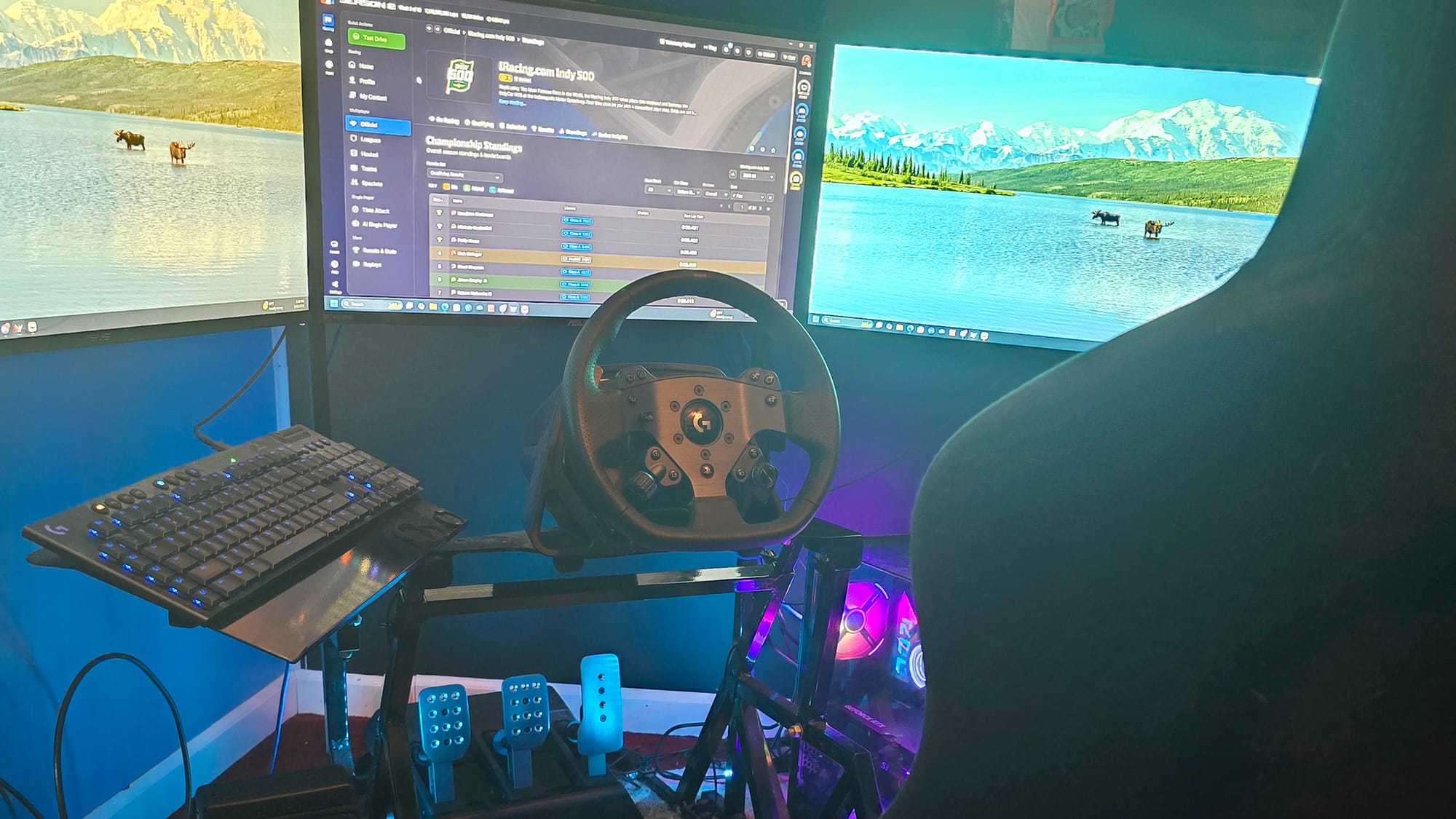
Drivers use steering wheels, pedals and immersive screen setups in their houses – known as sim rigs – to compete online. Some, like Minter, treat it as a profession. Other hobbyists across the country and on college campuses like the University of Florida race simply for the community and the thrill of competition.

For Minter, that passion started early. He had no race tracks near his hometown in Warrenton, Virginia. But at 11, he found racing in an unexpected place: YouTube.
“I saw some videos of Dale [Earnhardt] Jr. talking about iRacing,” Minter said. “I was like, ‘Man, this is awesome! If Dale Jr. says this is cool, it must be cool.’"
He waited until he turned 13, the minimum age required to join iRacing, before creating an account and competing in his first race. What started as curiosity quickly became a focused pursuit. “I took it serious to the extent that I always wanted to get better,” he said.
Minter practiced for hours, completed internships with Richmond Raceway and NASCAR and eventually transferred from Elon University to the University of North Carolina at Charlotte to be closer to racing’s heartland.
By 2023, Minter’s dedication had paid off. He earned a spot in the eNASCAR Coca-Cola iRacing Series, one of the longest-running eSports series, completing its 16th season this year. Forty of the world’s best sim racers compete across an 18-race schedule, chasing a prize pool of more than $500,000, with the overall season champion taking home $100,000.
Since joining the series, Minter has won seven races, including three this season, and he finished sixth in the 2025 driver standings.
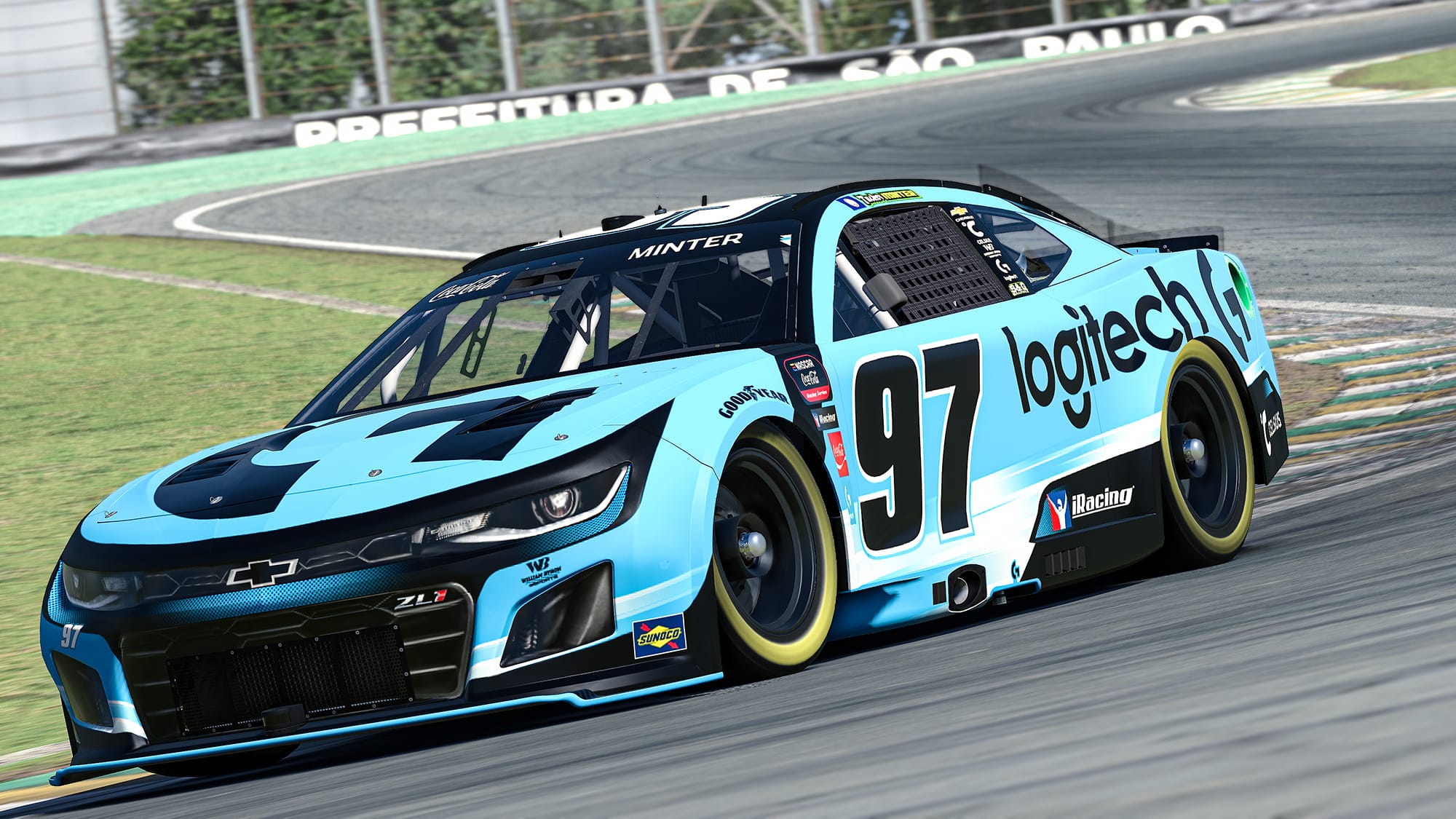
To win, drivers in the series prepare like professionals, analyzing telemetry (real-time data from the car), fine-tuning their setups and racing under the banners of real racing teams.
“With how close the Coca-Cola Series is, you’re just searching for that last 100th of a second,” he said. “At the top, it’s just the thinnest margins.”
Minter logs 10 to 15 hours a week in the simulator, breaking down every lap with his teammate using software like Virtual Racing School (VRS). The platform examines braking points, racing lines and car behavior, helping him identify areas to improve and refine his racing technique. His commitment also opened the door to his current team, William Byron eSports.
Byron, already a two-time Daytona 500 champion at age 28, started sim racing in his early teens. By the time he transitioned to real-world racing in 2012, he’d racked up more than 300 wins in iRacing. That virtual experience fast-tracked him through the ranks.
In 2017, he won the NASCAR Xfinity Series title. One year later, he was racing full-time in the Cup Series. Now, the Charlotte native is a 16-time NASCAR Cup Series winner, including winning back-to-back Daytona 500s in 2024 and '25 and making Championship 4 appearances in each of the past three seasons.
“I was really excited to be able to represent William,” Minter said. “He's the best example of what sim racing can really do.”
No simulator can fully capture the feeling of G-forces or the smell of burning rubber. But in terms of racecraft (a driver's overall skill), pressure and precision, iRacing comes close.
“You can tell who came up through iRacing,” Minter said. “They know where to position their car. They anticipate moves. They’re just sharp. You develop that kind of instinct from thousands of virtual laps.”
But the real power of sim racing is access.
Money paved the road to motorsport success for decades. Drivers start young, climb the karting ladder and hope for sponsorship, making it a dream that few can afford.
Just the base frame, or chassis, of a new kart can cost more than $3,000, not including accessories, the engine or other components needed to race. Competing in a single season of professional karting can easily top $10,000.
Sim racing isn’t free, either. Drivers still need to buy a subscription, track licenses and equipment. A basic sim rig, Minter said, can run around $500. That’s far from cheap, yet only a fraction of what most families spend each year.
From Minter's perspective, sim racing simply levels the playing field.
“If you put in the time to practice and you’re talented enough, you can make your way to the top just by winning,” Minter said. “It’s not like you gotta know the right person or be in the right place at the right time.”

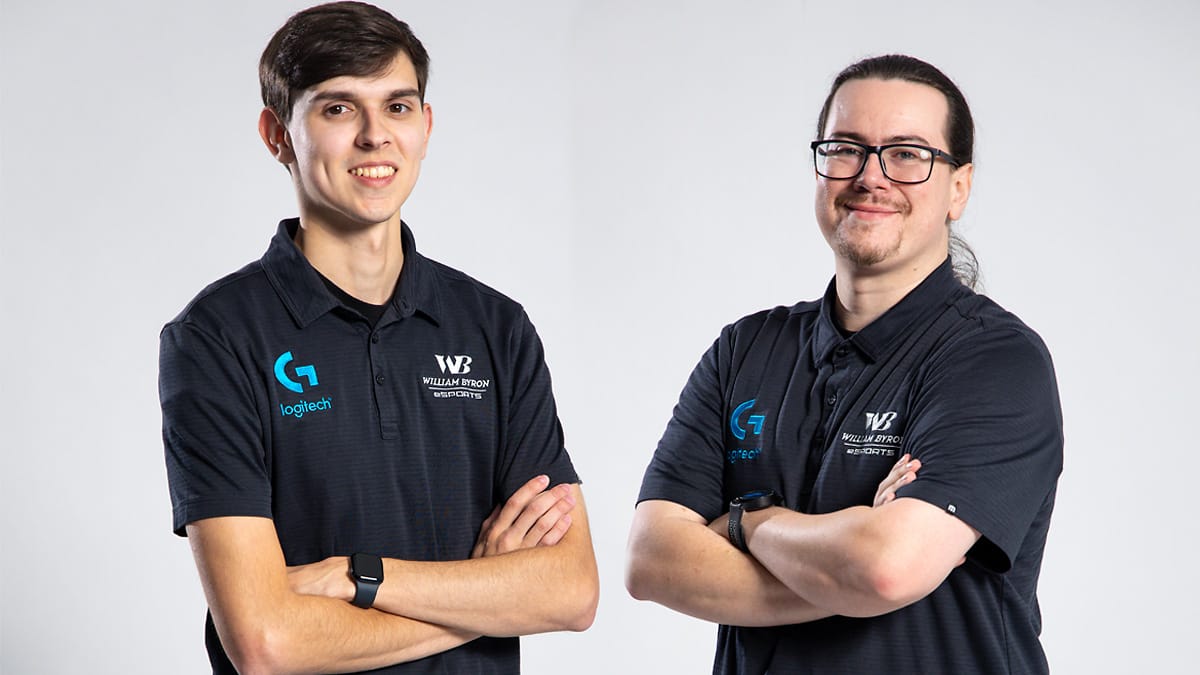
While Minter represents the next wave of sim racers breaking into the top tier, his teammate Nick Ottinger brings more than 10 years of experience in the eNASCAR Coca-Cola iRacing Series.
The 31-year-old set the single-season wins record in 2013 with six, a mark that stood for more than 10 years before it was surpassed this season. In 2019, he won the first live sim race broadcast on U.S. television. After nine seasons in the series, he secured his first eNASCAR championship in 2020, his debut year with William Byron eSports.
Ottinger didn’t grow up chasing virtual checkered flags. As a kid, he poured his energy into traditional sports until everything changed at 13, when he underwent open-heart surgery.
The long recovery sidelined him. With months at home and no way to compete physically, he turned to gaming. His dad had raced at Hialeah Speedway in Florida, and the two often watched races together during that time. Those afternoons led him to try a NASCAR game and sparked the interest that set him on his path.
“That just basically filled every type of void that I had in other sports,” Ottinger said.
Since 2023, he has worked as a simulation driver for Legacy Motor Club, providing virtual testing and data analysis for the NASCAR Cup Series team. The role underlines a different opportunity for sim racers that doesn’t include competing on track.
Ottinger doesn’t expect sim racing to become a mainstream path into real cars anytime soon. The obstacle, he said, isn't talent but resources. Teams still expect drivers to show up with funding, sponsors or some kind of backing, which is often the reason many racers turn to iRacing in the first place.
“They do iRacing because they don’t have those resources,” Ottinger said. “I don’t envision it changing much than what it is right now because of how much resources you need to bring with you.”
He sees occasional exceptions, moments when a sim racer like Byron earns a chance. In his view, the sport needs more intentional pathways from the virtual world, including at-track test days where teams can evaluate if talent on the sim translates in person.

Sim racing isn’t solely about trying to become a professional, however. For younger racing fans like Jack Dobias, it’s simply a way to connect more deeply with the sport. The 20-year-old aerospace engineering sophomore at the University of Florida first found his passion for racing behind the wheel of his own car.
“What really got me into racing in general was the fact that my dad decided my first car was going to be a manual,” Dobias said. “Learning that kind of exposed me to it. Just working on that car developed the passion.”
Dobias focused on real driving at first and followed Formula 1 as a Ferrari fan. But like many enthusiasts, he was soon drawn into the virtual world. He started with Forza Horizon on Xbox, a game known for its open-world driving rather than realism, before moving to Forza Motorsport, where he developed a fascination with competitive online racing.
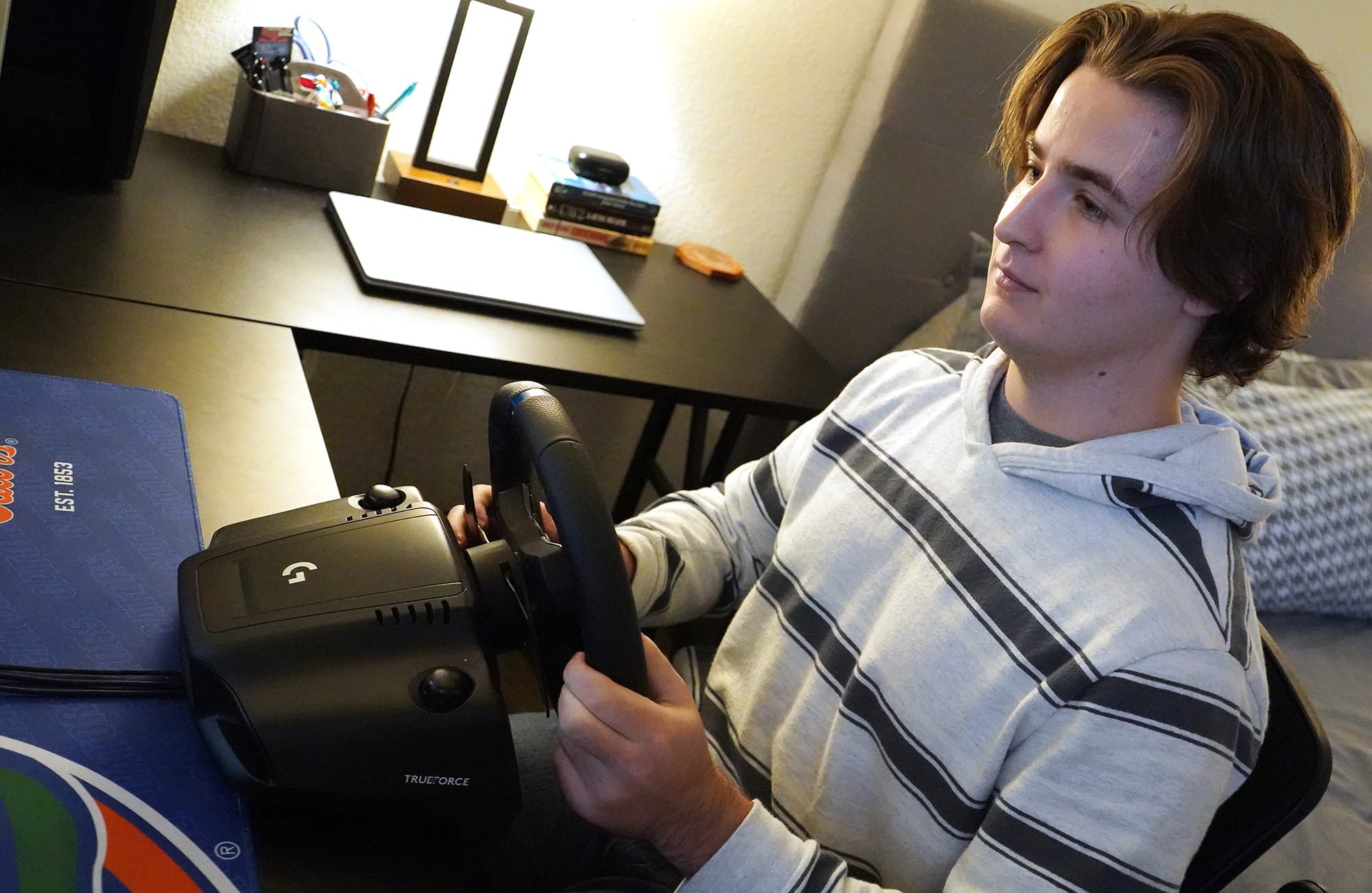
His turning point came at a Redline352 meet, a UF club for automotive enthusiasts, when someone brought a full sim rig in the bed of their pickup truck.
“I thought, ‘Oh my god, that was really cool. I need this now,'” Dobias said. Soon after, he bought a wheel and started exploring sim racing more.
He has taken his real car to the track a few times and said the transition from screen to seat isn’t as dramatic as some might think.
“It definitely has limitations, but it’s pretty comparable,” he said. “I think it teaches you a lot of the basic principles you’re gonna need if you want to transition into doing real-life stuff.”
Part of the appeal for Dobias is that sim racing also gives him access to cars he’d never be able to drive in real life.
That sense of possibility resonates with other young online racers, including David Nunez, a senior information systems major at UF. He got his start in sim racing when his cousin upgraded his setup and passed down his old rig.
“I don’t have the money to own a race car,” Nunez said. But the hand-me-down rig gave him a chance to experience racing without the costs or risk.
“It was more than I could do on a controller,” Nunez said. “You feel like you’re actually driving a car.”
One of his favorite memories of sim racing came from when he first got his rig. He and his brother set it up in his room and found a game with go-kart tracks and shifter karts that sounded like lawn mowers. Their dad even came in to join them.
“We were crashing, we were flipping the karts,” Nunez said. “I was just goofing off and enjoying myself with my dad and my brother.”
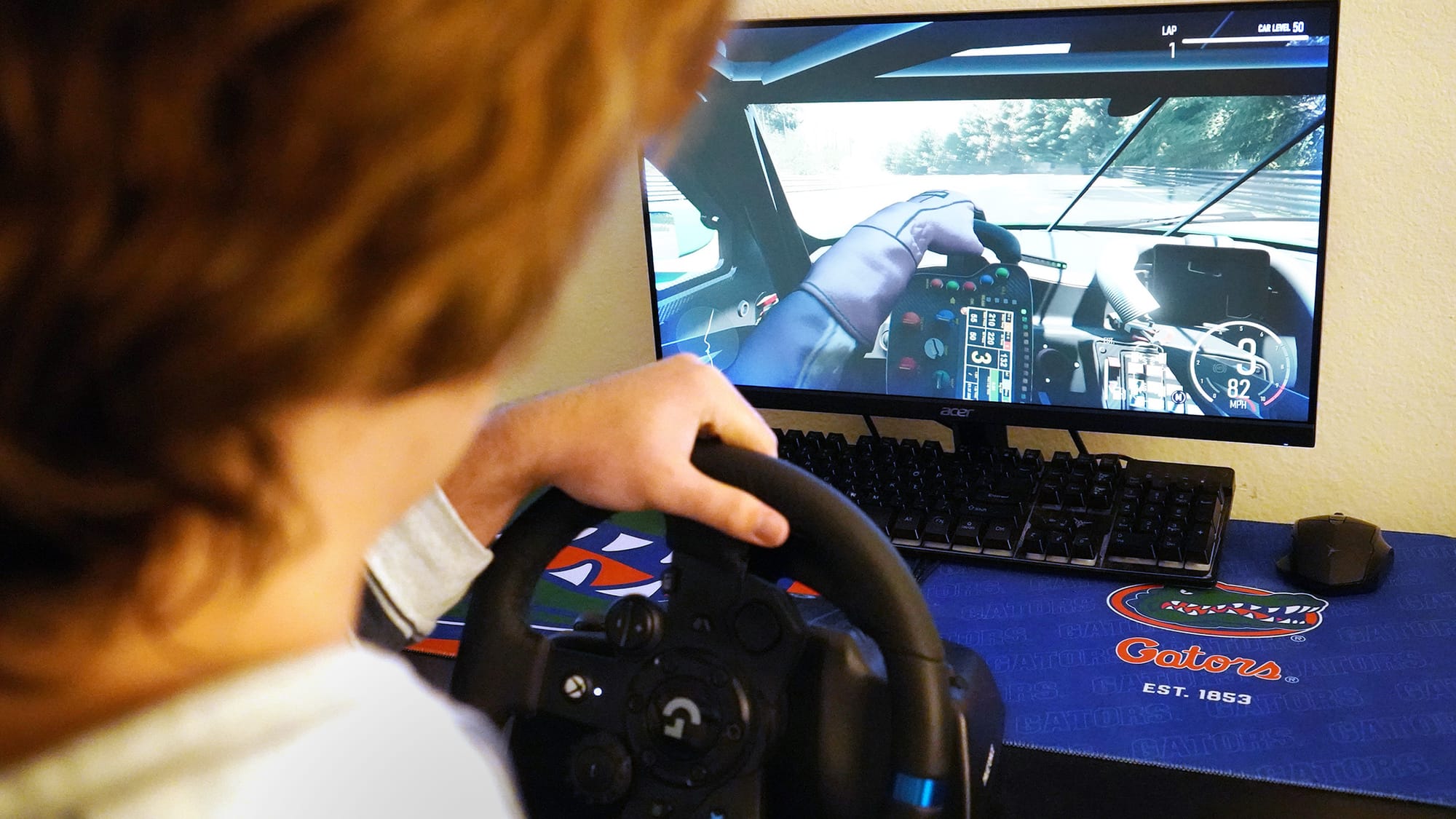
Nunez is also a member of Redline352, even shares an apartment with other club members. He said the club has given him some of his closest friends at UF. Often, he races from his room, setting up circuits with his roommates to see who can post the fastest lap.
Sim racing is a niche within a niche. The community around it reflects how virtual racing can bring people together, both on and off track.
“Sim racing really helped me get through college,” Minter said. “It was a real community for me that I was able to be with like-minded people that loved racing.”

In a sport shaped by cost, location and access, virtual racing has become an entry point for people long kept on the margins of motorsports. What began as recreation for some has become an opportunity for others, a way not just to participate, but to dismantle the barriers that once made racing unreachable.
From the moment he watched the movie “Cars,” Rajah Caruth knew he wanted to race. But like Minter, Caruth grew up in Washington D.C., far from any racetracks and without the means to chase a traditional path into motorsports. So he turned to the only option available to him: sim racing. It became the vessel that carried him into real-world racing.
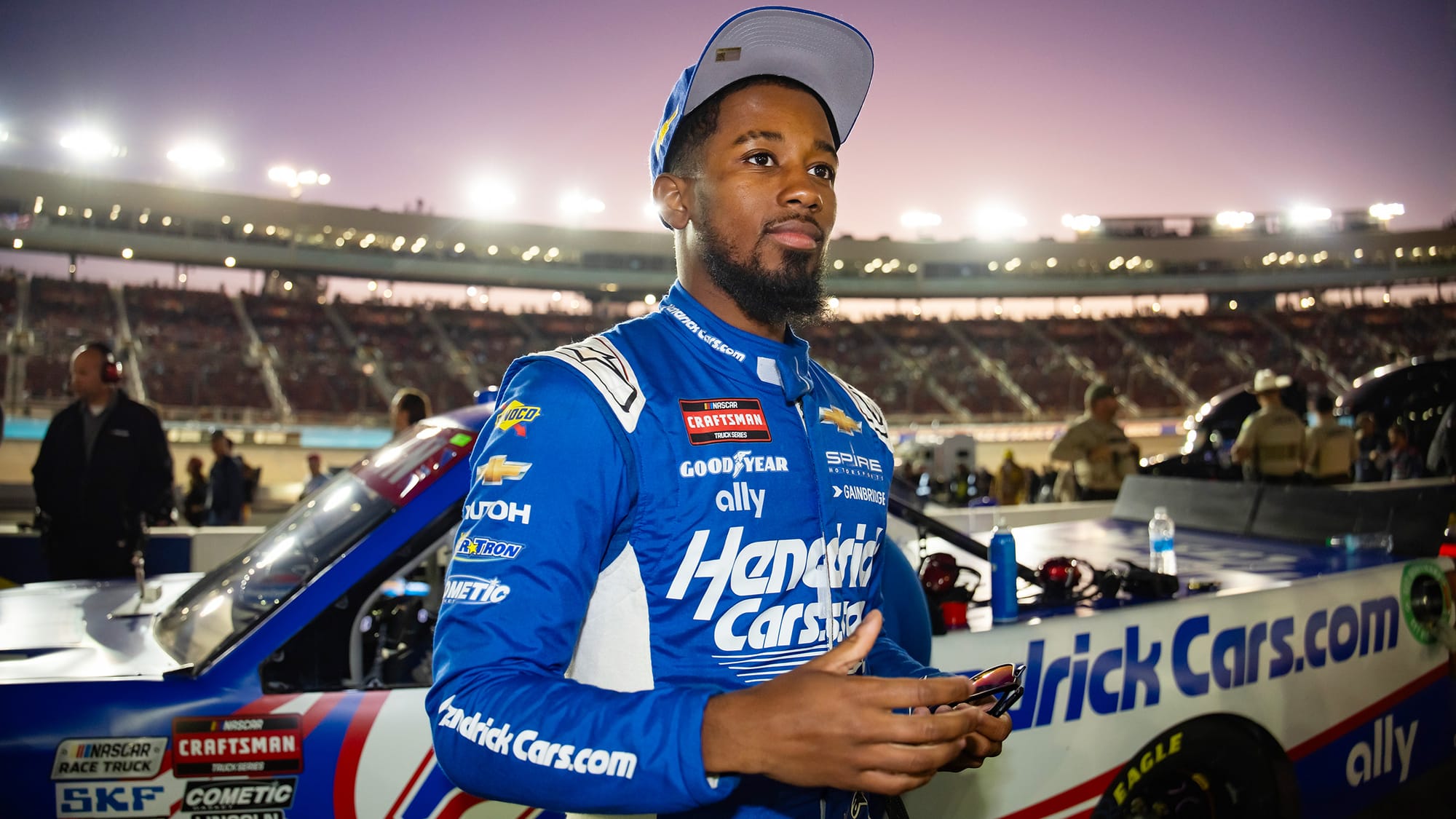
At 17, he earned a spot in NASCAR’s Drive for Diversity program, giving him his first chance in a real car. His rise from there was swift, from regional NASCAR races to ARCA to the Truck Series in just a few seasons.
All the while, Caruth balanced a growing racing schedule with college coursework, graduating in December 2024 with a bachelor’s degree in Motorsports Management from Winston-Salem State University.
“It’s 100% making it just more accessible," Caruth said. "I hope it comes to a place where you can have it in inner cities and people across the world can go and race online because I think racing is such a unifying sport."
His climb has kept its momentum. This year, Caruth earned his second NASCAR Truck Series win and finished sixth in the standings. In 2026, he’ll step into the Xfinity Series with JR Motorsports, owned by Dale Earnhardt Jr., while continuing full-time in Trucks with Spire Motorsports.
But breaking into the sport didn’t mean fitting into it. Early on, Caruth often felt out of place, a feeling intensified by the lack of representation for Black drivers. He pushed through by focusing on the work and the love of racing that brought him there in the first place.
“Now I don’t feel like that at all,” he said.
Even a NASCAR driver now as decorated as Byron wasn’t immune to that same sense of disconnect.
“I was not in this sport at all,” Byron said. “I was very much an outsider … overcoming some imposter syndrome of ‘I’m a race car driver, I deserve to be here.’ That’s like a never-ending process, really.”
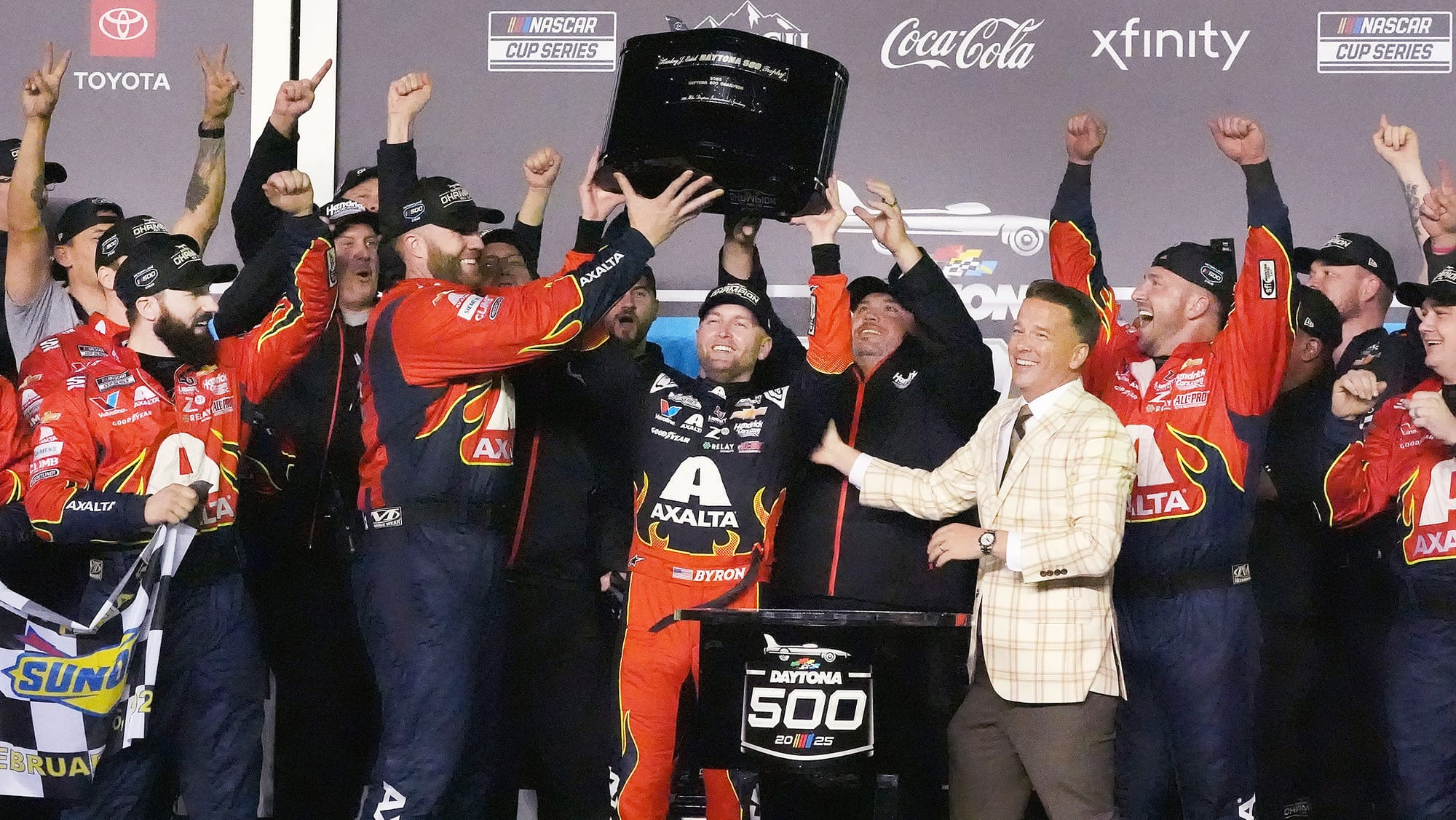
Still, his rise from sim racing to NASCAR’s top level has become its own proof of possibility. Byron says success isn’t just measured in wins, but in who might follow.
“That excites me thinking about young kids and their passions,” he said following his victory at Daytona. “Whatever it is you’re interested in, you just have to go for it and continue no matter what anyone says.”
Together, their experiences underscore that while sim racing can open doors, stepping through them still takes persistence, belief and a willingness to stay the course.
“I think if you’re somebody that can go and sim race and be really good at it, and then at the same time start your real-life racing journey, I think those skills are going to intertwine,” Caruth said. “You’ll be prepared to be successful in whatever you choose to race on the real life side of things.”