The Erased SEC Champs
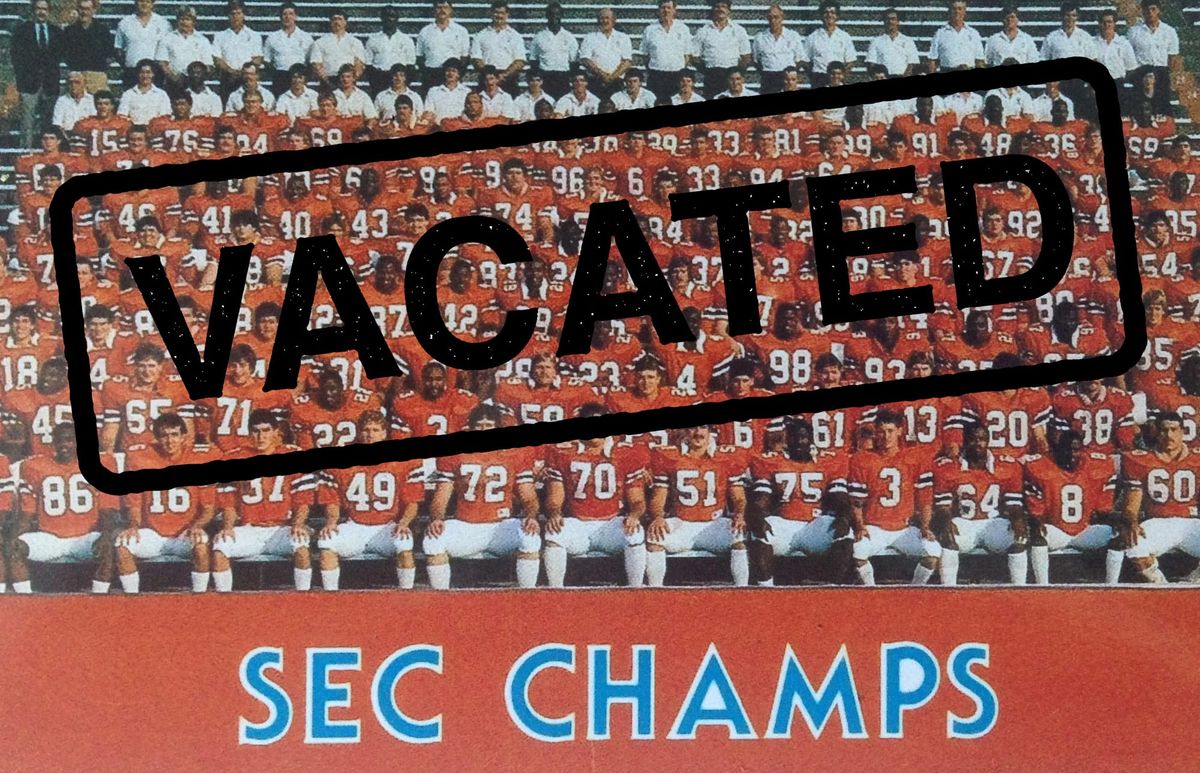
In 1984, Florida celebrated what it thought was its first Southeastern Conference football championship in school history. Four decades later, the sting of the title that was taken away still lingers.
“To ‘84!”
Shot glasses clinked at the cheer, a cacophony of laughter and overlapping conversations. If you took away the alcohol and added a few shoulder pads, the sound could have passed for a locker room.
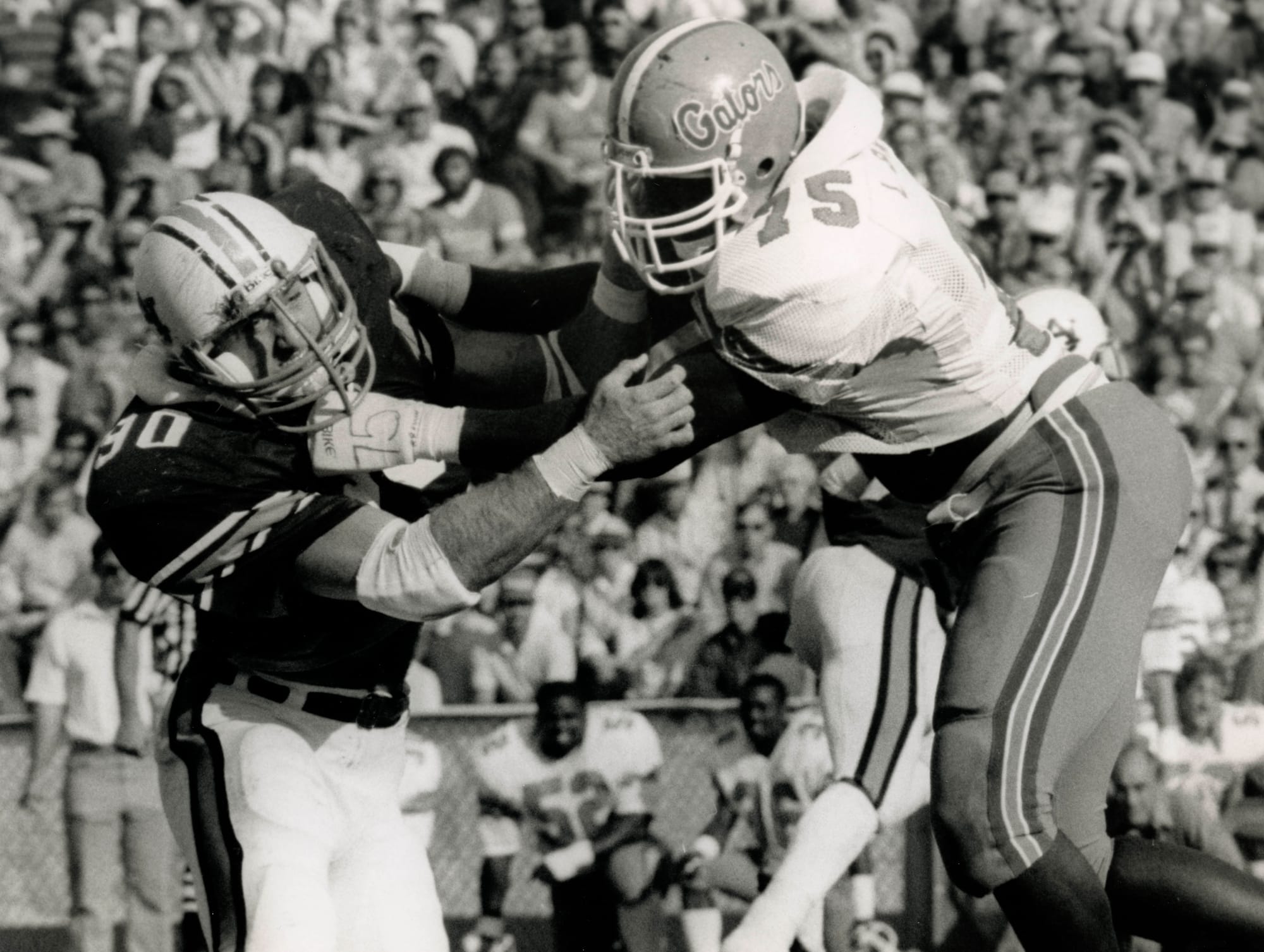
In one corner, Ricky Nattiel and Keith Williams sat at a table, reminiscing about their days living together in Yon Hall, the athletic dorms once stitched into Ben Hill Griffin Stadium. Nearby, Eddie Twyford and Crawford Ker laughed through a memory of a night at CJ’s, a long-gone Gainesville bar where the old beer and floorboard stuck to your shoes. At another table, the conversation turned to the dominance of the 1984 season, including the “Great Wall of Florida” and the 27-0 shutout against Georgia.
A darker cloud, however, lingered. A scandal that had taken the team’s Southeastern Conference championship title away from them in the record books. How could they avoid it? But the outstanding opinion on that season has stayed consistent for more than four decades.
“You can’t take the wins away,” said Jeff Dawson, a walk-on kicker on the ‘84 Gators team. “Don’t punish the kids because of what the adults do.”
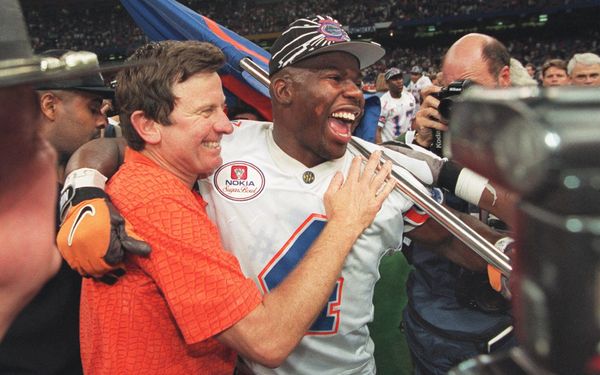
On Nov. 17, 1984, the Florida Gators football team returned home to Gainesville after a 25-17 win against Kentucky, a victory that cemented the Gators’ place atop the SEC for the first time in school history. Crazed fans on University Avenue welcomed the team home that night. Mass-produced “Florida Gators 1984 SEC Champions” merchandise — Coke bottles, ball caps and metal pins — sold. The shiny gold trophy was awarded to the school shortly after the win.
More than 40 years later, the roster leaning out as the years had gone on, this former team walked on a familiar field, greeting a crowd that they remembered, but one that scarcely could picture them. This time, the players returned without the security of their SEC championship title or a shiny, gold trophy that's said to have been lost somewhere between the day the title was taken away in May 1985 and the day the ‘84 Gators returned to the Swamp in October 2024.
What they did keep were their rings, their pride and years of memories. Things that sometimes felt like the only confirmation that they had won a conference title all those years before, despite its erasure from SEC and UF history.
But the team has yet to forget.

The 1984 season began under a cloud.
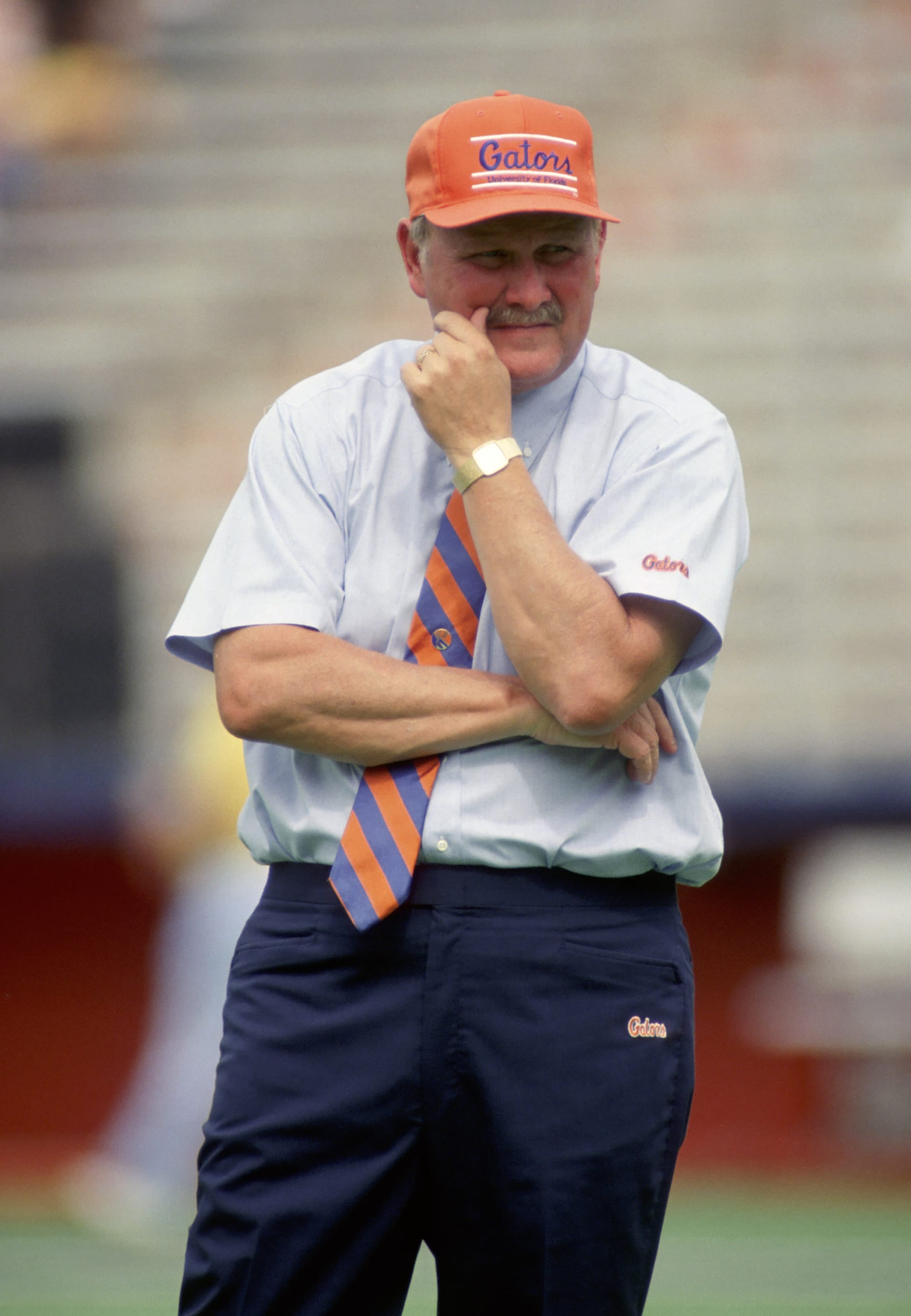
Florida opened the year with Charley Pell at the helm, but rumors of violations circled. By the third game of the Gators’ season, UF president Marshall Criser forced Pell to resign as a result of mounting investigations, and he was replaced by offensive coordinator Galen Hall. On paper, the transition had the potential to unravel the team. Instead, it unlocked their full potential.
Hall’s approach was different. Where Pell was rigid, Hall was relaxed, relying on the team's talent, rather than on strict intensity.
“Pell was very tough,” defensive tackle Keith Williams said. “You were quivering around him half the time. When Galen took over, all we had to do was keep doing what we were doing. At that point, I don’t think we needed much. Just open up the gates and let them out.”
What followed was one of the most dominant seasons in program history.
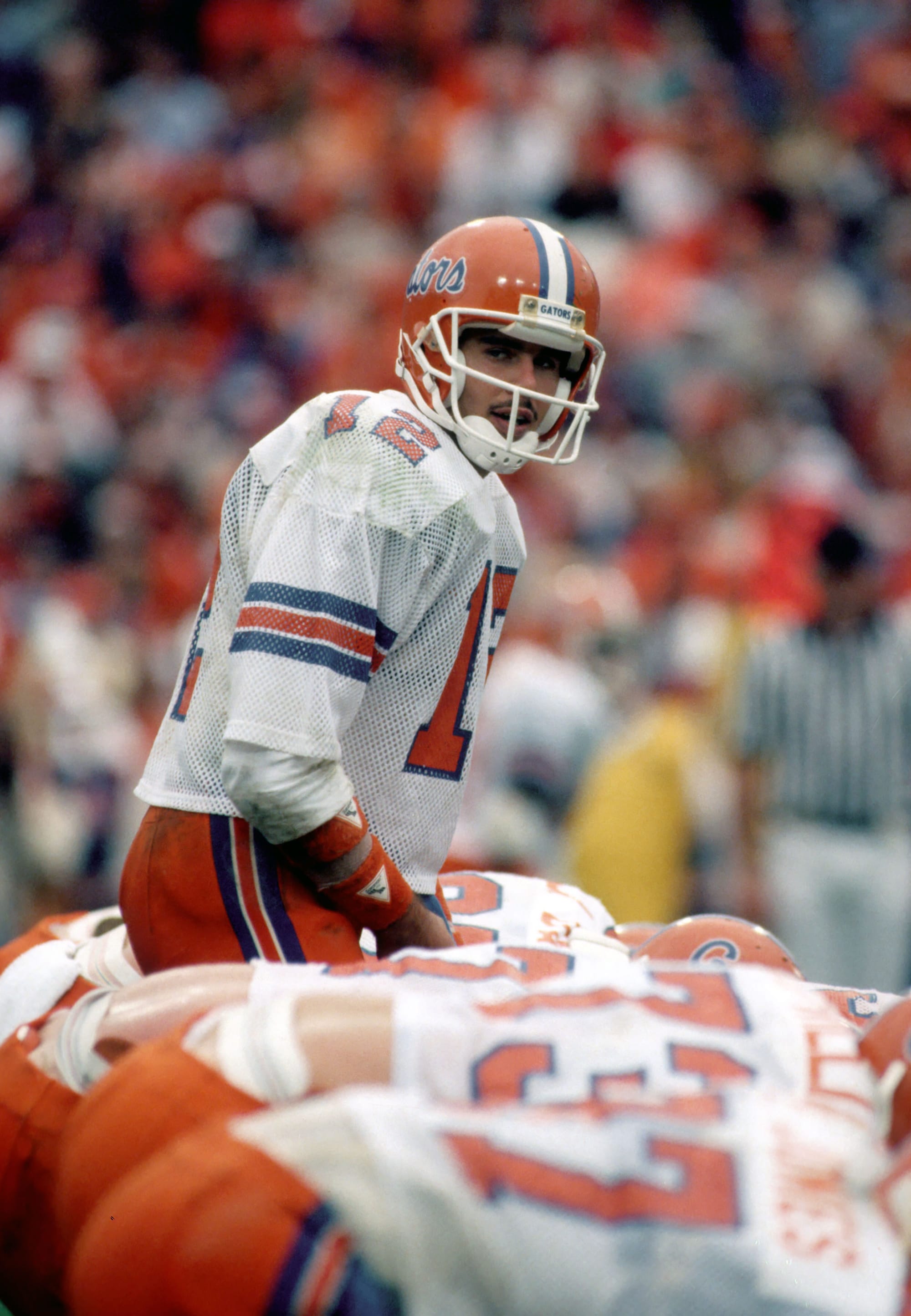
After opening with a 32-20 loss to Miami and a 21-21 tie against LSU, Florida didn’t lose again. It won eight straight games, knocking off No. 11 Auburn and No. 12 Florida State, while shutting out Georgia. The Gators finished 9-1-1, powered by a formidable offensive line known as the “Great Wall of Florida” and a freshman quarterback, Kerwin Bell, who took over after senior Dale Dorminey suffered a knee injury just days before the season started. Bell went on to win the 1984 SEC Player of the Year.
“We just ran the ball,” said Ker, the starting left tackle on the 1984 team. “I never thought we could be beat. We were men among boys, and it was that way on both sides of the ball.”
Yet, even as the wins rolled in, the outside noise continued. Probation loomed, and local headlines questioned the team's legitimacy.
"We thought we had a good team, but now everything was against us, and I think that feeling, that was us against the world,” Bell said. “I think that brought us together."
By season’s end, Florida was ranked No. 1 by The New York Times and The Sporting News. A number of players were preparing to head to the NFL. But when the team looks back now, it isn’t as much about the high rankings, the winning record, or the NCAA scandal that lingers.
“I think what’s special is the camaraderie,” Ker said. “You miss the guys more than anything. Because you never meet guys like that in the real world.”

By the spring of 1985, the question surrounding Florida football was no longer whether the Gators could win the SEC championship. It was whether they would be allowed to keep their crown.
During the 1984 season, the NCAA charged Florida with more than 100 recruiting violations and ultimately found it guilty of 59. The violations were extensive, including cash payments to players, ticket scalping, illegal recruiting by providing illegal transportation and housing to players, and spying on opposing teams' practices.
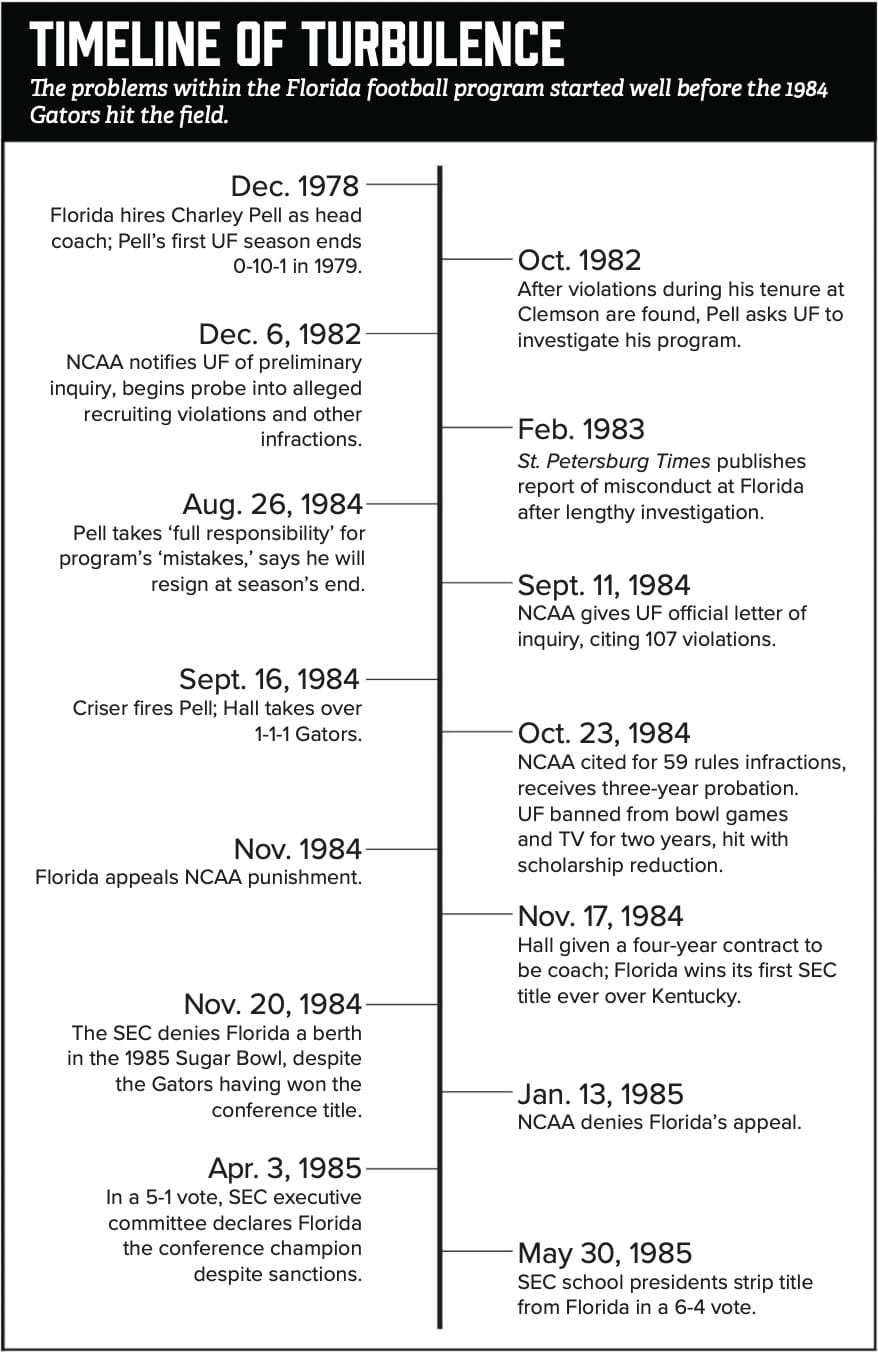
In April 1985, the SEC executive committee ruled in favor of Florida, negating any further punishment, saying their two-year ban on bowl game appearances and reduced scholarship totals were enough. But just a month later, in an unprecedented move, the league’s presidents overruled this decision in a 6-4 vote to strip Florida of its title.
Criser, UF’s president, was furious and initially refused to relinquish the championship, requesting a legal review of every available option. At one point, the university even threatened to withdraw from the SEC entirely.
“It is our unanimous opinion that those institutions, having delegated that final authority to the executive committee, had no power or jurisdiction to deal in any manner with the question of the SEC football championship after April 3, 1985,” Criser said in a statement following the decision.
Despite Florida’s efforts, the title was ultimately vacated.
Gators players argue that this is what separated them from other programs: not the violations, but the way it was enforced.
“There’s nothing embarrassing about it,” said Nattiel, the Gators’ All-SEC wide receiver. “Everybody was recruiting illegally back then. It didn’t matter who they caught — that’s just the way college football always has been.”
At the time, it was a recurring problem in the SEC. A majority of the league’s programs – not just Florida – had been hit with sanctions over the course of a turbulent decade. In addition to UF, four other SEC schools went on probation between 1975-85: Mississippi State, Kentucky, Auburn and Georgia. Three more went on probation in 1986: Tennessee, LSU and Ole Miss.
Tennessee, Vanderbilt, Georgia, Kentucky, Ole Miss and LSU – which finished second in the SEC in 1984 – were the six schools that voted to take the Gators’ title away.
“I think we were the sacrificial lamb,” said Hall, who turned 85 in August. “I think they [the SEC] were trying to set an example, and they went overboard.”
Last year’s House v. NCAA ruling adds salt to the wound. Under NCAA guidelines, schools can directly pay players, and athletes now have wider scope to market their Name, Image and Likeness (NIL). Rules that, when broken, once counted as harsh violations of NCAA rules, including athletes giving free shirts or a ride to the stadium, no longer exist.
The change has fueled lingering bitterness among former players, many of whom believe Florida was punished more harshly than its peers.
“In our day, you couldn’t get a pizza without an infraction,” Ker said. “Now look at it. It’s kind of hypocritical.”
Despite this shift, the 1984 season holds the distinction as the only football season in conference history without a listed winner. (Kentucky’s 1987-88 men’s basketball regular-season and tournament titles were similarly vacated.) For the players, the lack of recognition feels less like a punishment than erasure.
Four decades later, those emotions remain stronger than ever.
“Everybody knows who won that thing,” kicker Bobby Raymond said. “And with what’s going on today, the things we’re punished for seem insignificant. The school shouldn’t be embarrassed to promote it.”
By the start of the 1985 season, Florida football was officially on probation. The SEC title was gone, scholarships were stripped, recruiting was near impossible and money was tight.
Although much of the team graduated, Florida had a strong roster and Hall remained with the program. Still, motivation was hard to come by.
“It was like kissing your sister,” Dawson said of maintaining the team’s ambition. “It wasn’t good.”

For 40 years, the 1984 Florida Gators football team was scattered, remaining loosely connected through phone calls and their shared memories. In October 2024, they finally came back to Gainesville, together.
The reunion was set on the weekend of Florida’s home football game against Kentucky, the opponent the Gators beat on the night they learned they’d won the SEC title. Over the weekend, former players, coaches, trainers and staff gathered for tailgates and weekend reunion events before being brought onto the field at Ben Hill Griffin Stadium in front of thousands of fans decked out in orange and blue.
For many, it was the first time they’d been back to the school after losing the title in 1985.
“A lot of these guys are really, really bitter,” Nattiel said. “Some of these guys haven’t been back since. They don’t even set foot on campus anymore.”
The urgency arose in February 2024, when former Gators linebacker and two-time All-American Alonzo Johnson passed away. Hinson attended his funeral, alongside several other members of the team, and left with a plan to coordinate a reunion. Offensive guard Jeff Zimmerman, another two-time All-American, also passed away one month later on March 1.
“I said to myself, we’re going to do something,” Hinson recalled. “I just started calling guys I hadn’t talked to in years and said, ‘We’ve got to get together.’”
By the time the weekend arrived, nearly 90 people from the 1984 season had traveled back to Gainesville. The size alone was meaningful. For those who walked back onto the field, the emotions came quickly.
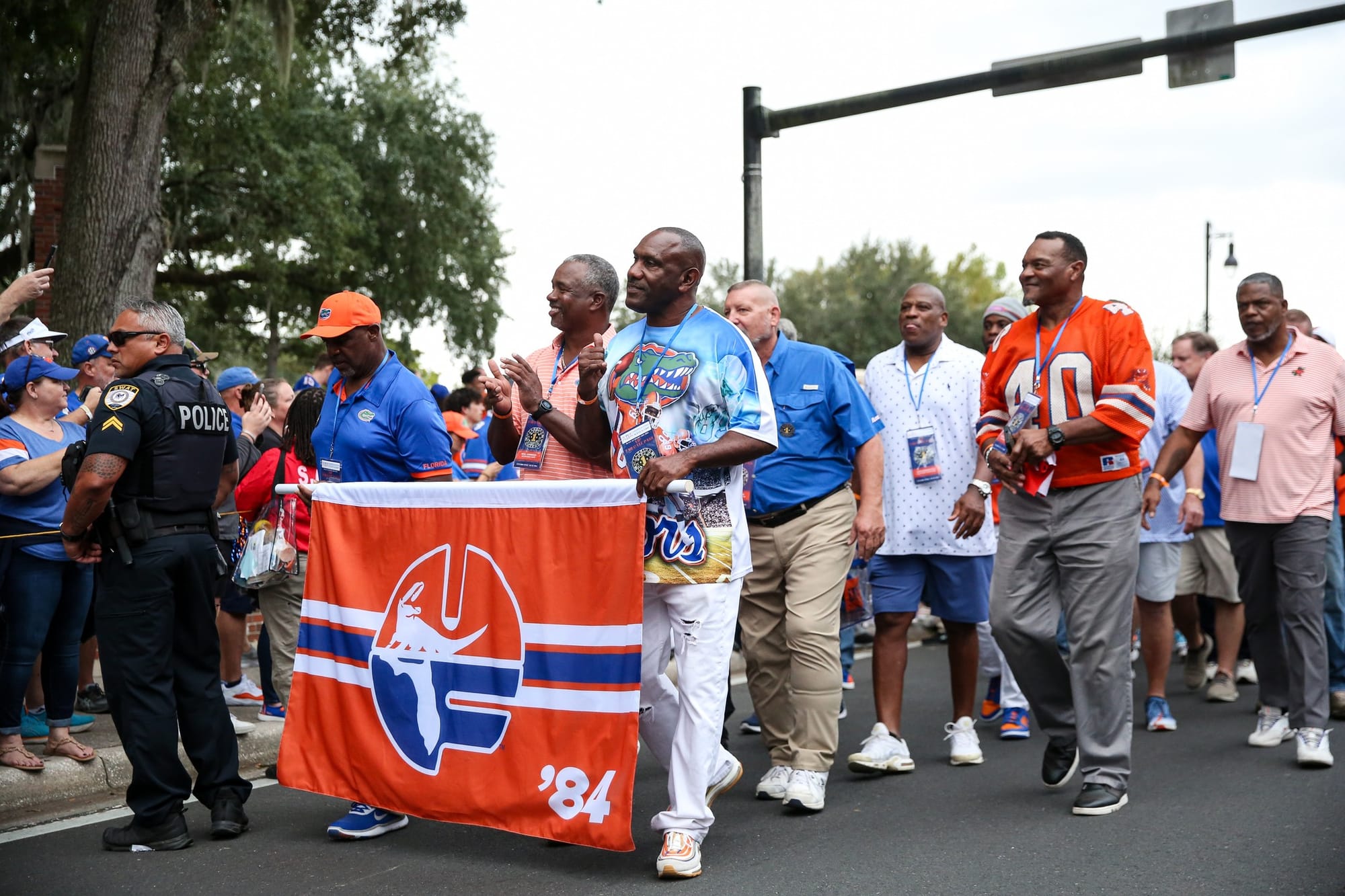
“These were grown men in their 60s, and they were weeping,” Hinson said. “It’s just what you go through at 18, 19, 20 years old, and then to have it taken away. To come back and have 90,000 people applaud you. … It was special.”
Defensive lineman Rhondy Weston described the moment as surreal.
“You see guys you haven’t seen in a long time,” Weston said. “When we walked onto the field, the memories came back. I could’ve suited up and played again.”
Still, the recognition came with caveats. During the on-field presentation, the team was referred to as the “best in the SEC”, rather than SEC champions — a distinction that didn’t go unnoticed by many members of the team. Regardless, the moment was meaningful.
The reunion didn’t yet restore a championship or edit the record books. However, it brought back something that had been missing – acknowledgment and a chance to stand together again.

In recent years, several awards and achievements taken away due to NCAA violations in the pre-NIL era have found their way back, one way or another.
Reggie Bush’s 2005 Heisman Trophy was formally reinstated after years of controversy, a decision the Heisman Trust credited to “enormous changes in the college football landscape.” At Louisville, the university has begun pushing to restore its 2013 men’s basketball national championship title, arguing the punishment didn’t fit the crime — a line of reasoning that sounds all too familiar.
Meanwhile, the University of Michigan’s football program faced a highly publicized cheating scandal involving scouting and signal stealing, yet no titles were vacated. Scouting, notably, was one of the violations that cost the ‘84 Gators their trophy.
Some schools have taken matters into their own hands. Auburn recently publicly recognized seven additional national titles, most prominently their undefeated 2004 team. Its actions reflect a thought that members of the ‘84 team had voiced: sure, the NCAA won’t recognize the championship, but Florida still can.
When asked about the controversy, the University Athletic Association spokesperson called the team “a big part of the history of Florida football” and pointed to the 2024 reunion, when members of the team were brought onto the field during the homecoming game against Kentucky.
“It was special to welcome the 1984 team back to campus last year for the Kentucky game,” the spokesperson said. “It was great to see those players reconnect with one another and be celebrated.”
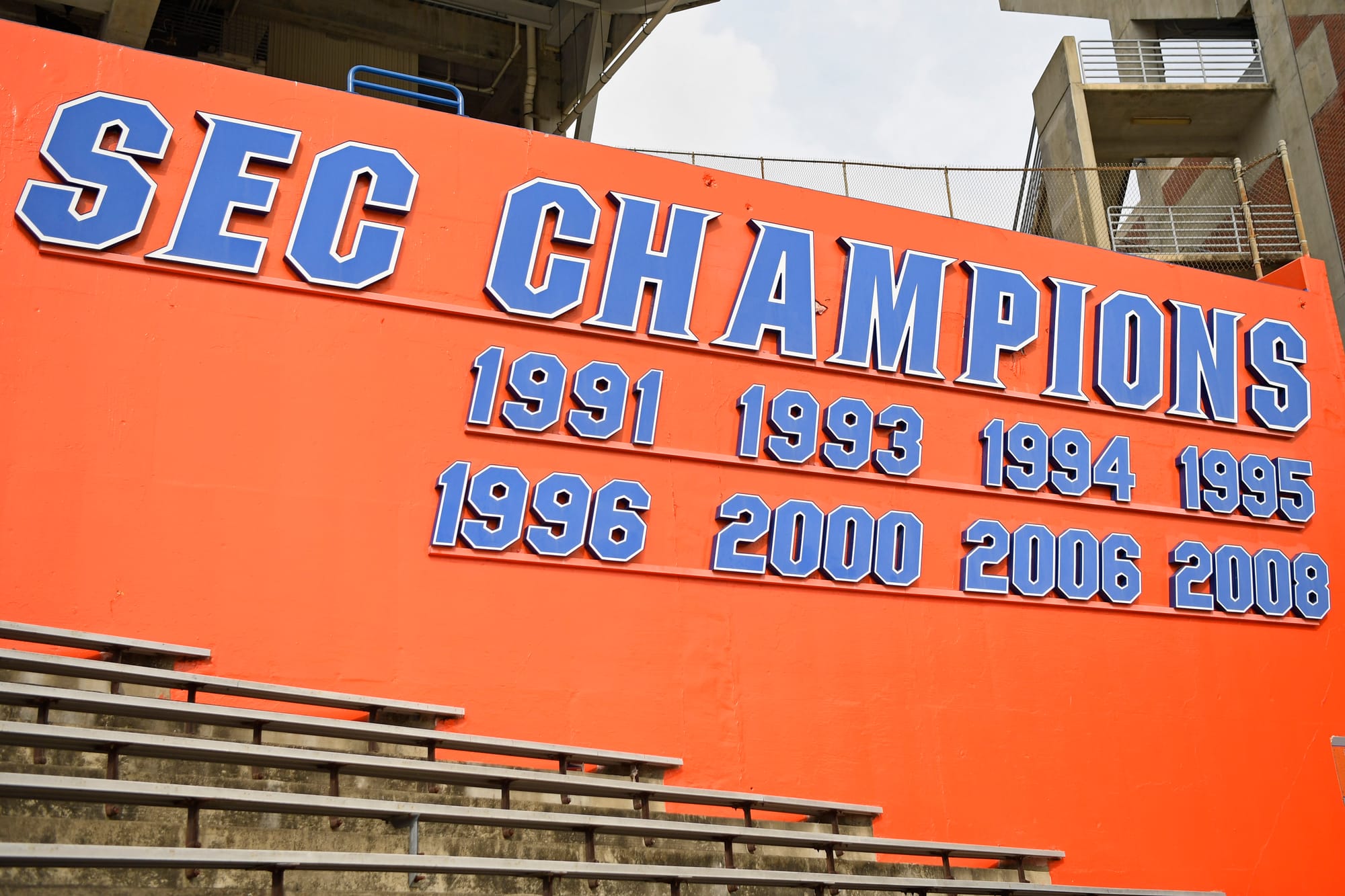
Even so, their presence on campus is subtle. The stadium’s “SEC Champions” wall begins with the 1991 season. While names like Tim Tebow, Emmitt Smith, Steve Spurrier and Danny Wuerffel are prominently featured around campus, the 1984 team is notably absent. The program used to honor the three UF teams – 1984, '85 and '90 – that won SEC titles that were either stripped or ineligible on the south end zone facade but it was removed in 2007.
This past year, Florida basketball legend Vernon Maxwell – the Gators’ all-time leading scorer – regained his last two seasons of individual statistics after they had been removed following an NCAA investigation. In a statement following Maxwell getting his school records restored, Florida athletic director Scott Stricklin said simply: “It’s time.”
The question remains: When will it be time for the 1984 football team?
In response, a UAA spokesperson said, “We currently honor championship teams with signage in The Swamp that are recognized by the Southeastern Conference.”
After requesting comment from the SEC on the issue, Director of Communications Chuck Dunlap said reinstatement “has not been contemplated,” noting the conference maintains the same position on the vacated Kentucky’s men’s basketball title.
History, however, is not always defined by its record books.
Reunions often hold a trace of stiffness before familiarity returns. But at the latest gathering of the 1984 team, that hesitation never surfaced. Conversation came easily, laughter rose quickly, and the brotherhood forged during that season remained unmistakable.
Regardless of whatever history had since been debated or diminished, certainty lived comfortably across the table, sitting in their teammates who never once questioned their accomplishments.
Over drinks and stories, over memories worn smooth with retelling, one fact wove its way around the room that night: a title had been won on that field.
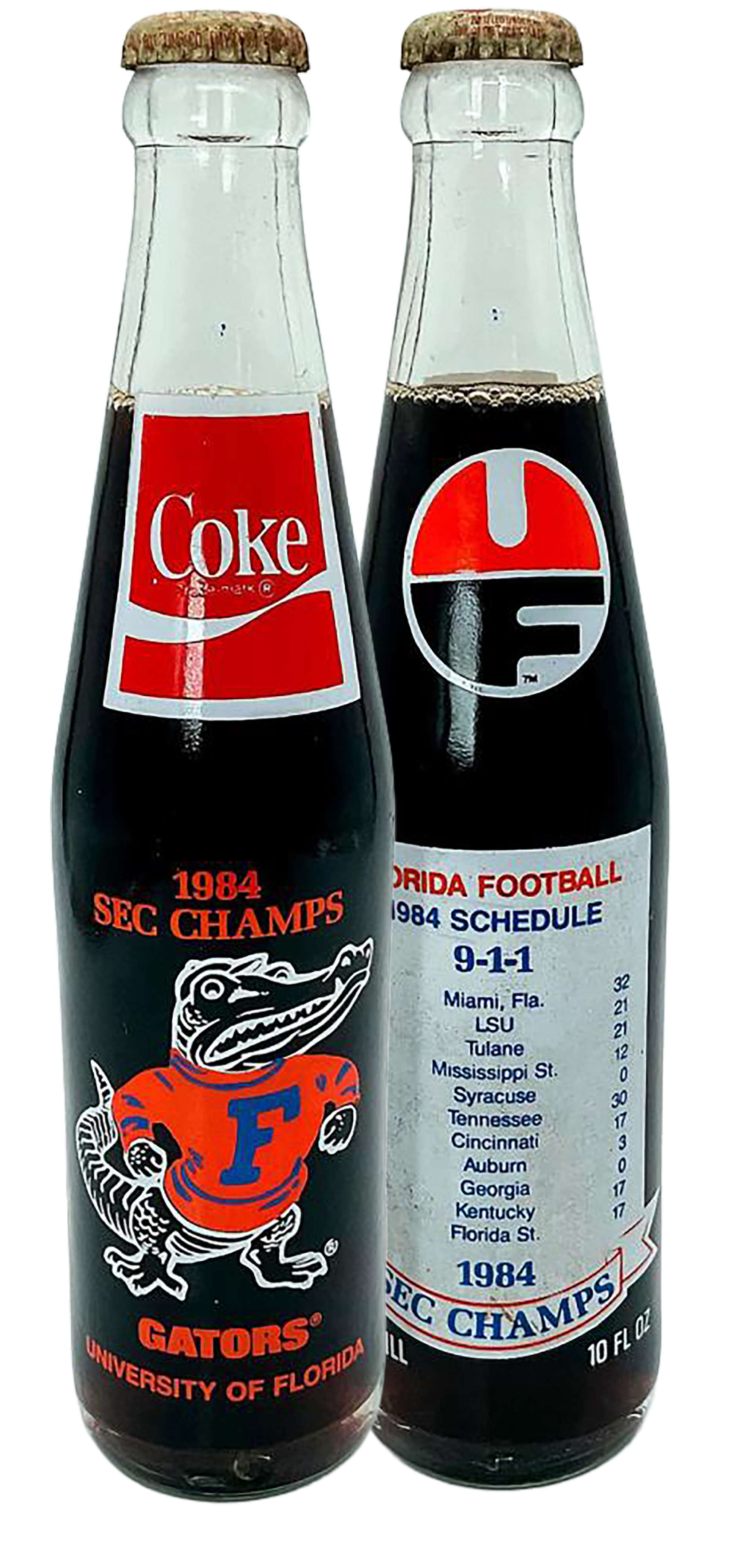
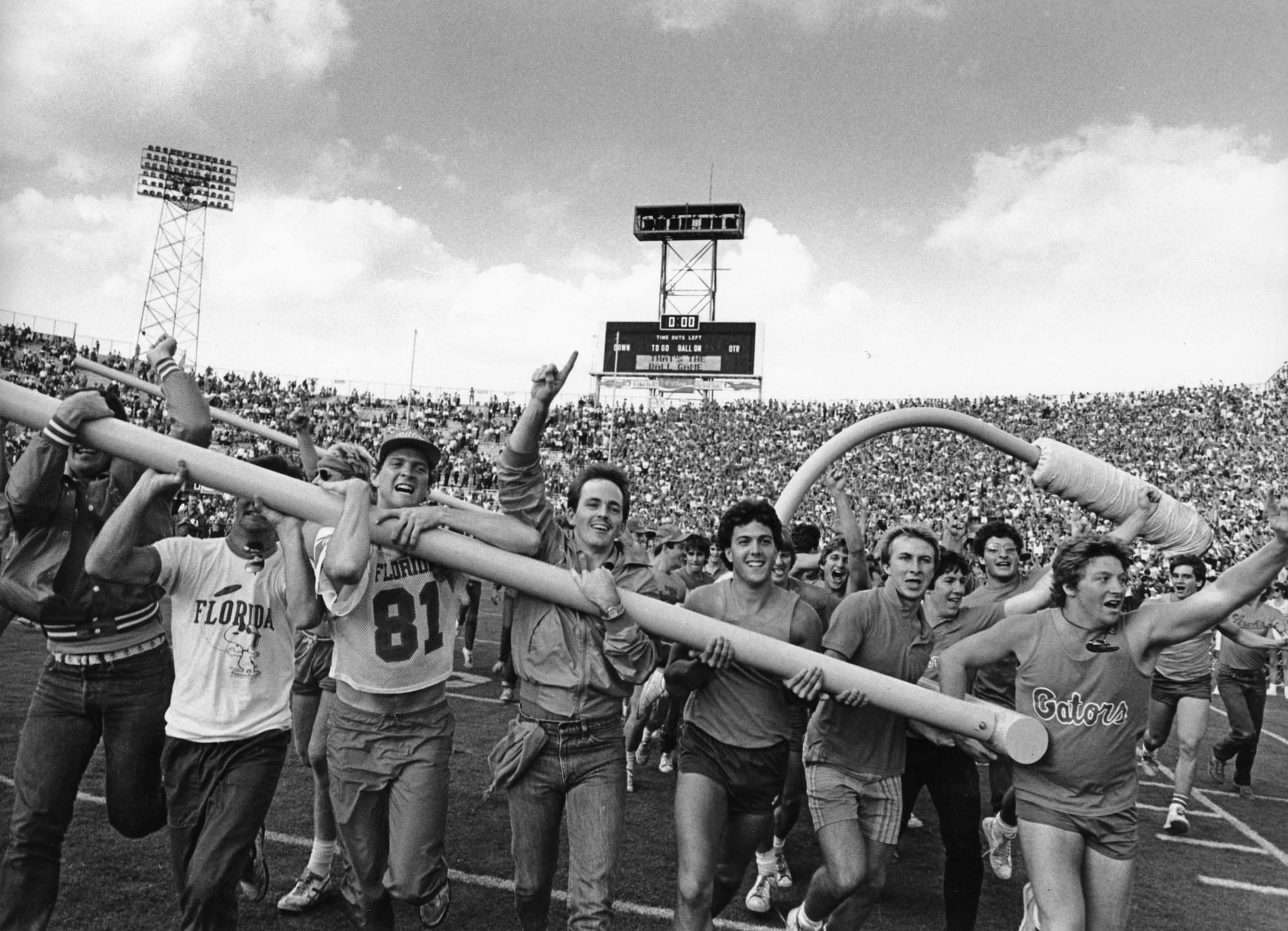
Long after the investigations and rulings, the legacy of the season has survived in a sort of fragmented story – in faded photographs of fans carrying goalpost off the field, in Gainesville Sun clippings proudly proclaiming Florida’s new SEC title, in the memories of those who ran to the center of campus the night of their win, and perhaps most importantly, in the defiant cheer of a team that returned to Gainesville again, 40 years after their initial victory:
“To ‘84!”
This story appears in the Spring 2026 print issue of Grandstand Magazine. Click here to see the full issue in its original print format.