The Shadow of Gold
UF track great Grant Holloway reached the pinnacle of his sport. But after becoming an Olympic champion in Paris in 2024, Holloway struggled with an unexpected hurdle: the mental comedown that followed.
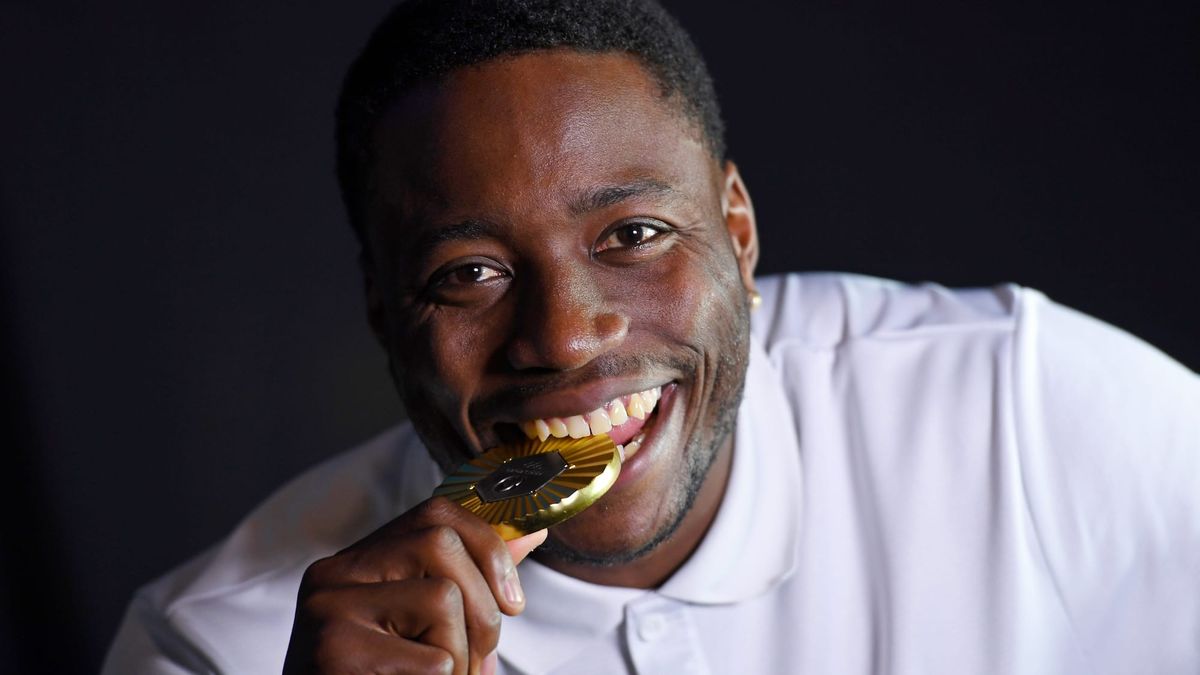
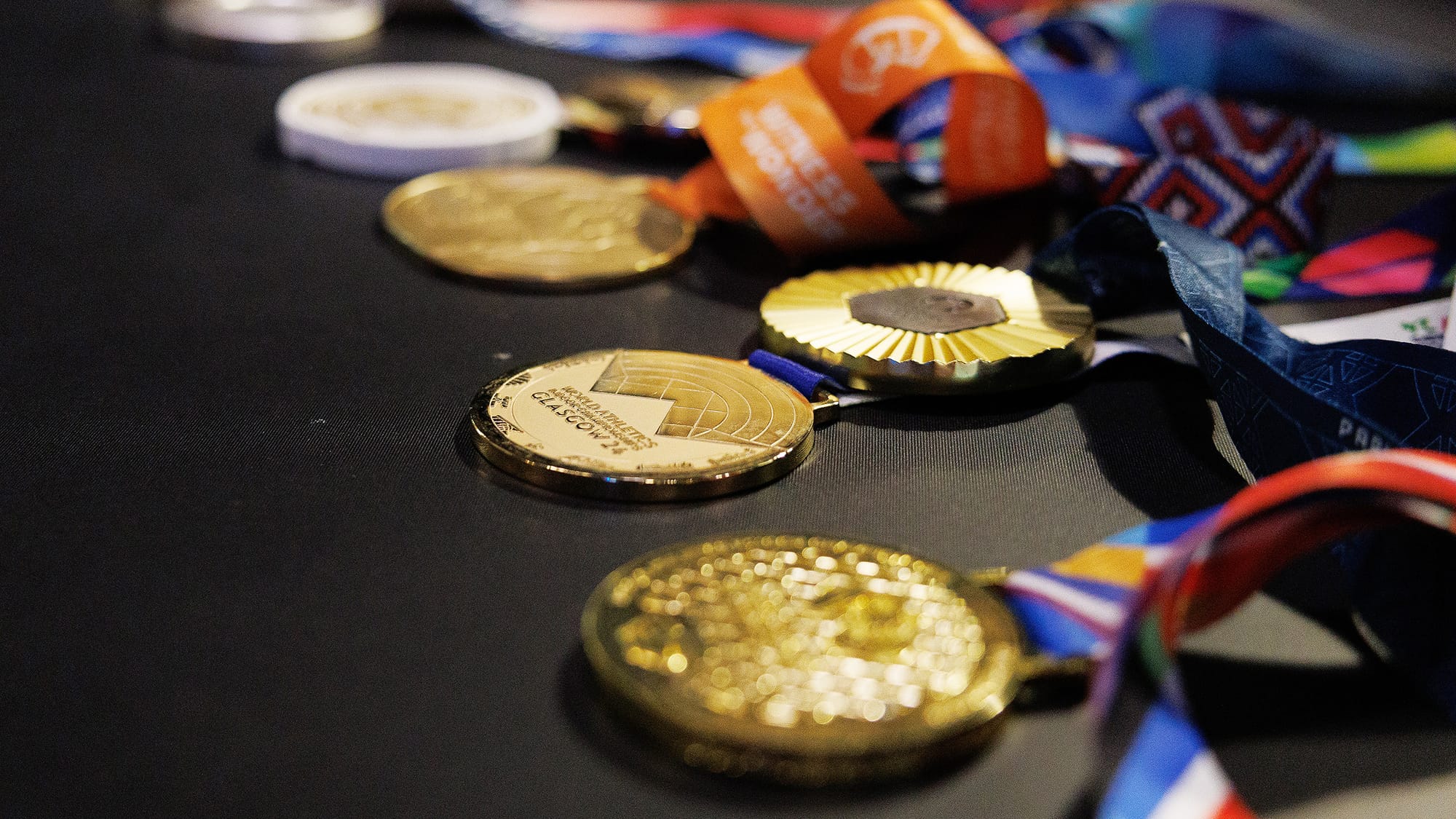
Grant Holloway was fashionably early, arriving nearly 30 minutes before the photo shoot. He climbed out of his car, grabbed a backpack full of clothes in one hand and a bundle of medals in the other. Seven gold and one silver clanked together, singing like a victorious wind chime on a breezy day. Then one of the golds slipped from his hand and clattered to the asphalt below. He just laughed.
The multiple-time world champion and 110-meter hurdles Olympic gold medalist watched one of his prized possessions fall to the ground. And he laughed.
“I'm bigger than those medals,” he said. “At one point, they were my babies, and I want to cherish them and put them in frames and boxes. And I think I will do that once my career is over. But as you get older, your dreams and aspirations change, and it's not just about track and field.”
But for 16 years, it was about track and field.
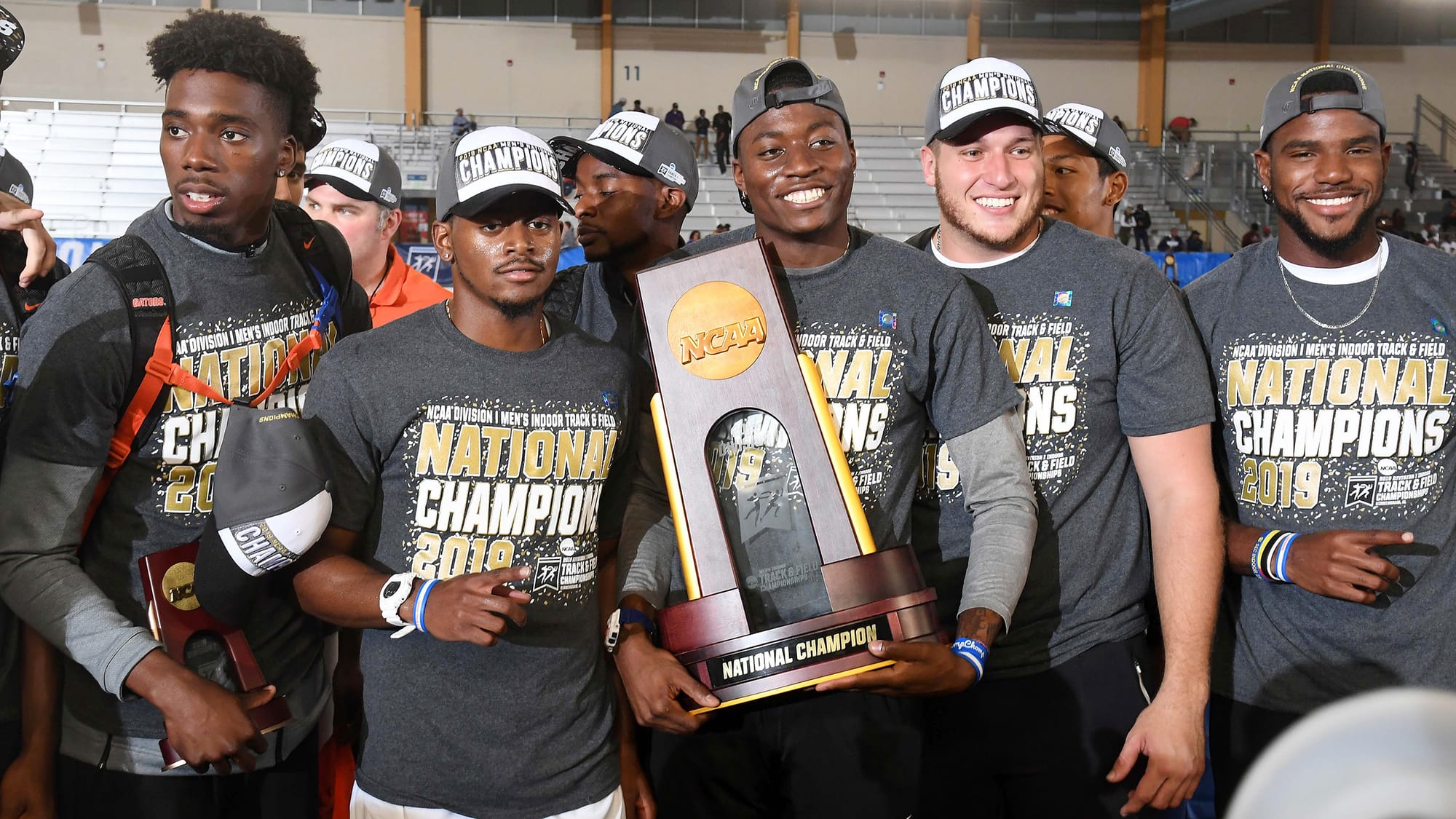
Leading up to the 2024 Paris Olympics, Holloway already was the most dominant 110-meter hurdler in the world. His laundry list of accomplishments, ranging from NCAA titles during his time at Florida to world records, was missing just one thing: a gold medal inscribed with five interlocking rings. The one race he had yet to win.
In Tokyo, some three years earlier, he was the heavy favorite. That gold should’ve been his, but he was upset by Jamaica’s Hansel Parchment in the final. Instead, he returned home with the one medal that doesn’t match the rest.
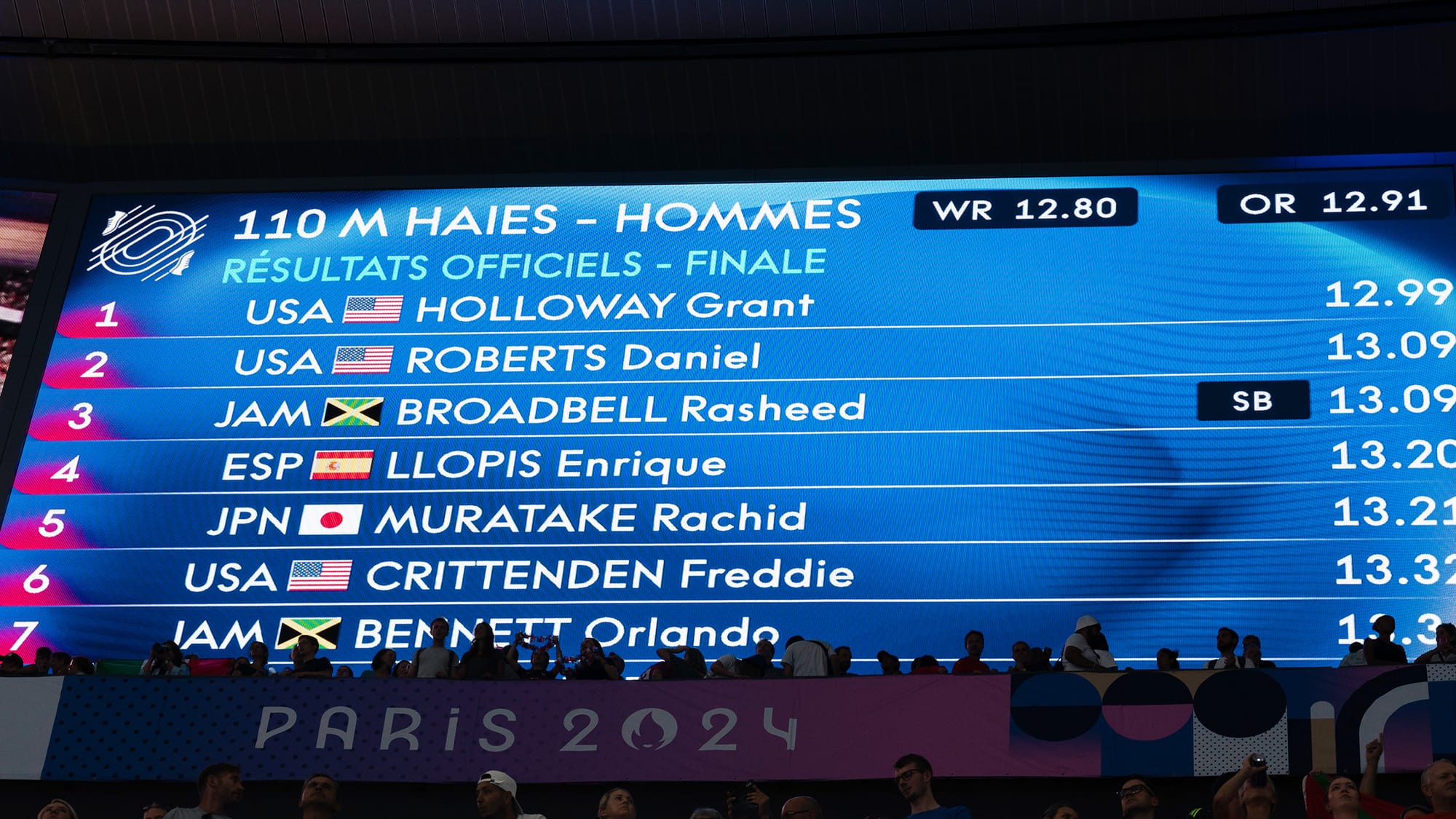
Holloway spent 16 years building up to this race, one he would finish in 12.99 seconds. Not many things occur in under 13 seconds. A few blinks, maybe a couple of Formula 1 pit stops. That’s probably about how long it’ll take you to read this paragraph. Yet 12.99 seconds is all it took for Holloway’s life to change as he knew it.
He reached the pinnacle of his sport. He checked off the last box. Running is the easy part, he would later realize. It’s everything else — the mental fatigue, physical toll, the emotional turmoil of becoming an elite athlete — that is not. Despite having the Olympic gold medal in his hand, Holloway’s biggest hurdle still loomed: figuring out what comes next.

When he stepped up to the starting line for the 110-meter hurdles final at the Stade de France, Holloway knew he was going to win.
“I was having such good practices. I was doing such great things,” he said. “I had confidence not only in my athletic ability, but my mind was just in a spot where I could not be denied.”
Holloway recalls speaking with his grandmother before he left, her words echoing in his mind from halfway across the world: “I knew you were an Olympic champion,” she had said. “You just have to show the world.”
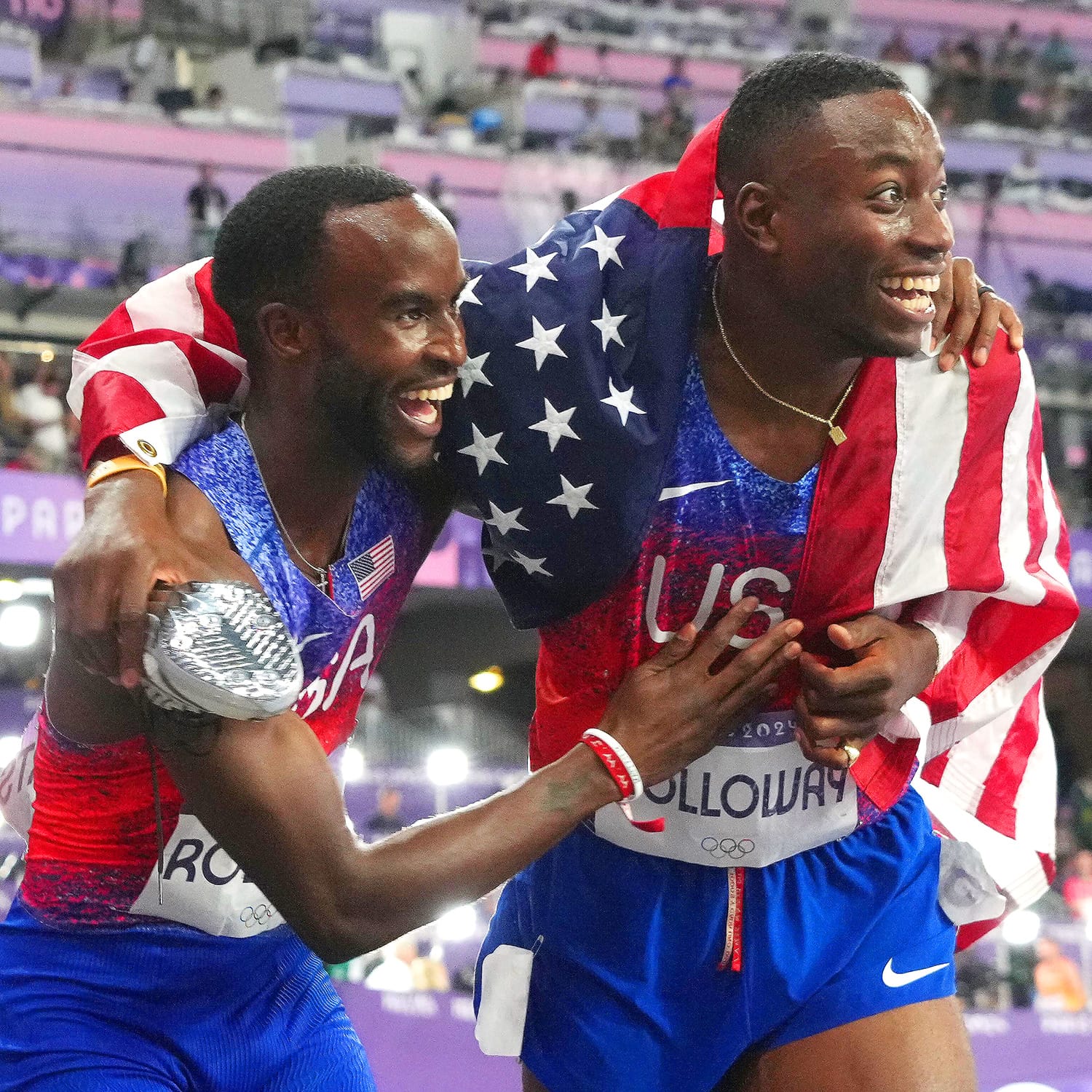
When the race began, long-time rival and friend Daniel Roberts beat him to the first hurdle, but it was all Holloway from there. He defeated Roberts, who took silver, by one-tenth of a second. This may not sound like much — but, in track, it’s a lifetime.
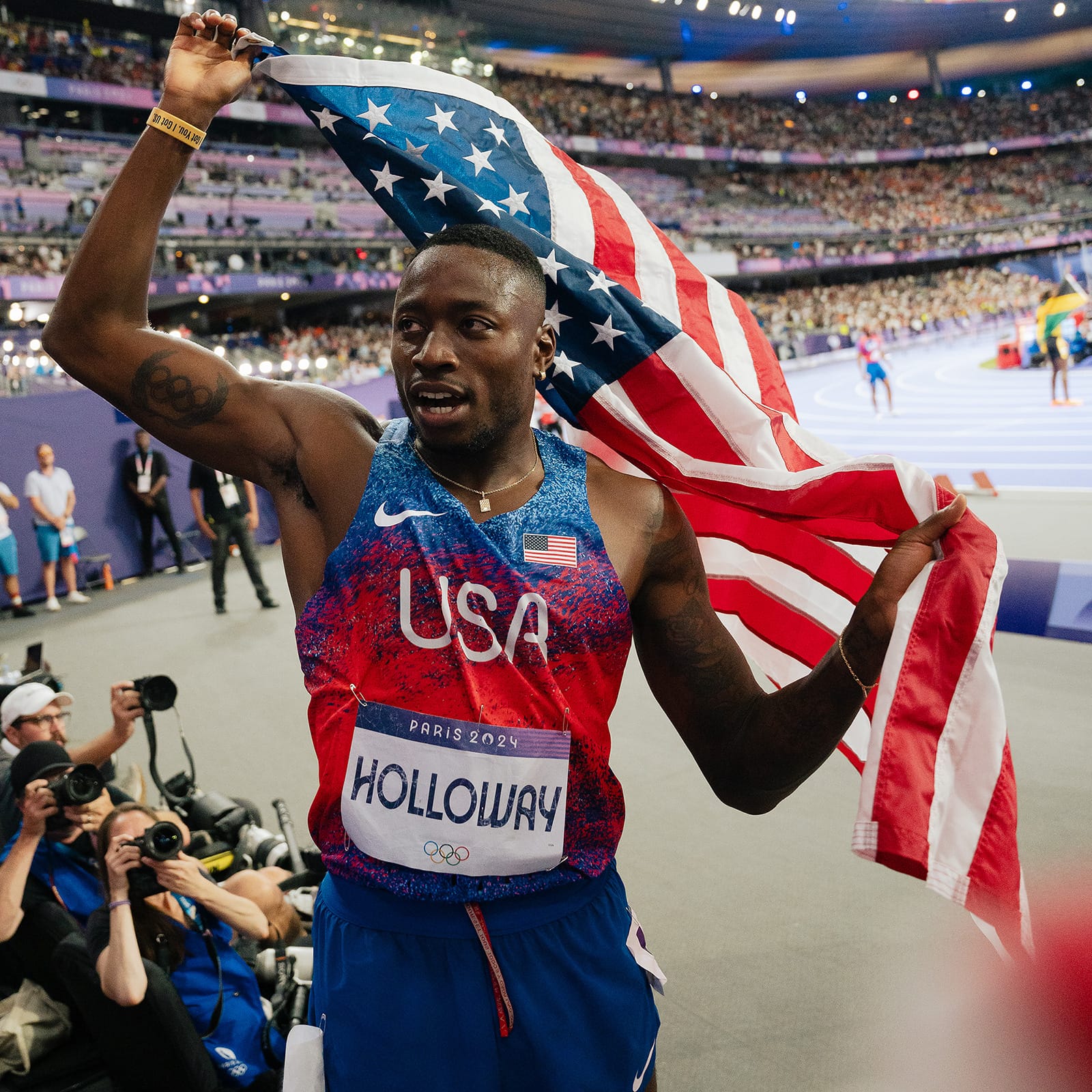
After crossing the finish line, Holloway threw his hands up and looked at the scoreboard. He shared a hug with the bronze medalist, Jamaica’s Rasheed Broadbell, and faced the raucous crowd to unleash a cry of victory.
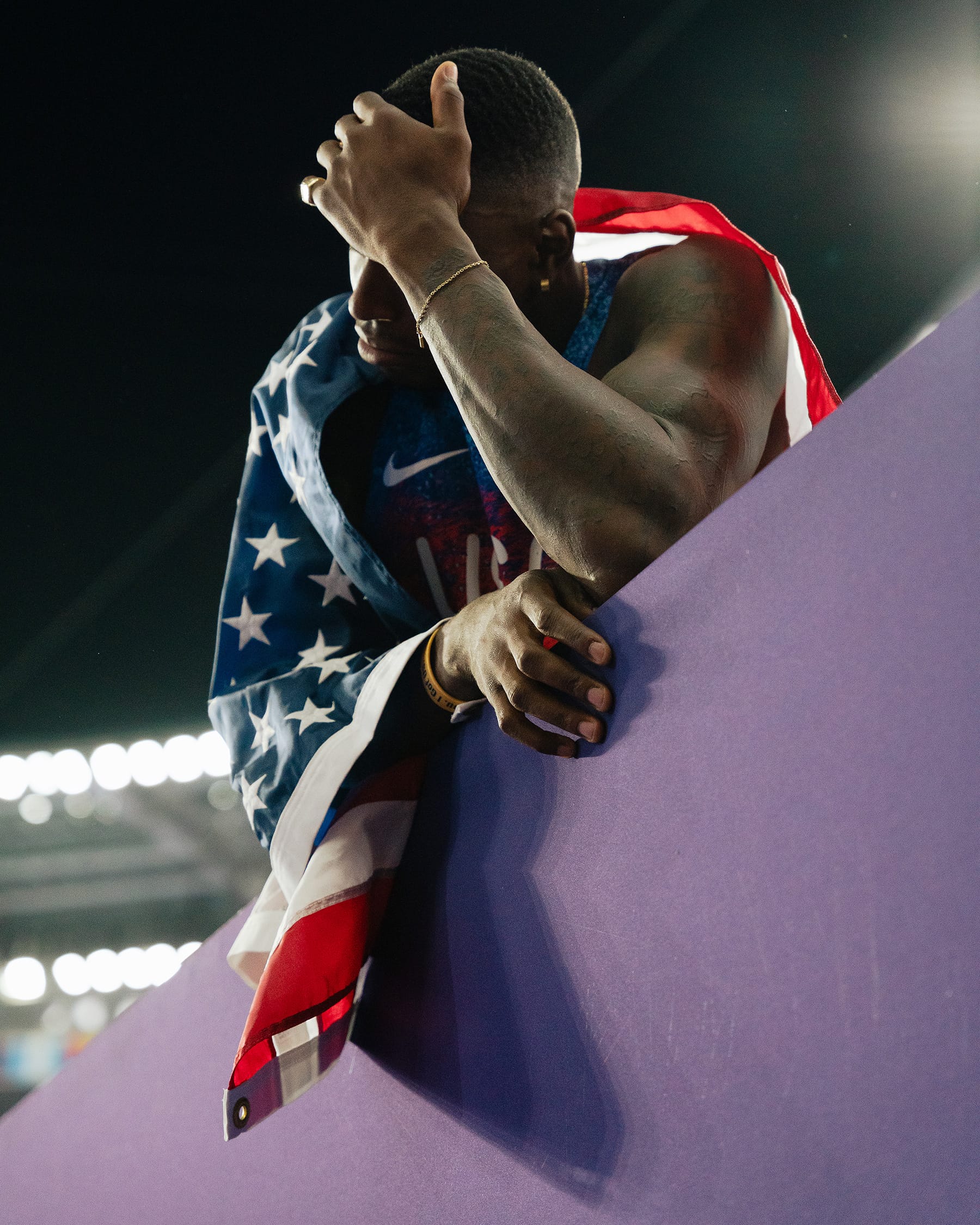
He was now Olympic gold medalist Grant Holloway. This moment had been a long time coming.Holloway paused at the top of the staircase following his post-race victory lap, head in his hands and sweat still glistening on his forehead. An American flag was draped around his shoulders. Now, here, he could finally let out the sigh of relief that lived in his chest for years.

After the high of capturing the gold in the 110m hurdles – a feat accomplished by just 27 men before him – wore off, something felt different.
Hundreds, perhaps thousands, of laps around the track pushed him to his mental and physical limits and led to this. The payoff was so immense that he couldn’t fathom the other side.
“I was willing to die for that Olympic gold, and now that I got the Olympic gold, it’s like, ‘Alright, what's my next goal?’” he said. “And I don’t have one.”
For the first eight months after his victory, it was this interview and that interview. Appearances here and there. Then back to training. No rest. No reset. Just back to business as usual. Eventually this caught up to Holloway; his mind was not where it once was.
The cracks began to show at the 2025 Tokyo World Championships, his first appearance on this stage since the Paris Olympics 13 months prior.
“I never really came to terms on what I did [in Paris],” He said. “I think that's the reason why I struggled so badly this season.”
He loaded into the starting blocks having won three championships in a row, but this time he didn’t — far from it. The 2019, 2022 and 2023 champion placed sixth in his semifinal heat and didn’t even advance to the final. For the first time in six years, a new champion of the 110-meter hurdles was crowned.
His struggle — an inability to come down from achieving his life’s goal — isn’t abnormal.
The condition, known as post-Olympic depression, is not recognized by the Diagnostic and Statistical Manual of Mental Disorders (DSM-5), the guide used by mental health professionals to diagnose and treat mental illness. Though Dr. Nicole Karcinski, Director of Mental Health and Wellness for University of Florida Athletics, says it’s characterized by those in the sports world as the “sharp drop” an athlete experiences after achieving a monumental goal.
The signs of it are consistent with those of adjustment disorder. These include, but are not limited to, feelings of numbness and emptiness as well as irritability and anxiety.
And those feelings are completely normal. Numerous athletes – most notably, Chloe Kim and Michael Phelps – have similarly discussed their struggles with post-Olympic depression.
“Even in winning gold medals, there can still be grief,” Karcinski said.
Holloway’s process of working through his emotions is pretty straightforward. He leans on those closest to him. His friends, loved ones, former teammates and coaches – especially UF track and field head coach Mike Holloway – have all played their part.
“I viewed my role as a bit of a sounding board and just keeping it light,” said Jesse Millson, Grant’s former roommate and teammate at UF.
But when things got heavy, Grant could turn to Roberts, who was going through the same thing.
"When your body and mind goes to such a high place — like it does with the Olympics, like it has to in order to be successful — there’s going to be some type of crash," Roberts said. "It’s been a little tougher just trying to get through this."
Although it may not have started that way, over the past decade, their friendship has grown beyond the track. They’re able to recognize that when the spikes are on, they’re enemies. But when they’re off, Grant and Daniel are now longtime friends.
When they first met in 2015 at the New Balance Nationals Outdoor meet in Greensboro, North Carolina, Roberts thought of Grant as a friendly kid with a smile that stretched from ear to ear.
Little did he know that they would become each other's biggest motivators.

Holloway first started getting national attention during his sophomore year at Grassfield High School, just south of Norfolk, Virginia, when he won his first state championships in the indoor 55-meter hurdles and the outdoor 110-meter hurdles.
In 2014, he fell short in the 55-meter race at indoors nationals. He was a mere 16 years old. Now 28, he hasn’t lost the event since.
Collegiate offers flooded in, and he chose to put his trust in the hands of UF’s Mike Holloway. After all, the Gators head coach already had a proven record, having led the program to three indoor and two outdoor national titles since 2003.
“I sat in Grant's living room and I promised his parents I was going to help him become the best hurdler in the world,” Mike said. “That was his goal, that was his dream.”
Grant, who is known for his bubbly personality, made an immediate impact at UF, both on and off the track.
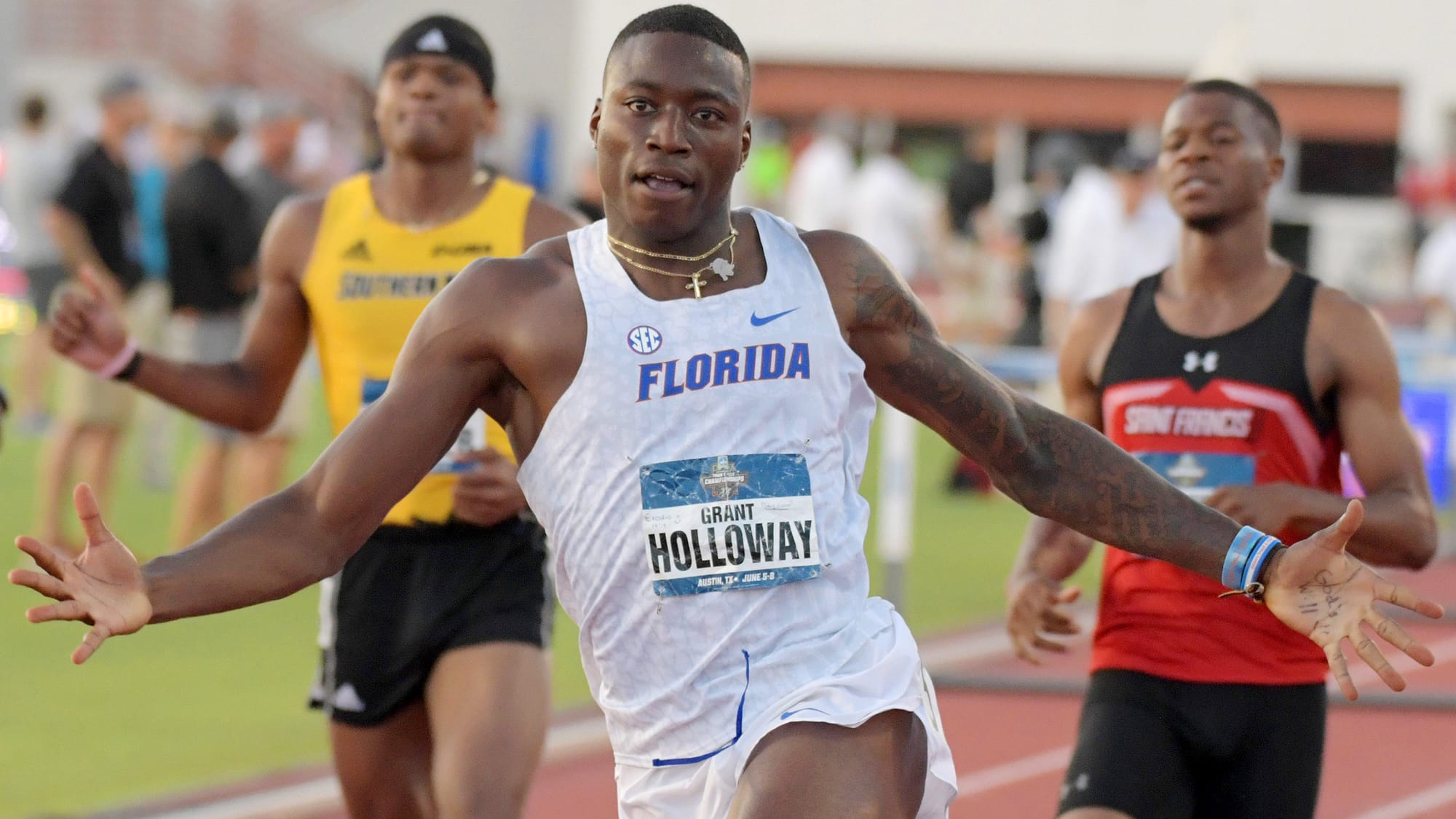
In 2017, he was named SEC Indoor and Outdoor Freshman Runner of the Year and brought home two individual NCAA and one SEC title. He also helped Mike bring his fourth outdoor team national championship title to Gainesville.
One person who helped Grant stay focused was Roberts, who began his career at Kentucky that same year.
“Without Daniel, who knows what happens,” Millson said. “But it really allowed Grant to have this tangible person that [lets him know if he] misses here and there, he's not gonna win.”
The two were neck and neck at every meet, always pushing one another. It helped that they both had the same goal: make the United States a hurdling powerhouse again.
After three years at Florida, filled with countless hours of playing Mario Party with his friends and collecting first-place finishes on the track, Holloway was ready to take the next step. He’d conquered the NCAA, it was time to take on the world.
In June 2019, he chose to forego his senior year and sign with adidas. Three months later, Grant took home his first World Championship gold in the 110-meter hurdles in Doha. That year, the world got to know him as The Flamingo — long-legged, energetic and confident.
While the transition from college to professional athlete can be difficult, Grant made it look easy.
“I definitely saw a flip within him of taking ownership of his day and his life and his path, his career path,” Millson said. “He wanted to be great.”
While his childhood dream was always to climb to the top of the Olympic podium, Grant attributes much of his success to Mike. The coach shaped his mindset, the person he is on and off the track. Although his UF days are long over, Grant still resides in Gainesville just a few doors down from Mike.
“Immediately we thought that we could be related, and we're still not sure if we are or not, but it doesn't matter,” Mike said. “Grant is part of my family.”
The words of wisdom Mike has given him over the years have traveled with Grant as he’s competed all over the world. Across continents and oceans, all the way to Paris.

This time it felt different. The energy inside of the Paris stadium was palpable. The cheers of fans could be heard from the warmup track outside.
It looked nothing like the last one. The atmosphere at the Tokyo Games in 2021, delayed by a year due to the COVID-19 pandemic, wasn’t what he saw on TV as a child. Those stands were a ghost town. And he lived for the roar of the crowd. It fueled him.
The announcer called his name as Holloway walked out of the tunnel and waved to a crowd of more than 70,000. He was straight-faced, all business. The trademark million-dollar smile that adorned his face as he stepped onto the track in Tokyo was nowhere to be found. He wouldn’t finish in second. Not again.
All around were supporters wearing his signature orange and white adidas tank top, holding up cardboard signs bearing his face. His support system — his parents, his now-fiancée and her parents, his coaches, his friends, even his acupuncturist — anxiously waited in the stands, anticipating the pop of the starting gun.
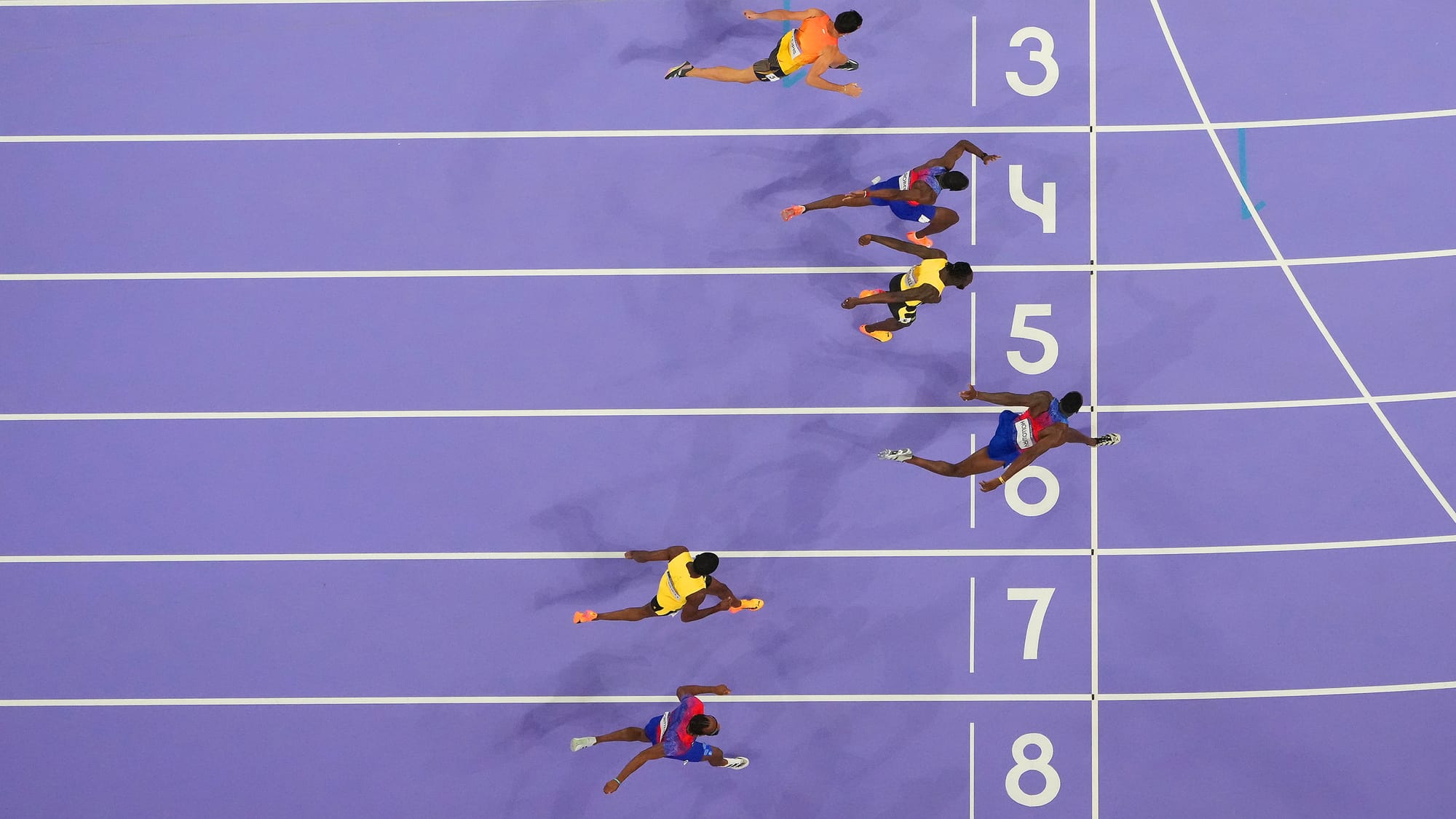
When he stepped up to the starting blocks, it felt as if time slowed down. A measured 51 steps lay between him and the finish line.
When the gun sounded, everything around him disappeared.
For those few seconds, he felt like he was a character in a video game with a superpower that slowed time. Like Neo from The Matrix, he said. Then he crossed the finish line and everything sped back up.
The goal was completed; it was time to soak it all in.
Holloway caught his breath and sprinted over to ring a large silver bell forged in Normandy, engraved with the Paris 2024 logo. At the conclusion of the games, it was hung in one of the newly reconstructed Notre Dame Cathedral’s bell towers. A piece of rewritten history on display for all.
Clang.
“But guess who now gets to ring the bell?” NBC track and field announcer Lewis Johnson cried emphatically on the broadcast.
Clang.
Team USA supporters went wild, clawing at Holloway over the wall for hugs and high fives. A joyous, bewildered expression painted on his face. He can’t believe it, he’s finally done it. Finally.
Yet those in the stands knew it all along. And that’s one of the things that Holloway loves best about competing, the love and support that helped him get to the highest level.
“[It’s the] small, subtle things where you can see that people are truly trying to support you,” he said. “And that's one of the things that I truly endure, that I love and endure about this because I'm going around, taking pictures, signing autographs, and all these people were there for me.”
Everyone could feel this moment.
“It was very surreal. We talked about moments like those in 2019 when we both were turning pro,” Roberts said. “We went No. 1 and 2 at outdoor SECs and then No. 1 and 2 at Nationals and breaking the collegiate record, both of us. And doing the same thing indoors. We said we want to do the same thing on the world stage.”
And they finally did.

Now Holloway wants to have fun again. During the Olympic year, the joy was taken out of competing because he was so focused on his goal.
“I was very, very driven by success on the track and not as a human being,” Holloway said. “Now that the success on the track is done for me, I'm still a dope human being who loves to drink bourbon and have wine with my friends.”
None of this means Holloway is hanging up the spikes. The 2028 Games in Los Angeles are still on his mind. The Olympics are just not the only thing on his mind anymore.
“Regardless of who I am as an athlete, I think people will remember how nice I am as a person,” he said. “Even if it's just holding the door for somebody, doing this or doing that, it's just one of the things where people remember you for who you are as a person, not as an athlete.”
And that’s who Holloway has always been. The glue of his friend group, the goofy kid with the wide smile, the Flamingo.
“He makes you feel like you're his best friend,” Millson said. “His circle is so important to him and he also takes care of everybody in it.”
He’s putting more emphasis on taking care of himself, too, both mentally and physically, as he rehabs a recent hamstring injury. Although minor, it sidelined him from this year’s World Indoor Championships. His body needed the rest, he said.
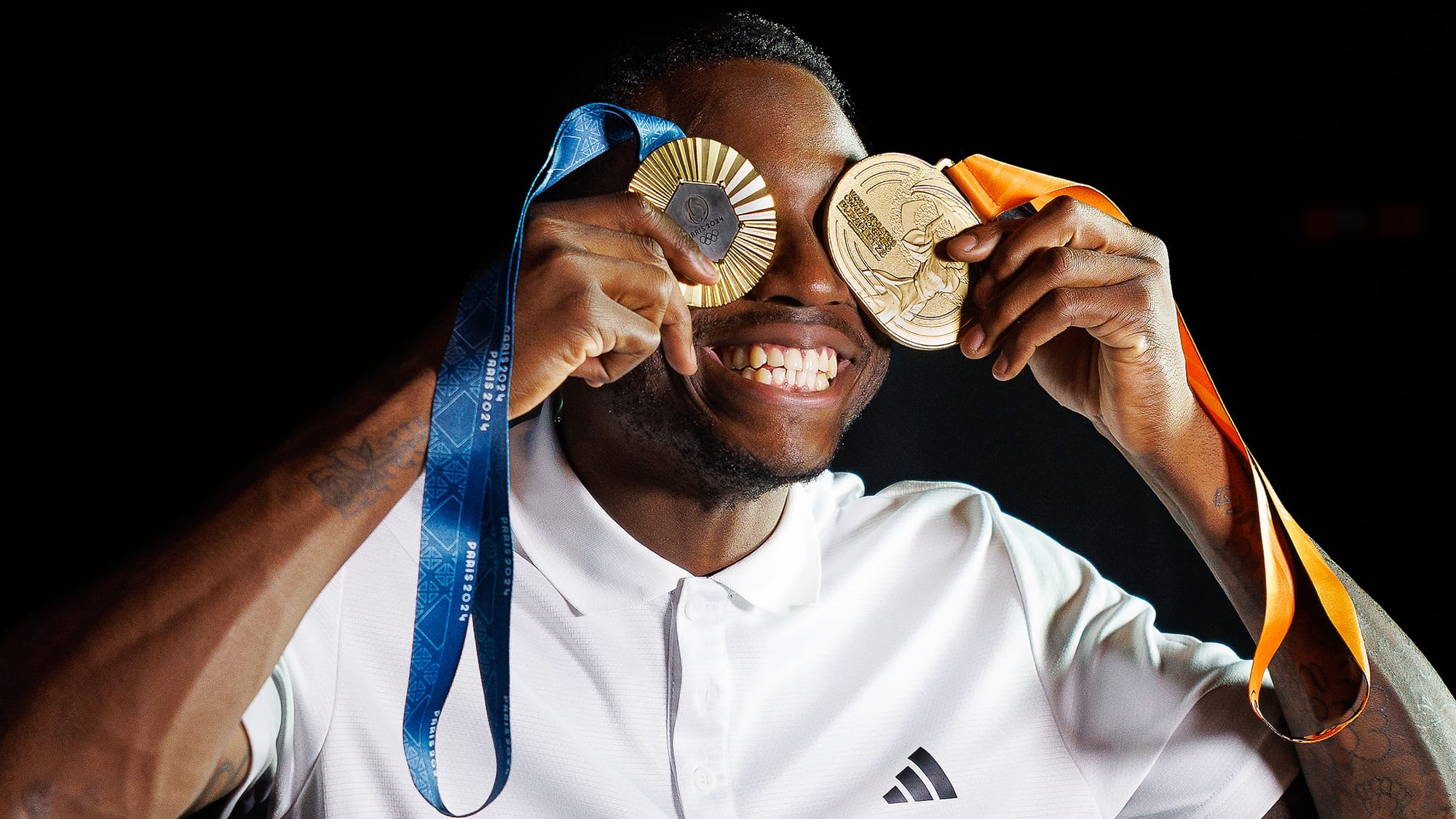
For now, Holloway sits in a studio in the basement of Weimer Hall, donning a simple white polo and showing off his pearly whites for the camera. Between shots, he’s handed a photo of a moment he remembers all too well. The image, taken by photographer friend Anderson Bobo, remains one of his lasting memories from that night – and his career.
“Ah, relief,” he says.
He can’t stop looking at it. A red, white and blue flag draped over his shoulders. The lights cascading down from above. The moment he could finally breathe again.
He’s been Grant Holloway, NCAA champion. He’s been Grant Holloway, world champion. He is Grant Holloway, Olympic champion.
Now, he finally has the chance to just be Grant.
This story appears in the Spring 2026 print issue of Grandstand Magazine. Click here to see the full issue in its original print format.