A Night Out In The Queue
Each July, fans from across the globe embrace a century‑old ritual: camping outside in the unpredictable London summer weather to earn a place inside tennis’ most storied grounds. It's a tradition that has become one of Britain's most cherished.
WIMBLEDON, England – A hushed silence falls across Centre Court.
Besides the low murmur of whispered conversations weaving through the stadium and the occasional pop of champagne corks in the distance, the crowd inside the All England Lawn Tennis Club grounds becomes still. With every seat filled, it’s as if thousands of fans have instinctively agreed to pause and lean into the intimate moment together.
But, first, let’s rewind.
Before being able to enjoy a coveted box of fresh strawberries and cream, sip on a glass of Pimm’s on Henman Hill or wander through Wimbledon’s beautiful grounds, countless fans wholeheartedly committed to countless hours of effort, anticipation and quiet dedication to earn a ticket to one of the world’s most prestigious sporting events.
Behind every spectator’s seat lies a journey. And for thousands of fans each day of the fortnight, that journey begins in the historic Wimbledon Queue.
Video by Hannah Getman
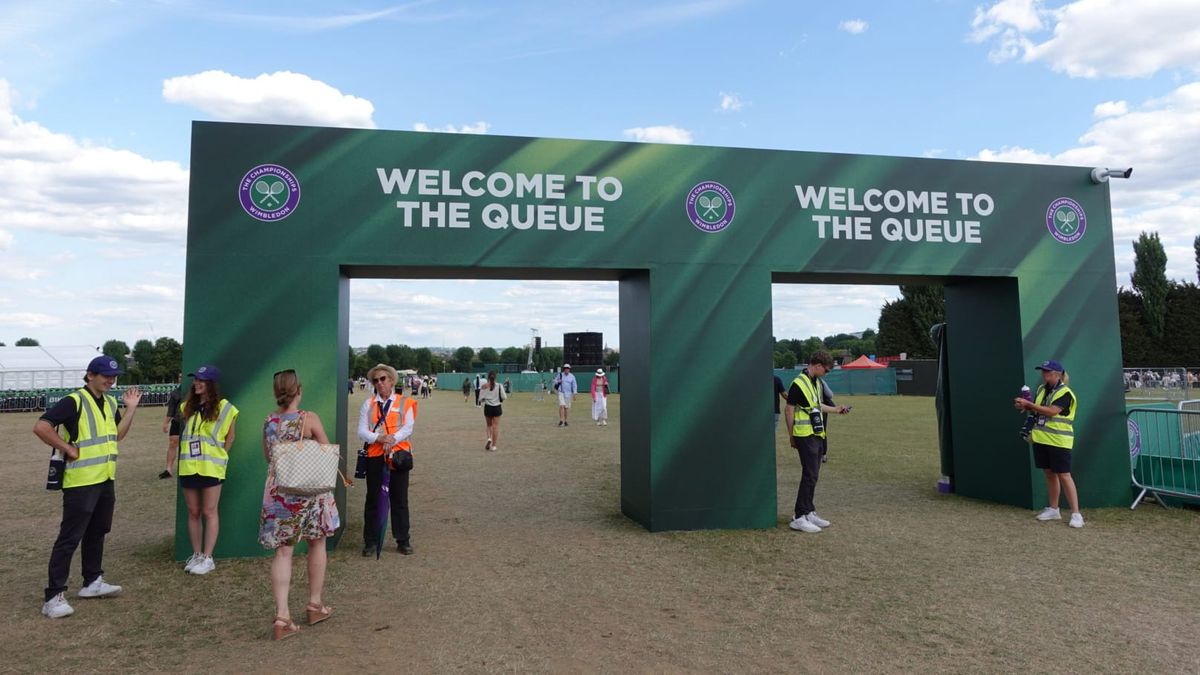
If you're arriving to the Southfields Station on London’s Underground District line in the early weeks of July, you may catch a glimpse of Wimbledon Park dawned with endless lines of tents, folding chairs and masses of people prepared to brave the unpredictable British summer weather.
As it has become nearly impossible to secure tickets through the AELTC Public Ballot, which requires applying almost a year in advance for up to two tickets, thousands flock to Wimbledon Park daily vying for a spot inside the grounds. Approximately the first 1,500 in line will be lucky enough to score Show Court tickets, gaining access to either Centre Court, Court No. 1 or Court No. 2. Nonetheless, entry will be permitted until the grounds reach its capacity of 42,000 spectators, allowing those with grounds passes unreserved seating on all outer courts, practice courts and Henman Hill.
The most dedicated fans arrive well before the gates even open and camp overnight, following an established code of conduct for the opportunity to purchase same-day tickets.
More than just the means to attend a sporting event, the Queue has undoubtedly evolved into a social and cultural experience like none other.
** More From Grandstand: What Makes Each Tennis Major Unique? **

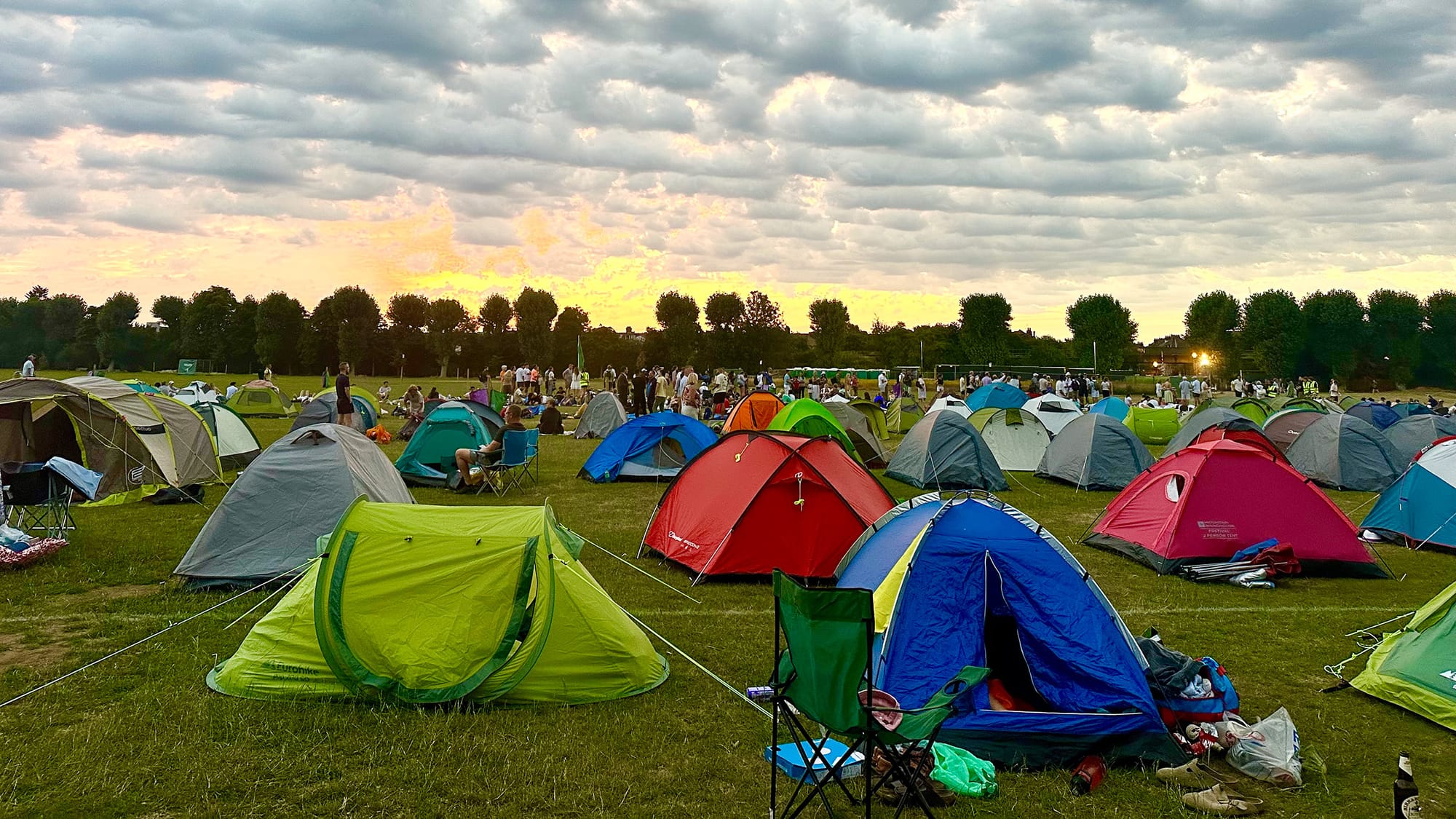
Play began at this year's Championships on Monday, and tournament organizers instructed fans not to arrive earlier than 2 p.m. Sunday. Still, people arrived as early as Saturday morning to claim their place near the front of the line – battling soaring temperatures throughout the weekend and only being permitted to leave their place in line for 30 minutes at a time.
Opening‑day crowds swelled to more than 10,000 people by 8:30 a.m., forcing officials to turn fans away. It’s a reality that pushes the most determined fans to camp out to secure their place inside the grounds.
Among those who joined the Queue last summer was Erin Przybylinski, who was queueing for Wimbledon for the third time and camping overnight for the first time in hopes of securing Centre Court tickets.
For those hoping to secure precious spots in Wimbledon's signature arena, Przybylinski offered practical advice based on her experience.
“If you really want to get Centre Court, I would definitely recommend camping or getting here before 3:30 a.m.,” she said.
Despite the long wait, Przybylinski said the atmosphere made the experience worthwhile and encouraged first-time queue-goers to approach the experience with a positive mindset.
“Come with a great attitude," Przybylinski said. "People are so nice, and it’s going to work out. You’re going to get in."
Her experience reflects what makes the Queue unlike any other in sport. Rather than competing against one another for tickets, fans spend hours sharing stories, exchanging advice and bonding over their shared love of tennis long before they ever step onto the grounds.
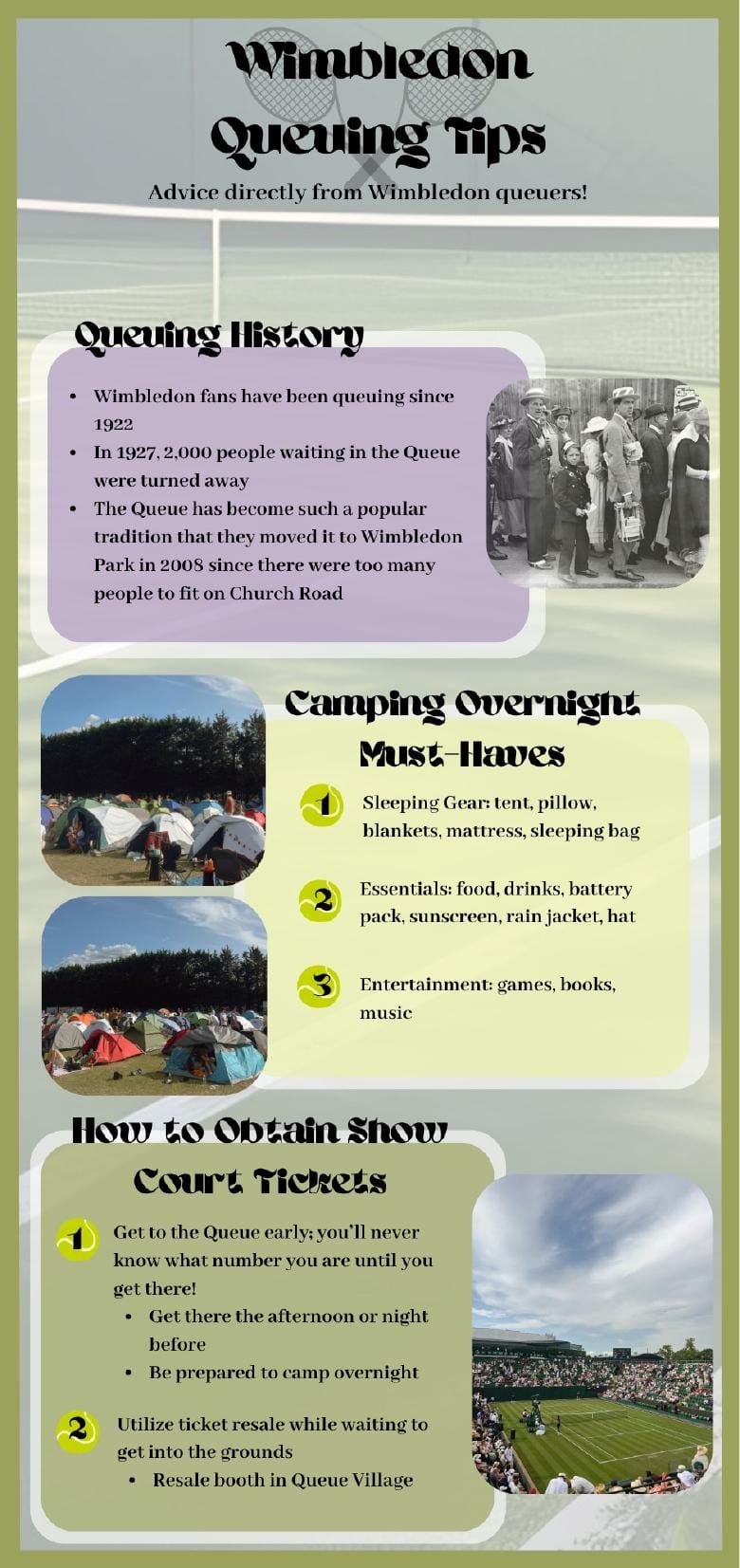
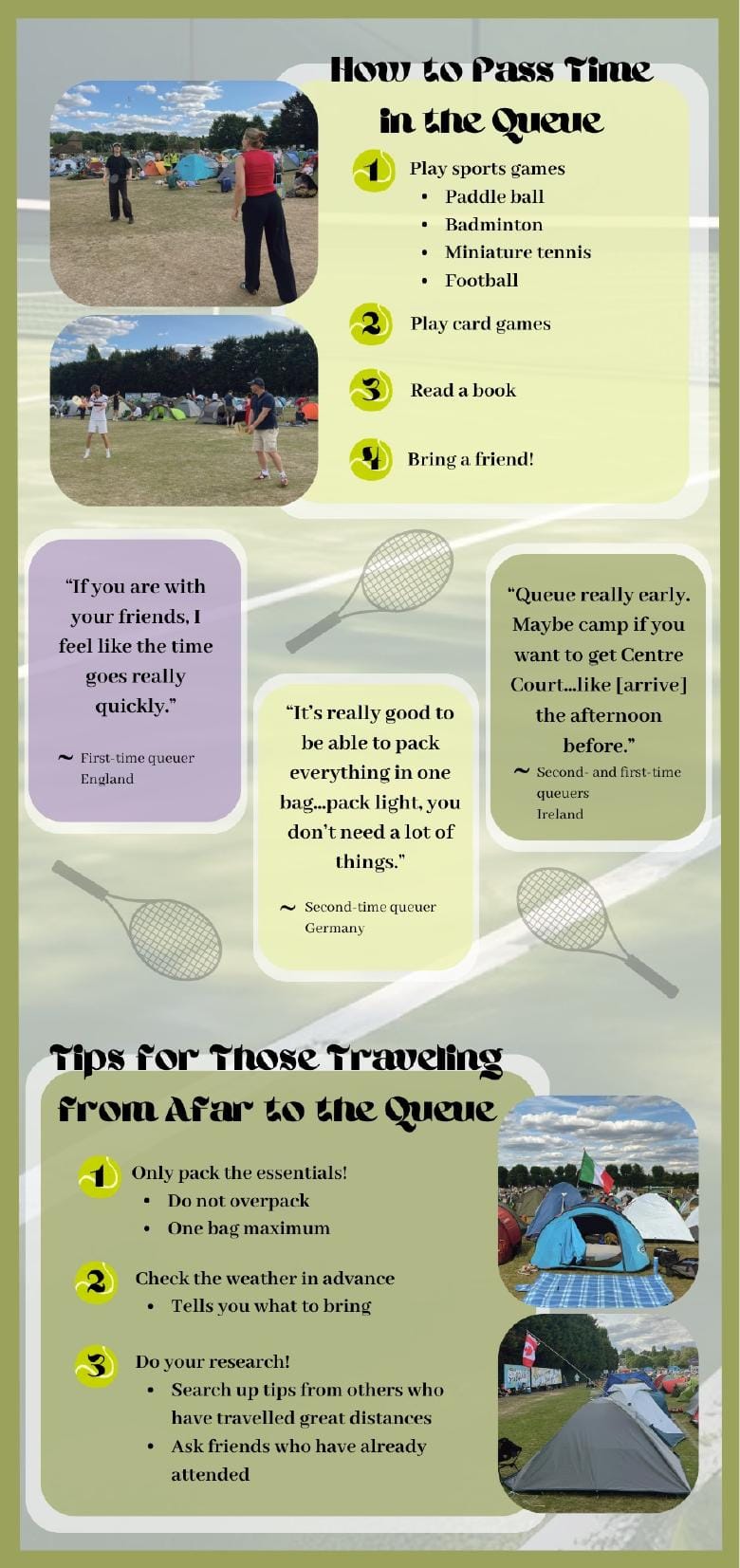
Infographic by Rylan Hauptman
Last year, Vicki and Nigel Broad, a couple from Wales, proudly claimed the first two spots in the Queue. Amid the lack of chaos, Vicki appreciates the calm, organized atmosphere that characterizes the Queue.
"It's a community of people, all with a common goal," she told BBC Sport. "There are never any problems in the Queue, the stewards run it so well.
“You know, the world’s crazy at the moment. But it’s like you take time out from that and you’re all just talking about tennis, you’re talking about where you come from, how long it took you to get here, how long you’re staying for, it’s just lovely.”
Looking around, you may find what you would least expect: groups of friends, families and strangers alike laughing and embracing the queueing culture. While some play cards or compete in spontaneous badminton matches, others appreciate the musical talent of local choir groups breaking out into song.
Despite changes the Queue has seen since its first year in 1922, there’s one thing that has remained uniquely special about the enduring tradition: the way it brings people together.
Perhaps the most notable example is Harry Taylor, a pub owner from Kent, England, who returned to the Queue this year for his 34th consecutive summer. Taylor camps every day of the fortnight — which is permitted until the quarterfinals — a tradition that has allowed him to build friendships with fans from around the world.
"I have friends from Australia, from New Zealand, from America, and we have known each other for over 20 years and we met in the queue," Taylor told BBC News. "So every year we just meet each other.”

Among Wimbledon’s many cherished traditions, the Queue attributes a ceremonial and timeless quality to the event by fostering a strong sense of community and camaraderie.
A shared passion for tennis brings fans together, creating the celebratory energy that defines the Queue’s lively, spirited atmosphere.


Newlyweds from South Korea were celebrating their honeymoon at last year’s Championships, proudly showing off their custom-designed T-shirts that they made to commemorate their journey. | Lexi McDonnough/Grandstand Magazine
A recently married South Korean tennis professional and digital artist traveled with his wife to Wimbledon for their honeymoon. Documenting his time in the Queue on his Instagram account, @wonlytoon, he delighted fellow fans by handing out photo cards featuring his own illustrated depictions of the players.
What remains fascinating is that fans may travel from opposite ends of the world, yet once they join the Queue, everyone becomes equal. Regardless of income, social status or connections, each person agrees to respect the orderly nature of the Queue, refraining from line-jumping or violating any rules that may diminish another fan’s experience.
While some cultures may view queuing as inefficient or outdated, the notion of a queue can be traced back to the times of the Industrial Revolution when people were largely migrating from the countryside into towns and transforming patterns of daily life.
At a time when broader society struggled to maintain structure, the British began establishing their enduring reputation for order and fairness. Today, the Wimbledon Queue emphasizes the need for mutual respect and embodies the British values of fairness, order and patience. As marquee sports become even more corporate and commercialized, the Queue stands out as one of the few events that still guarantees the most loyal fans the opportunity to experience the excitement of the tournament in person without breaking the bank.
At least for now, there is no indication that the Queue’s future is in jeopardy. By prioritizing fairness and accessibility over profit, Wimbledon continues to preserve entry for dedicated fans while protecting the integrity of the sport and serving as a rare equalizing force in a modern sports landscape dominated by inflated resale markets — a stark contrast to events such as this summer’s FIFA World Cup.
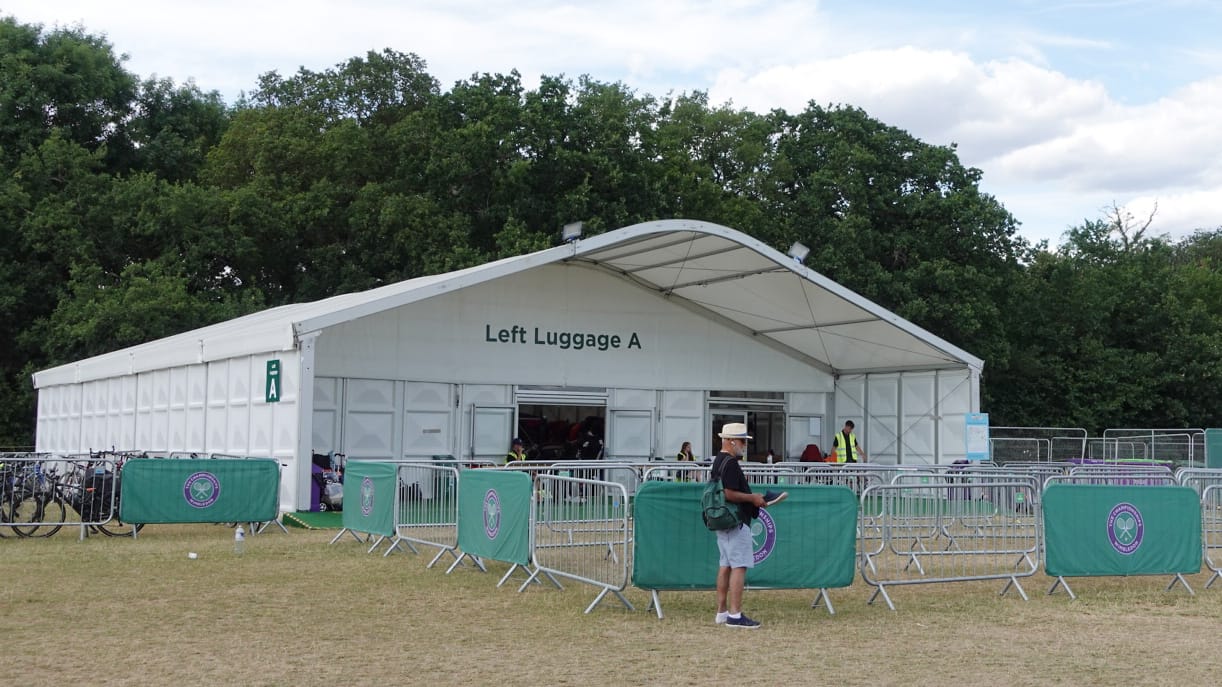
That commitment to accessibility is reflected in the tournament’s ticket prices. Tickets for the 2026 Championships remain reasonably priced, costing as little as £33 ($43.75) for grounds passes, while Centre Court tickets during the first week range from £115 to £175 ($152–$232). Once inside the grounds, spectators can also enter the official resale queue for the opportunity to upgrade to Show Court seats for a nominal fee.
Ophelia Parker and her husband, tennis enthusiasts from Seattle, returned in 2025 for their second year in the Queue, arriving at 4 a.m. on Day 2. Parker says the experience improved markedly since their last visit, crediting the 2024 introduction of the Queue Village, which is now a designated holding area offering activities and refreshments for queue‑goers.
Beyond Wimbledon’s attention-to-detail in creating memorable guest experiences, Parker appreciates its deeply rooted culture and extensive history of traditions, praising the organization’s ability to establish a dynamic reputation that blends prestige with inclusivity and accessibility.
“It's traditional," Parker said. "I like that it's proper and everybody wears white. I like that it's accessible for people. If you're a tennis fan, you can come, and you can get a ticket. It's not just corporate sponsors, and you don’t have to pay $300 or $400 for tickets.”

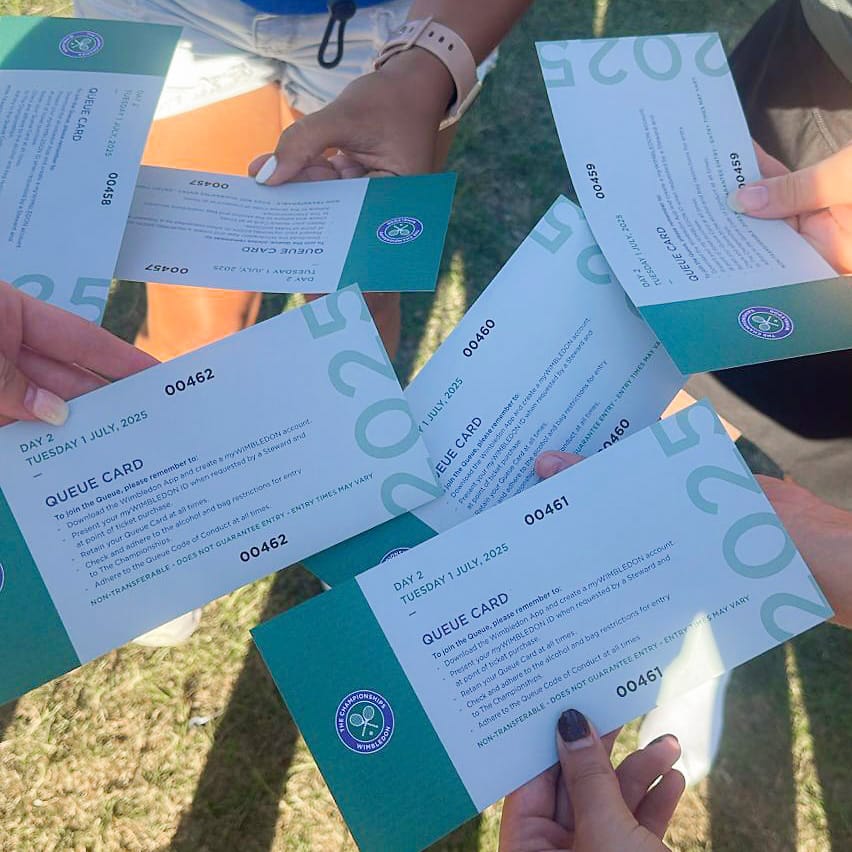
As Wimbledon’s 2026 campaign, “Where Beauty Meets the Battle,” continues the tournament’s “There is Only One Wimbledon” brand platform introduced last year, it celebrates the unique contrast between timeless elegance and the intensity of world-class competition that defines The Championships.
That same balance of beauty and perseverance is reflected in the spirit of the thousands of fans who are willing to brave unpredictable conditions and patiently wait their turn in the Queue. There is no doubt that queueing requires commitment and resilience, but to fans like Parker, waiting in line makes the entire experience that much more fulfilling.
“I really feel like it's a tennis tournament that is truly for the people," Parker said. "If you queue, and if you camp, the reward is always amazing.”