Why Club Sports Matter
Some want a sense of normalcy back, others want to play sports that aren't offered at UF. The reasons to join club sports vary from student to student, but one thing is clear: they've never been more popular.
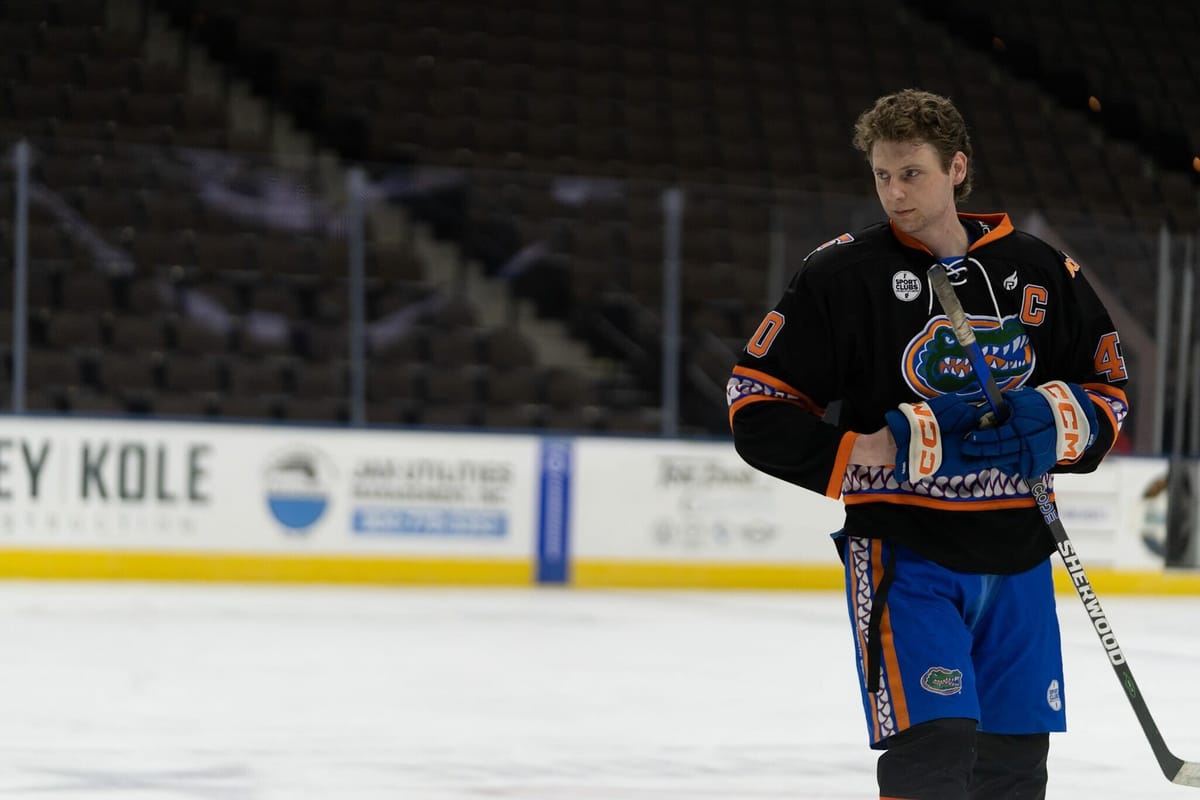
Dylan Morton still remembers the moment Florida club hockey finally clicked.
It was his freshman year, sitting on a bench in an ice rink in Jacksonville, the time on his watch creeping toward midnight. Florida was about to play Embry-Riddle’s club hockey team in Daytona. Morton glanced at the clock, tired, quietly wondering why he chose this.
Then, a teammate next to him leaned over.
“This is awesome, isn’t it?”
Morton didn’t see it. 10:30 PM puck drops on a Friday night to a near-empty crowd wasn’t exactly his definition of “awesome.” But the significance wasn’t lost on those around him.
“He’s like, ‘No, we get to wear the University of Florida Gator on our chest, and our name is on the back. Who else gets to do that?’ ” Morton said, smiling.
That perspective stuck.
For many high school athletes, sports shape everything — schedules, friendships and identity. Yet continuing to play in college isn’t guaranteed. NCAA data shows that only about six out of every 100 high school athletes continue on to varsity competition, leaving many in a limbo when college comes around. College club sports change that.
At the University of Florida, more than 40 club teams give students the chance to keep competing without the full demands of Division I athletics. From soccer to rowing, or even underwater hockey, there’s a club sport for just about anyone. Some programs operate at a near-varsity intensity, traveling nationally and holding structured practices. Others offer an easier balance of competition. All provide the opportunity to keep playing, and have exponentially grown over the last few years.
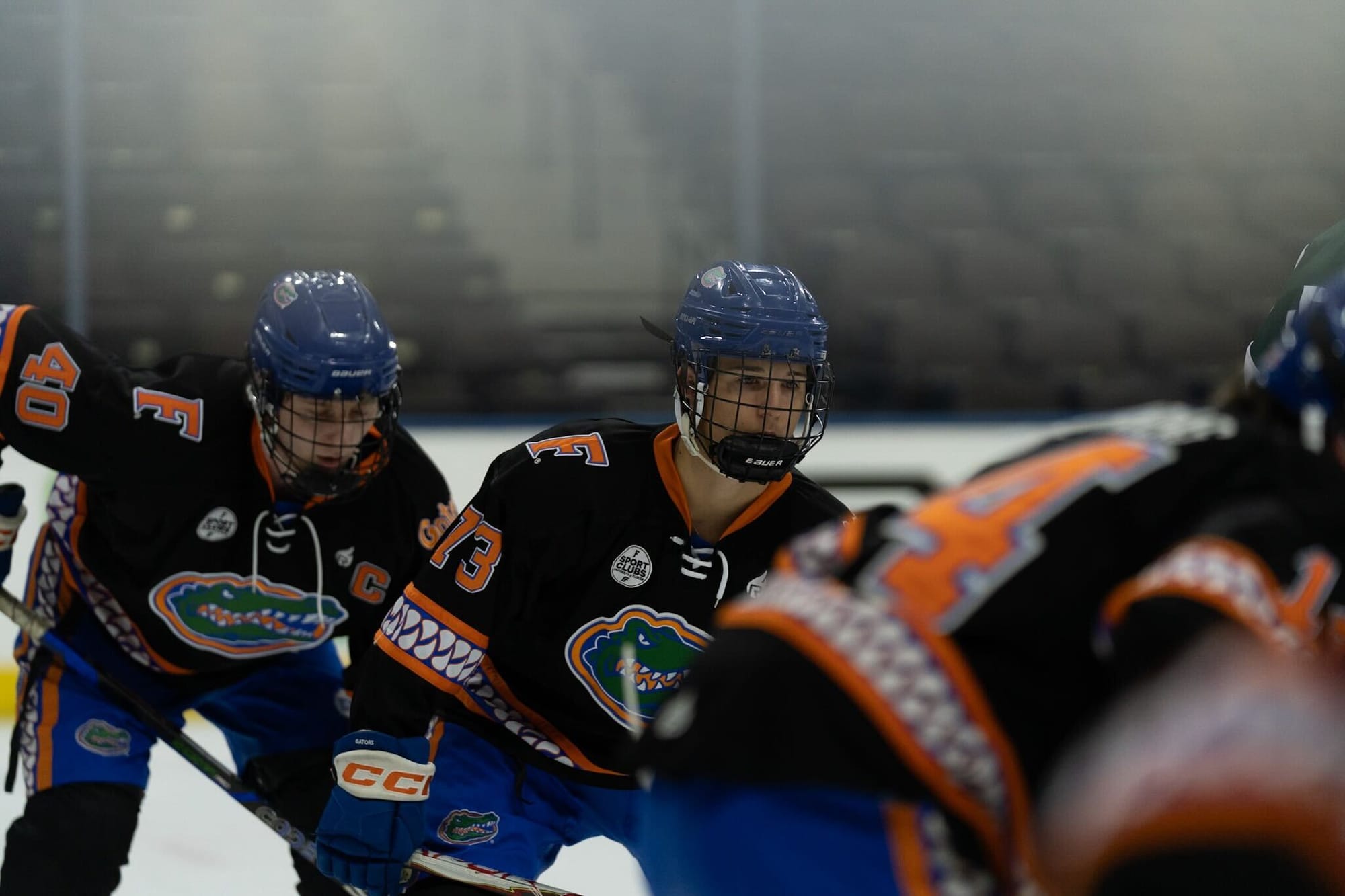
When Morton arrived at UF, the hockey program felt thin. Practices were inconsistent, the roster was small and the locker room, he remembers, was quiet. “I’d walk in, and everyone just sat down, got dressed and went on the ice–no talking,” he said.
Just a few years later, Morton is the team’s president, helping lead an 18-player squad that’s unrecognizable compared to prior years. The bench is full, practices are lively and the locker room buzzes. The culture has changed.
“We’ve built a community,” he said. “People are talking, going out together, actually enjoying being around each other.”
For Morton, who once was only concerned about how he could keep the sport in his life, club hockey has become more. It’s something he could build beyond the rink.
Morton’s experience, though, is only a small part of a larger story across the UF campus.

The squeak of basketball shoes cuts through the gym, sharp against the glossy floor. Orange-and-blue jerseys dart around the court amid a chorus of bouncing basketballs and sporadic shouts. Despite the familiar colors and sounds, this isn’t an NCAA practice — it’s UF Club basketball.
For that matter, only 3.6% of male high school basketball players make it to the NCAA.
“Knowing what I know now, I would come here every single time,” said Joe DeBlasio, the current president of UF’s men’s club basketball team.
The Holmdel, New Jersey, native spent years in competitive and travel basketball, even drawing Division III interest. But the fit was never quite right, leading him to club basketball.
His teammate, and vice president Logan Traband, echoed a similar experience. Traband has been on the court since he was 9, playing through high school with hopes of college recruitment. After a senior-year ankle injury sidelined him, his plans were reshaped.
Now, DeBlasio and Traband lead the Gators, who compete in the National Club Basketball Association, a league of roughly 150 teams. Last season, UF climbed as high as No. 4 in the national rankings.
As a student-run program, the structure demands more from its players.
“Not having as much of a level of authority, it’s a lot more on the players themselves to take it seriously,” DeBlasio said. “Everyone takes it at a different level, but I feel like a lot of guys do take it seriously.”
For DeBlasio, his role on the team has prepared him for what comes next.
“I think all that experience will definitely translate to working in sports in the future,” he said. “Which I 100% plan on.”

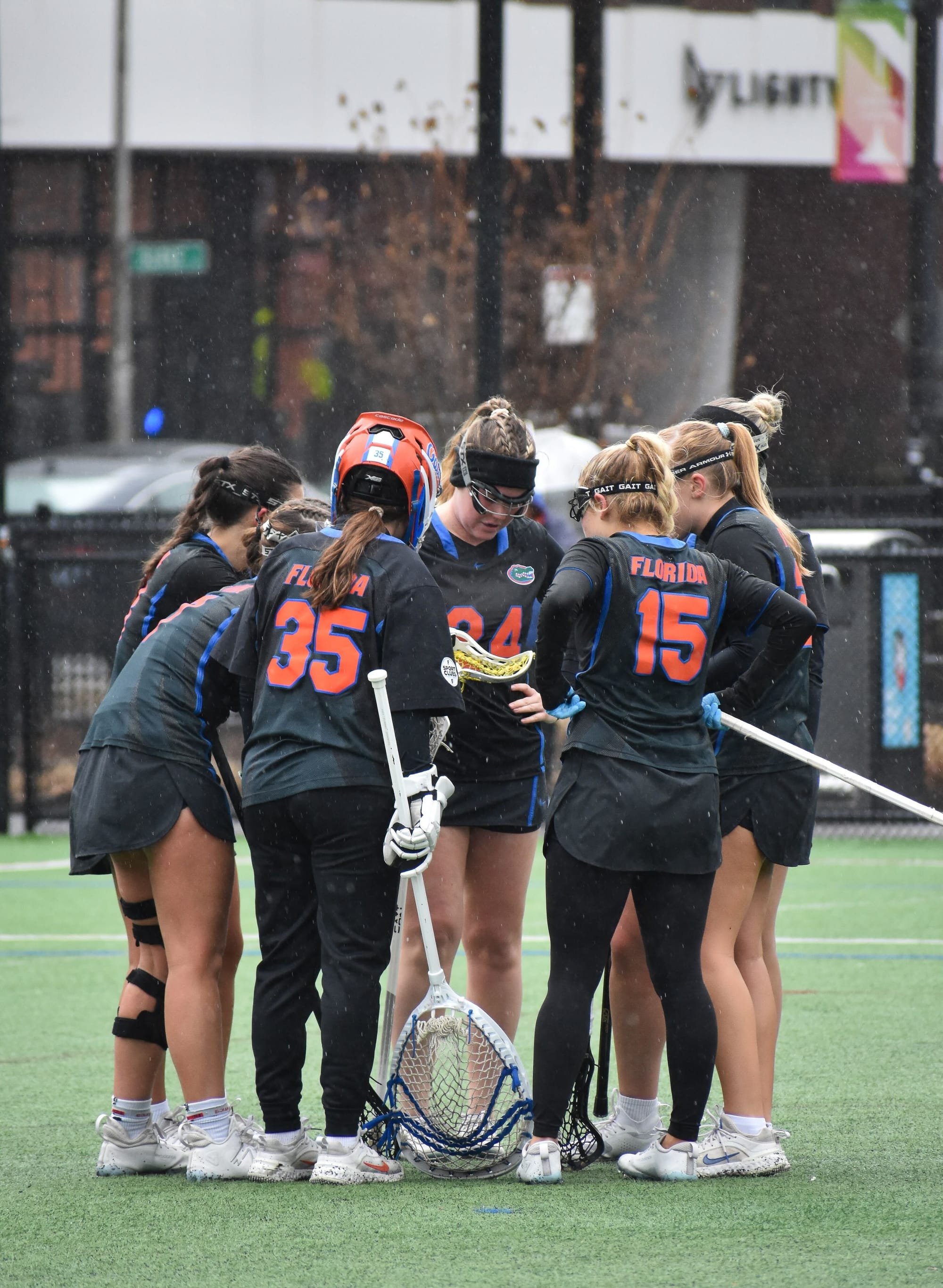
Reese Rines, a member of UF’s club lacrosse team, grew up playing sports, from basketball to soccer to eventually lacrosse. For her, an afternoon practice was as reliable as waking up in the morning. Her life revolved around the field.
“When I was in high school, that was all I did. I just played sports,” she said. “So I think I was worried about not finding where I was going to fit in, but [club lacrosse] really helped me keep a piece of myself.”
Originally from New York, Rines had to navigate a period of transition after moving to Gainesville. The absence of a sport left a noticeable mark — one she hadn’t initially been prepared for. Joining the team gave her a sense of normalcy.
“It was so nice to just have a group of girls that immediately felt like family. It’s a good grounding point for me,” she said. “No matter what’s going on, I know I have practice.”
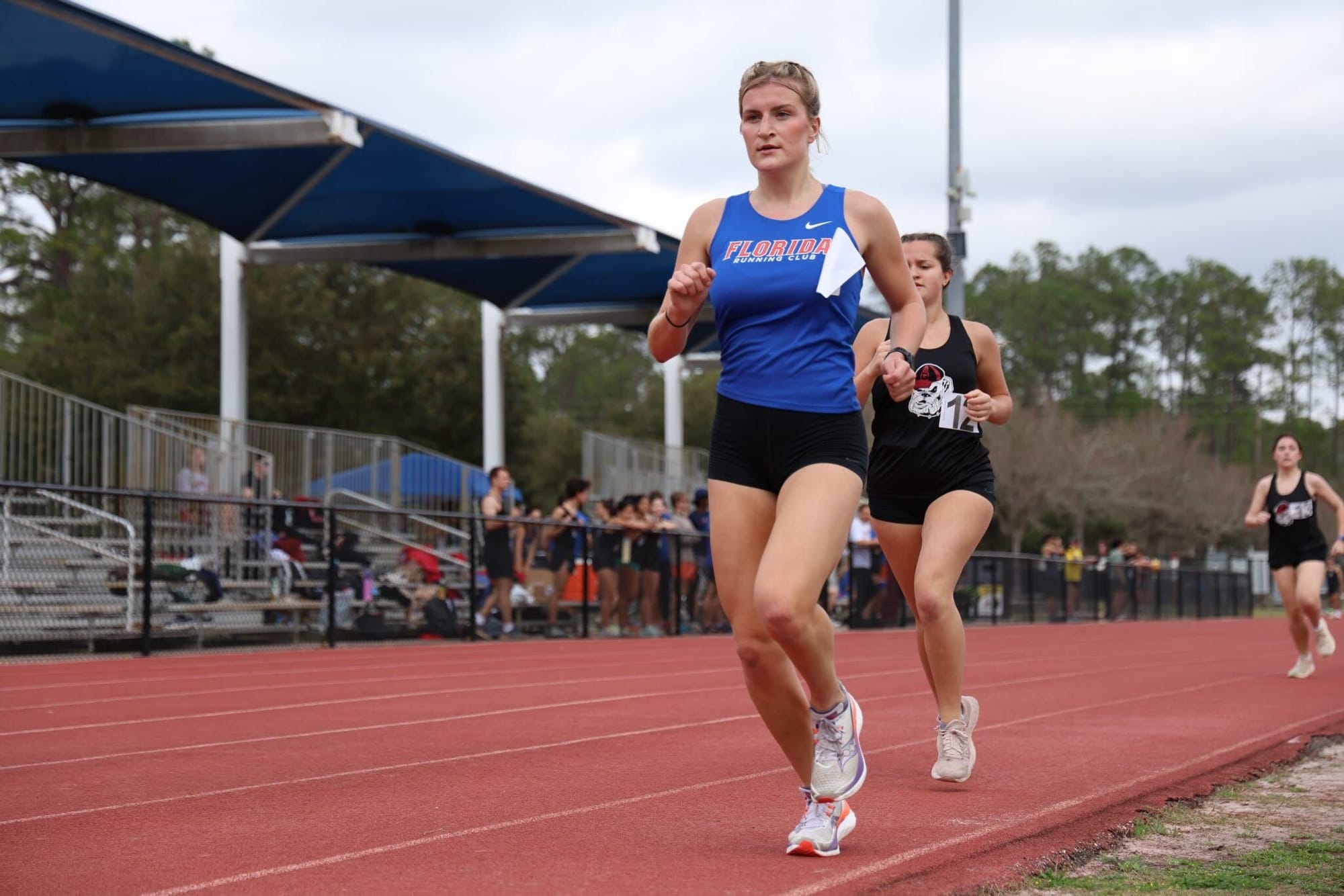
Sofia Tovar, a senior at UF and the President of Florida Running Club, compared the social side of club sports at UF to a Greek life alternative. These groups host socials with other club teams, plan team bonding events, regularly travel to away competitions and even have clubhouses that members of the team live in.
As a business major, Tovar said she didn’t have the opportunity to meet many other students because so many of her classes were hybrid or fully online. The social culture of club sports allowed her to immerse herself even deeper into UF’s diverse community.
“I have so many friends that are STEM majors or political science,” she said. “We’re brought together by a sport, but everyone’s so different.”
Chloe Reed is the vice president of Tovar’s team. Her experience has largely been defined by a similar sense of community.
On their first day of practice for the year, Reed said it’s normal to see close to 200 runners show up. The range of runners is part of what makes the team special.
“You’re surrounded by people in all skill levels of running,” she said. “It’s pretty motivating to see what people are doing around you.”
Another aspect of the team that she appreciated was its flexibility. Due to what she called its “self-sufficiency,” she was able to craft her own running plan that fit her schedule, rather than something that was set for everyone, regardless of their calendar. Reed said it’s made her a better runner.
For other club sports athletes, that flexibility became especially appealing after years of intense competition. A 2024 report from the American Academy of Pediatrics found that nearly 10% of youth athletes experience burnout. Even for athletes whose lives revolve around a sport, the demands can eventually overwhelm.
Tennis has been a constant in Jack Curley’s life for as long as he can remember. He started playing at 3 in Philadelphia, where he was born, and as his family moved around for his father’s job, the sport naturally followed. No matter the location, Curley trained full-time, often practicing for close to 10 hours a day. He spent teenage summers training at the John Newcomb Tennis Academy in Texas and during the school year, Curley was frequently absent due to weekend tennis tournaments. Unlike many of the athletes he competed against, he wasn’t homeschooled.
“I had no social life because of it,” Curley said. “All my friends were just tennis people, and you’d only see them at tournaments.”
By 17, the hours spent on the court caught up to him.
When he arrived at the University of Florida, Curley stepped away from the court for three months to focus on school. After that cool-down, he found his way right back through club tennis.
Now in his fifth-year at UF and in his second as the club president, Curley leads a program with around 60 active members, including Division I, II and III players whose competitive collegiate years were cut short.
“It’s one of those sports you can play forever,” he said. “I love it. I love every part of it.”
Curley’s journey is similar to that of many former high-level athletes at UF.
Whether it was competitive swimming or water polo, Nicky Borden has been in the pool since he was 5 years old. Growing up in California, his schedule, like many competitive high school athletes, revolved around practices, matches, and the college recruiting process.
By the end of high school, the path seemed clear. All but three members of his club water polo team went on to compete at the Division I level. Borden had similar plans to compete at an Ivy League school and was deep in the recruiting process with Brown University.
After not receiving an offer late in the process, Borden ultimately chose UF.
For water polo and other sports with limited professional opportunities, the chance of being able to continue the sport post-grad as a job isn’t just rare- it’s near impossible, regardless of how good you might be.
“They have these amazing high moments in NCAA tournaments,” Borden said of his friends playing Division I water polo. “But, when they graduate, oftentimes they don’t even have a job…You have to think beyond the four years.”
But stepping away from one dream doesn’t mean stepping away from the sport itself.
Like Morton, who, years after that late-night game in Jacksonville, no longer watches the clock tick down. Instead, he turns his focus to the crowded bench, the chemistry of his team and an opportunity to represent the orange and blue.
For him, and many of the hundreds of other athletes in club sports at UF, club sports were never a fallback, but a chance to redefine their role in a sport that once defined them.