The Anatomy of a Rebound
How is Florida so dominant on the glass? It's far more than just size. For the Gators, rebounding is both a science and an art, combining extensive analytics with an old-school emphasis on physicality, effort and mindset.
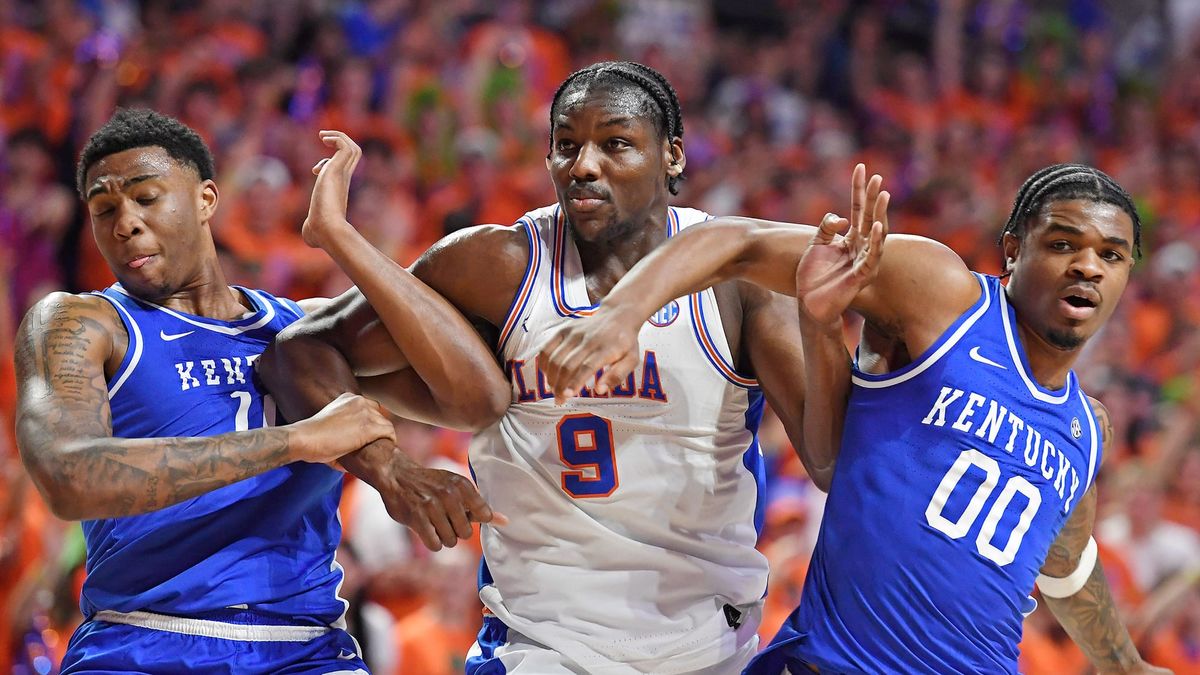
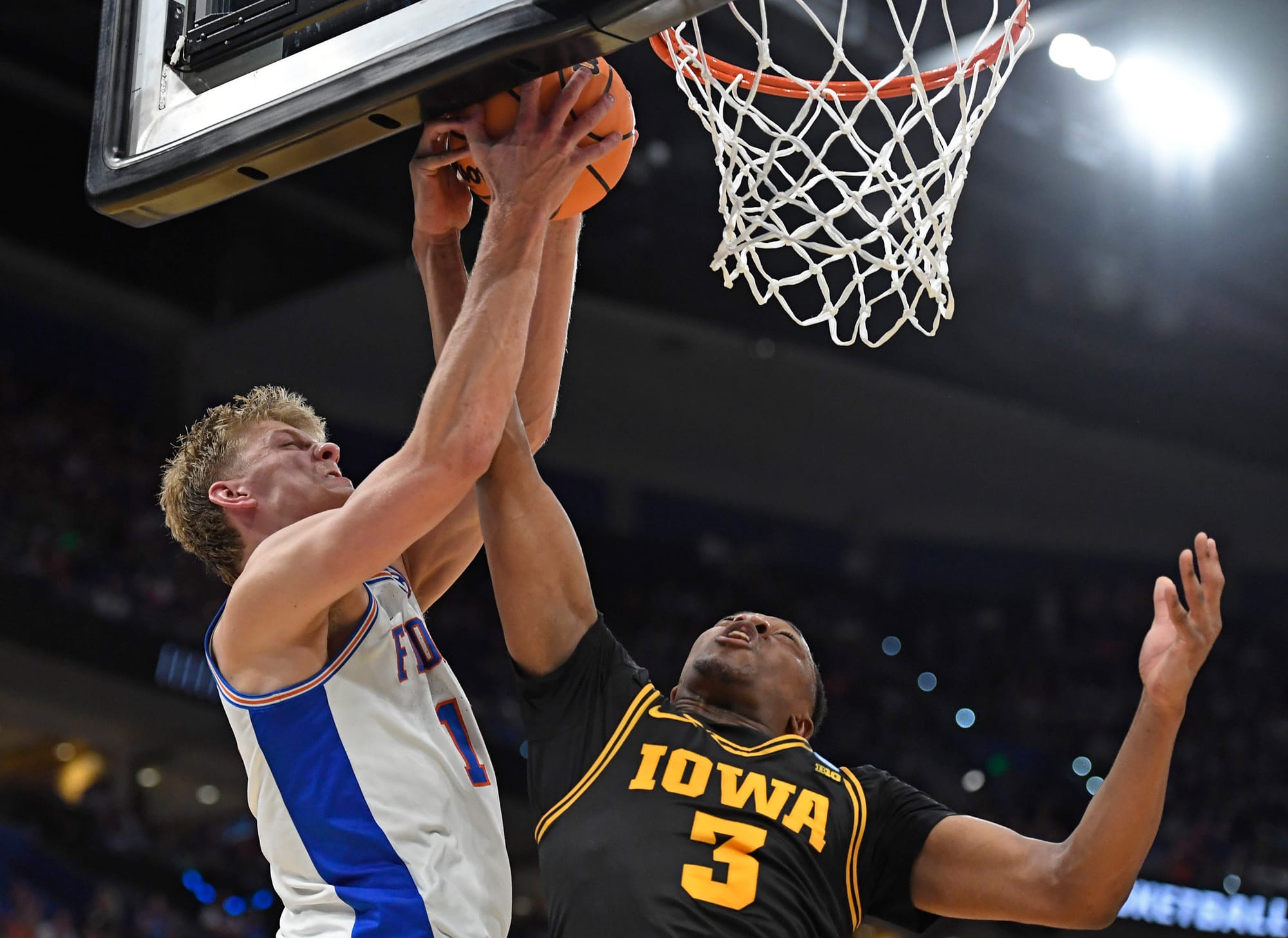
Flying out of the pick and roll, Florida forward Alex Condon caught the ball just outside the paint, drew a double team and missed a 6-foot shot off the side of the rim. What followed was a familiar sequence. Rueben Chinyelu rose above three defenders for a tip. Another miss. But Chinyelu was already there as the ball rolled off his hand to Condon, who soon passed to Urban Klavzar on the perimeter. The 3-pointer went up as Condon crashed the high side of the left block, Chinyelu battling for position and somehow getting in front of two defenders. Another miss. The ball then flew out of bounds, but one inbound later, it was back in Chinyelu’s hands. This time, he tossed aside a defender and scored. A four-shot possession had finally reached its bruising conclusion.
It’s only an exhibition game, but Florida’s intensity on the glass would pass in a late-March heavyweight fight. It’s a philosophy built by aggression and metrics.
A couple weeks earlier, sitting in his mildly decorated office, Jonathan Safir’s eyes darted from his phone to his computer. With a conversational style that mimics an auctioneer, he rattled off stats, techniques, game plans that make up the ethos of college basketball’s top dog.
“I have to remind myself to slow down,” said Safir, who is in his fifth season as an assistant coach on Todd Golden’s Florida staff. “It’s passion.”
On The Bounce
Florida has become a dominant rebounding team since head coach Todd Golden arrived in Gainesville, finishing in the top three nationally in each of the past three seasons.
| Season | RPG | National Rank | Head Coach |
|---|---|---|---|
| 2020-21 | 35.3 | 172nd | Mike White |
| 2021-22 | 33.6 | 259th | Mike White |
| 2022-23 | 34.5 | 204th | Todd Golden |
| 2023-24 | 42.3 | 3rd | Todd Golden |
| 2024-25 | 41.8 | 3rd | Todd Golden |
| 2025-26 | 45.1 | 1st | Todd Golden |
Source: NCAA statistics
Golden has always preached a commitment to rebounding, making it one of the cornerstones of the Florida program since he was hired in 2022. At the time, UF ranked 259th nationally in rebounds per game (33.6). The Gators have finished third, third and first over the past three seasons. Last year, Florida collected 43.2% of its missed shots, good for second in the nation. Those second-chance opportunities are vital to the No. 1 team in the country — and the product of an intricate, intentional balance Golden’s staff strikes.
Safir and fellow Florida assistant Carlin Hartman meld the science of the boards with an artistic approach that guided the Gators to lead the nation in rebounding, offensive rebounding and rebounding margin last season. That team was statistically better on the glass than the Gators’ 2025 championship squad. With the return of the most dominant frontcourt in college basketball – Chinyelu, Condon and first-team preseason All-America forward Thomas Haugh – for their senior seasons this year, Florida expects to be even better.
With a 6-foot-9 Haugh, 6-foot-10 Chinyelu and 7-foot Condon, Florida returns one of the largest lineups in college hoops. It figures that rebounding margins follow, but the raw size is only a small part of what makes Florida so good.
By tracking nearly every movement those giant bodies make on the court, Safir and the Gators can isolate and evaluate one specific element of basketball: rebounding.
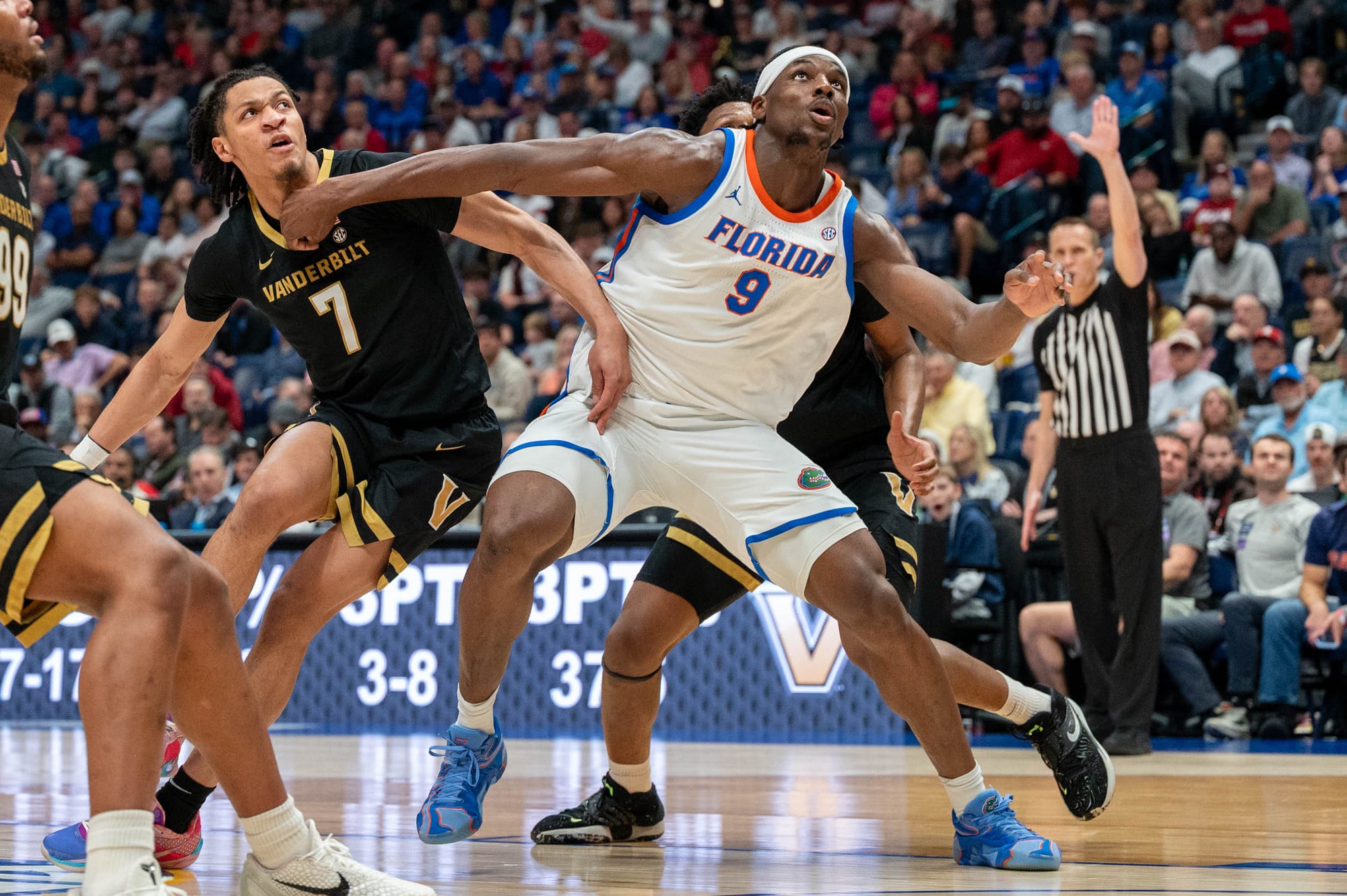
Just down the hall, Hartman enters his slightly more ornate office after working with Florida’s frontcourt at the Hugh Hathcock Basketball Complex. He leaves the rocket science to Safir, instead focusing on pursuit — the tenacity and will of chasing a missed shot. As a former player for Tulane and a coach for 30 years, Hartman understands the mentality and toughness it takes to dominate the glass, and, in some ways, he’s the Gators’ numbers translator – the yin to Safir’s yang, each balancing two schools of basketball thought.
To many, the process of grabbing a rebound following a missed shot seems relatively straightforward. After a first-round loss in the 2016 NCAA Tournament to 12th-seeded Yale, Baylor forward Taurean Prince answered a question about why Yale outrebounded the bigger – and heavily favored – Bears.
“You go up and grab the ball off the rim when it comes off,” he explained blankly. “Then you grab it with two hands, and then you come down with it, and that’s considered a rebound. So they got more of those than we did.”
Prince wasn’t wrong. That is, in fact, how you rebound, technically speaking. But the practice is considerably more complex.
“I think it’s a science because there is a process that needs to be followed,” said Al Horford, a 20-year-NBA veteran and two-time national champion at Florida. Horford led the Gators in rebounding during their back-to-back championships in 2006 and 2007 before going third overall in the 2007 NBA Draft.
“The first thing I’m always conscious of,” Horford said, “is when the shot goes up, you have to find and make contact with the offensive player.”
Dennis Rodman, the NBA great recognized for his flamboyant, rebellious persona, is also widely known as one of the greatest rebounders ever. At only 6-foot-7, Rodman led the league in rebounds for seven consecutive years in the 1990s.
His former teammate and Hall of Famer, Isiah Thomas, said that Rodman was a genius on the court. Rodman would count the rotations of the ball for every player’s shot in warmups, he claimed, so he knew how long the orb would spin in the air, where it would hit and how it was going to bounce.
According to Safir, the Gators aren’t exactly studying spin cycles, but a lot more goes into rebounding than just ‘see ball, get ball’. “Rebounding is just a percentages game,” he said. “All we’re trying to do is optimize our percentages.”
Every time a player takes the court, practice or game, Safir and Florida’s support staff turn action into data.
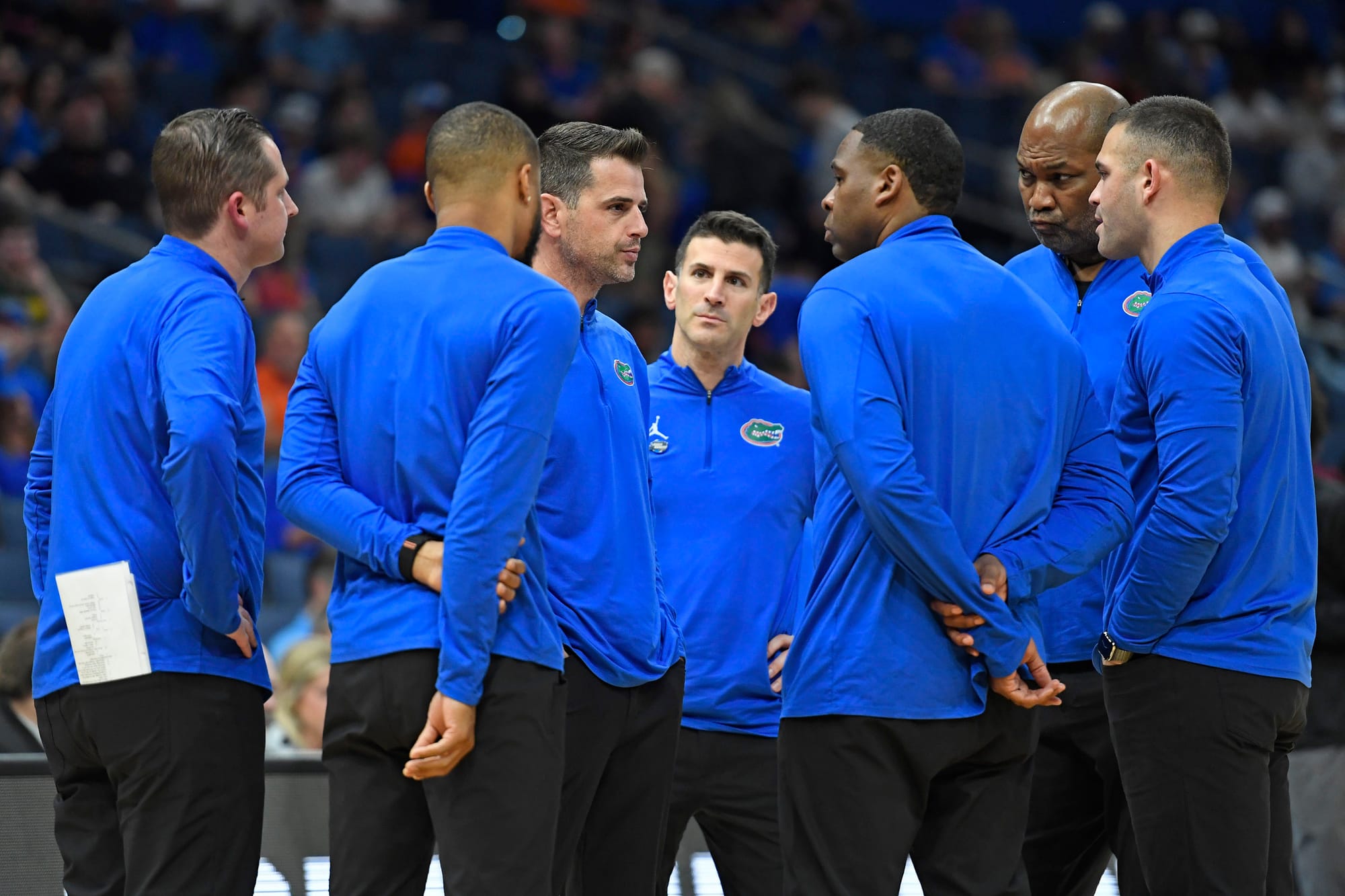
Using an extensive Excel database, they chart virtually everything related to rebounding: blockouts, missed blockouts, blind blockouts, rotational blockouts, defensive rebounds, defensive rebound execution errors, offensive rebounds, offensive tips, whether they had two feet in the paint when the shot goes up, if they didn’t crash and “ball-and-hole,” which is when one guard fills in at the free throw line after a shot goes up and the other goes back on defense. That range of technicalities then funnels into a singular rebounding hustle statistic that Safir and Florida’s staff use to evaluate an individual’s rebounding value.
“They could say, ‘Hey, Condon was a great rebounder in Australia, but he comes here and he can’t rebound right now,’” Safir explained. “And I can say ‘His process has been great, he’s gotten two feet in the paint all the time, his blockouts are good — the balls just aren’t bouncing his way.”
Before diving into the details, a quick terminology lesson: In basketball, there’s a point guard, shooting guard, small forward, power forward and center. Coaches often call the point guard the 1, shooting guard the 2 and so on. “Crashing” is when a player runs at the basket when a shot goes up and “hitting” is the first contact a player makes with the opposing team on a rebound.
Now put your coaching hat on and buckle up.
Grab And Go
UF's record when outrebounding opponents under Todd Golden.
| Season | Record | Win % |
|---|---|---|
| 2025-26 | 26-5 | .839 |
| 2024-25 | 30-3 | .909 |
| 2023-24 | 19-5 | .792 |
| 2022-23 | 8-2 | .800 |
When a shot goes up on offense, Safir said, the 4 and the 5 should already be running to the basket since Florida’s offense brings them up top with ball screens and then prompts them to roll. The 3 also crashes, meaning the goal is to have six feet in the paint by the time the ball hits the rim.
“If you’re crashing from the corners, you don’t crash baseline because even though it may help you get a rebound a percentage point or two, if you don’t get it, it hurts your transition defense,” Safir said. “We tell them to crash the high side, so the elbows and blocks.” (The blocks are the hash marks on the sides of the free-throw lane that are closest to the basket. The elbows are where the lane intersects with the free-throw line. Crashing baseline is when a player runs along the boundary behind the backboard.)
Then, for the aforementioned “ball-and-hole,” the 2 should sprint back on defense and the 1 runs to the free throw line. If the other team gets the rebound, the point guard is there to contest an outlet pass for a split second to give Florida’s transition defense more time to get set. The 1 is also there to gather long rebounds and tip-outs from the bigs.
Hartman works with the bigs on wedge blocking, which is when an offensive player wedges the defensive player under the rim so long rebounds have a better chance of falling in the hands of the offense, often to the point guard.
“There’s teams that their guards don’t rebound … that’s just not going to be a thing,” Golden said. “For the football guys, that would be like having wide receivers that don’t block.”
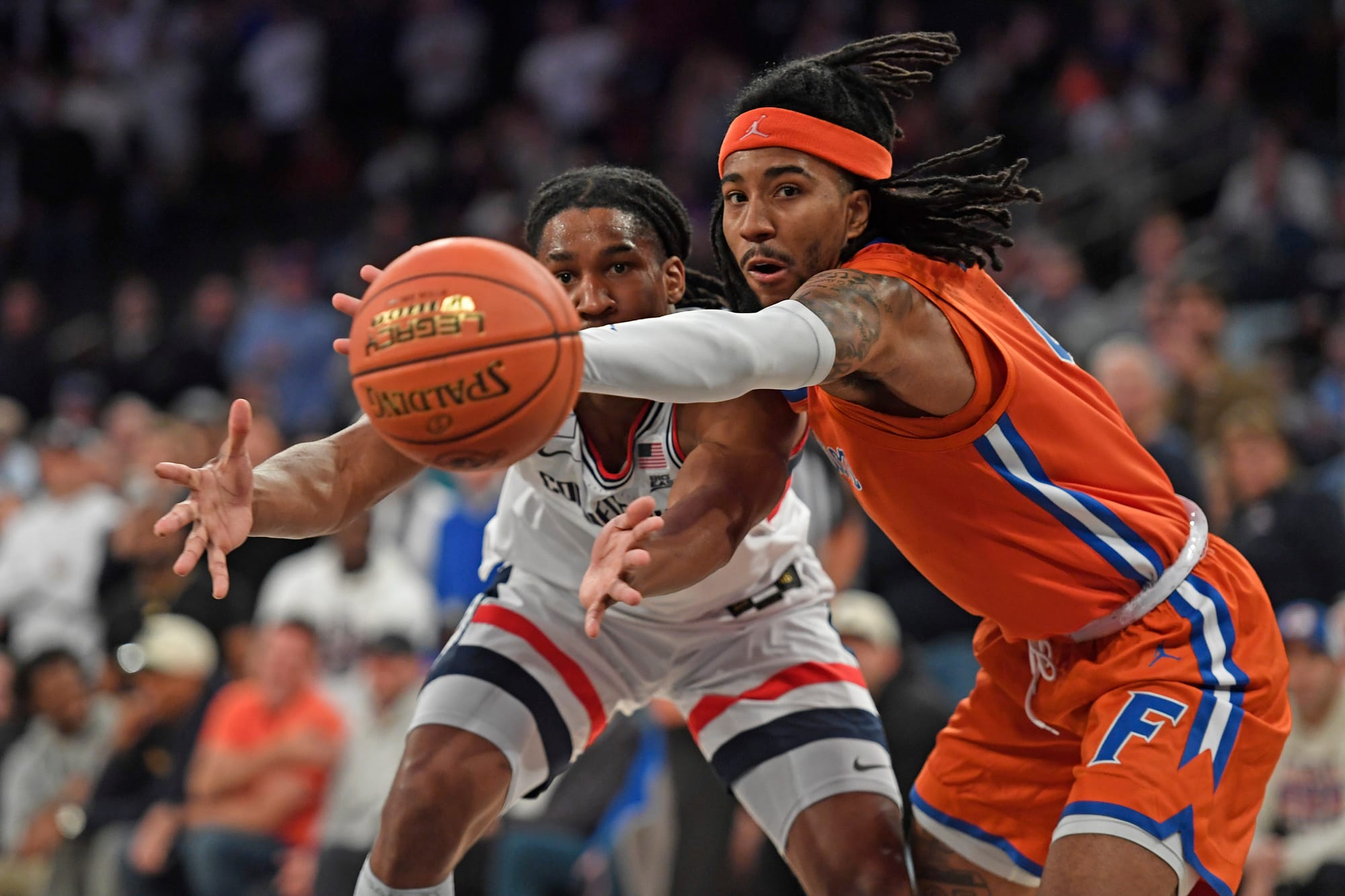
On the defensive end, all five guys block out, Safir said, but they don’t all hit. The bigs are always hitting and crashing, but the guards have another role. First, a player has to check if their man is crashing. If they are, you follow, but if not, you have to own the real estate where your cover is standing. When a player doesn’t check and crashes anyway, the ball might go over their head to whomever they were marking.
This part is important: On the boxout, no matter their role, all players have to watch their hands. Safir mentioned that when a player hits, they have to open up to the ball and create space when boxing out, that way they don’t lose sight of the rebound.
Safir originally bonded with Golden over these exact practices and the analytics behind them when the pair were at the University of San Francisco. Golden was running the defensive hustle statistics, hit it off with Safir and the two eventually came to UF together in 2022.
“He’s a big numbers guy whether it’s baseball, football, basketball. Just data, numbers, analytics and how they apply to sports,” Safir said. “It’s part of the reason why we developed a very strong relationship.”
That passion has turned Florida into an analytics-first, forward-thinking program that’s perpetually focused on finding ways to innovate.
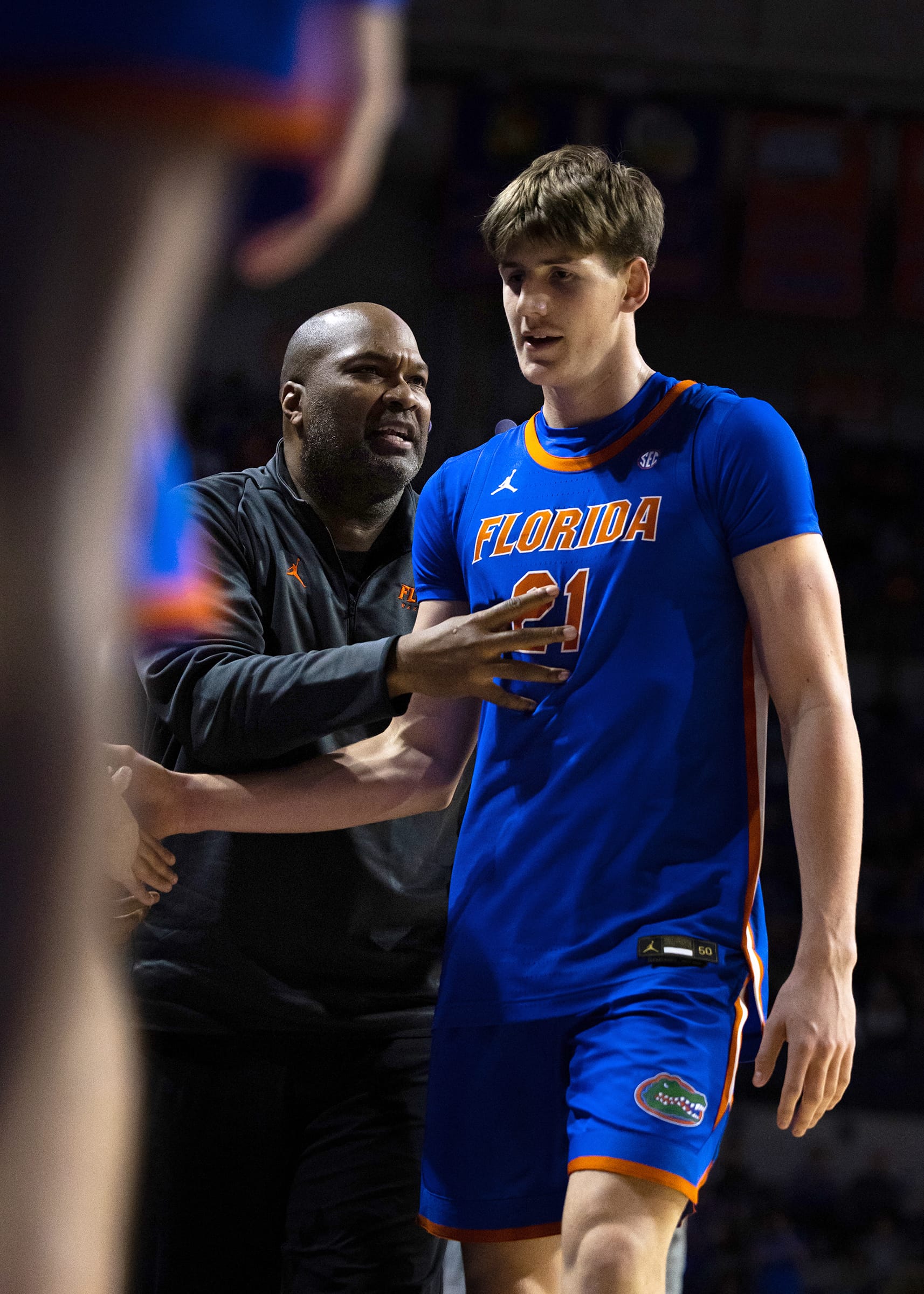
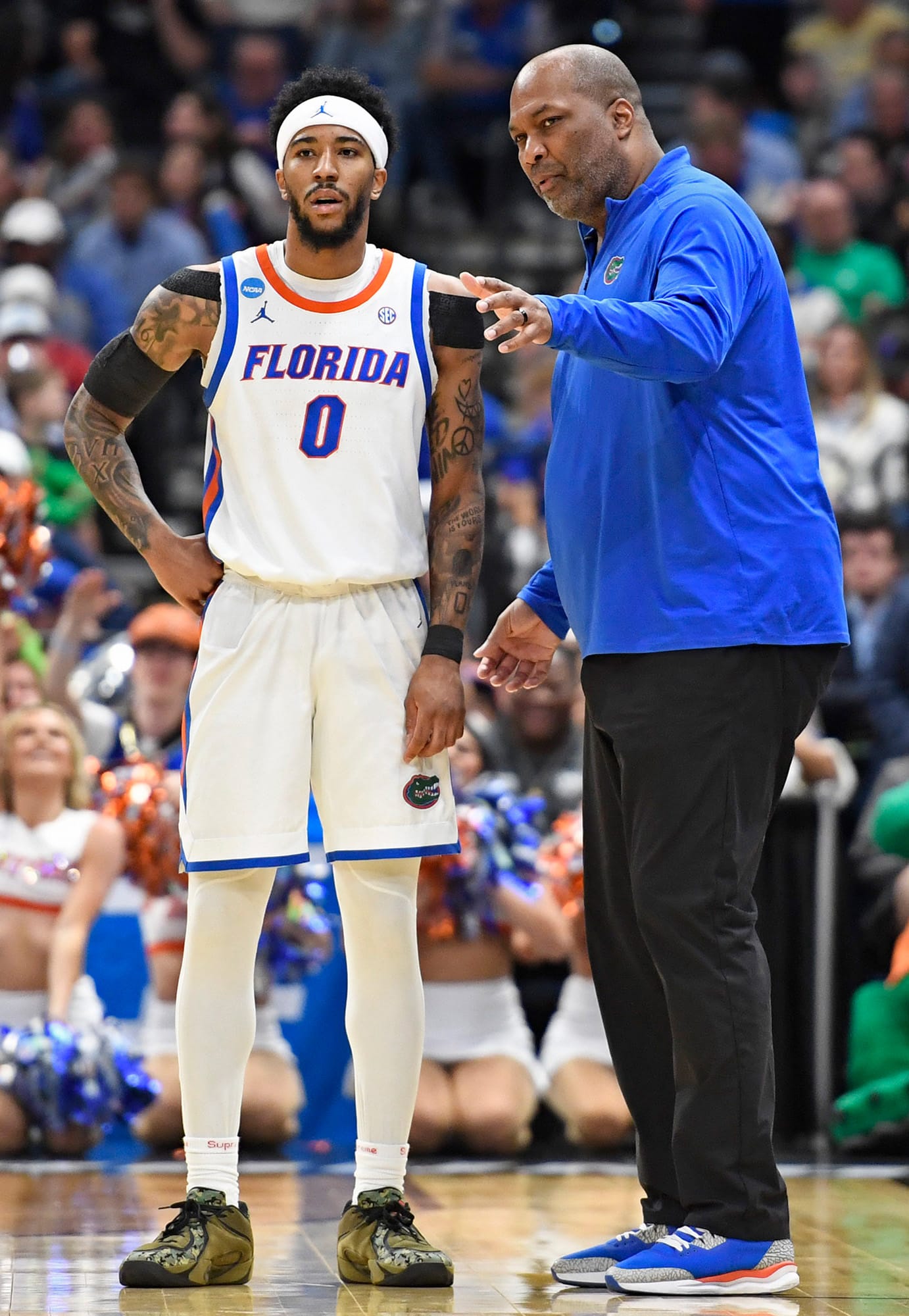
Florida associate head coach Carlin Hartman serves as the Gators' data-translator-in-chief. | Left: Grandstand Magazine Staff; Right: Matthew Lewis/Grandstand Magazine
Golden and his staff’s recruiting pitch includes their complex science of basketball, and Safir said that the players often take up the same detail-oriented approach after seeing it from the coaches. But for the players, the methodical nature doesn’t come down to the numbers. Safir used to tape the data up in the locker room, but now only shows players the actual statistics if they require it. Instead, Florida wants its players to focus on the mindset that achieves those stats, the Gators’ staff tasked with distilling information into practicable action fueled by effort.
“It’s not a science,” Chinyelu said during the NCAA Tournament last spring. “You need to want it, want to hit someone. Anybody can hit someone.”
King of the Boards
Chinyelu’s 11.2 rebounds per game last season were the highest by a UF player in the shot-clock era (1985-86).
| Rank | Player | Season | RPG |
|---|---|---|---|
| 1 | Rueben Chinyelu | 2025-26 | 11.2 |
| 2 | Dwayne Schintzius | 1988-89 | 9.7 |
| 3 | Al Horford | 2006-07 | 9.5 |
| 4 | Colin Castleton | 2021-22 | 9.0 |
| 5 | David Lee | 2004-05 | 9.0 |
| 6 | Andrew DeClercq | 1994-95 | 8.8 |
| 7 | Dwayne Davis | 1989-90 | 8.5 |
| 8 | Joakim Noah | 2006-07 | 8.4 |
| 9 | Dorian Finney-Smith | 2015-16 | 8.3 |
| 10 | Udonis Haslem | 2001-02 | 8.3 |
Source: Florida Athletics
The senior holds program records for double-doubles (19) and offensive rebounds (137) in a season. He also tied Florida’s record for most rebounds in a game in the shot-clock era with 21 against Merrimack last year, a line he replicated against LSU. Chinyelu also added 20 rebounds against Georgia, making him the first Florida player in more than 50 years with three 20-rebound games in a career. He did it in a few months.
While leading the country in total rebounds last season, Chinyelu became the first Gator in 50 years to average double figures in rebounding and the first in program history to win Defensive Player of the Year.
“To see what he does on a nightly basis, the double doubles, the high-rebound games,” Hartman said, “it’s an art.”
Every time a shot goes up, his 265-pound frame barrels toward the glass, carving out space with a rare combination of strength and timing. It's an approach that has helped make him one of the most dominant rebounders in the country, creating opportunities that statistics alone can't fully capture.
Horford said there wasn’t as big of an emphasis on statistics during his time in college for rebounding and there still isn’t in the NBA. It’s all about a strong connection with all five guys on the floor and trusting the process. At Florida, Horford recognizes that dedication.
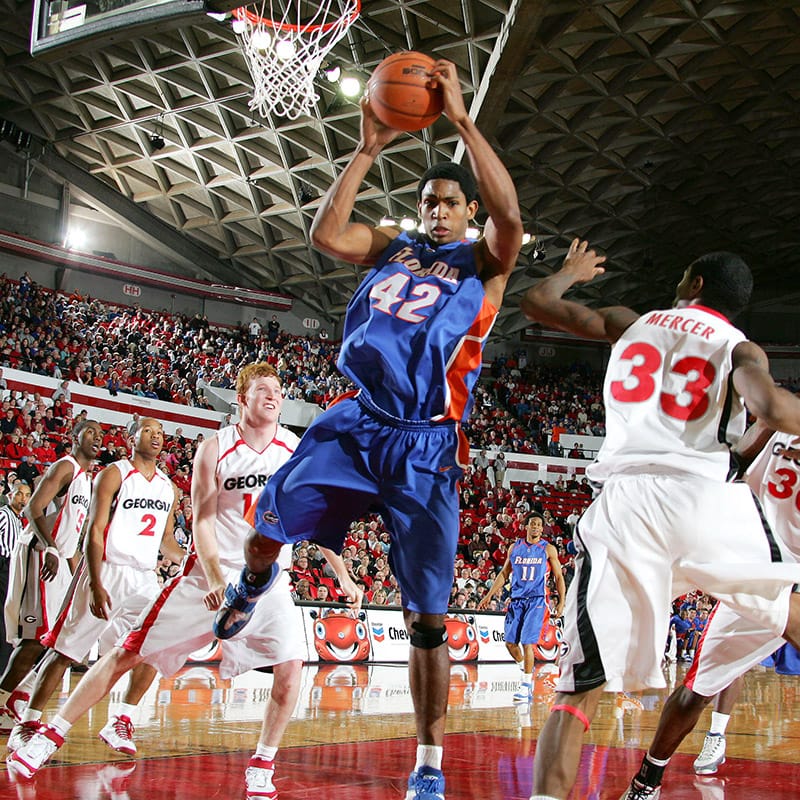
“From the 3, 4 and 5 positions, and even the guards are flying in there and getting rebounds,” Horford said. “It sets them apart.”
Leading the nation with 45.1 rebounds per game last season, Florida outrebounded opponents by an average of 14 a night. That excellence is built on the practice court.
Hartman said you can script rebounding situations in practice, but at the end of the day, rebounding isn’t about a script. It’s about the pursuit of the ball and the persistence to do it repeatedly. Mentality paints the dominant picture that the Gators have made their MO. The Gators practice rebounding daily but the technique, power and understanding of the game won’t look like an artform on gameday if just one mental attribute is missing. “You gotta have the wingspan to do it, the timing to do it, the eyesight to do it and again, for the 15th time during this conversation, you gotta have the will,” Hartman said.
When Haugh and Condon were freshmen, their roles were slim, but Hartman said they were the hardest workers in the room. When Chinyelu came a year later, the three developed their game, but never lost the knack for chasing the ball, carving out critical roles for the national championship run.
After three years together, the three giants have an uncanny cohesion that allows them to all effectively rebound without interfering with one another. Whenever a shot misses, they are consistently in tandem, striving to achieve six feet in the paint.
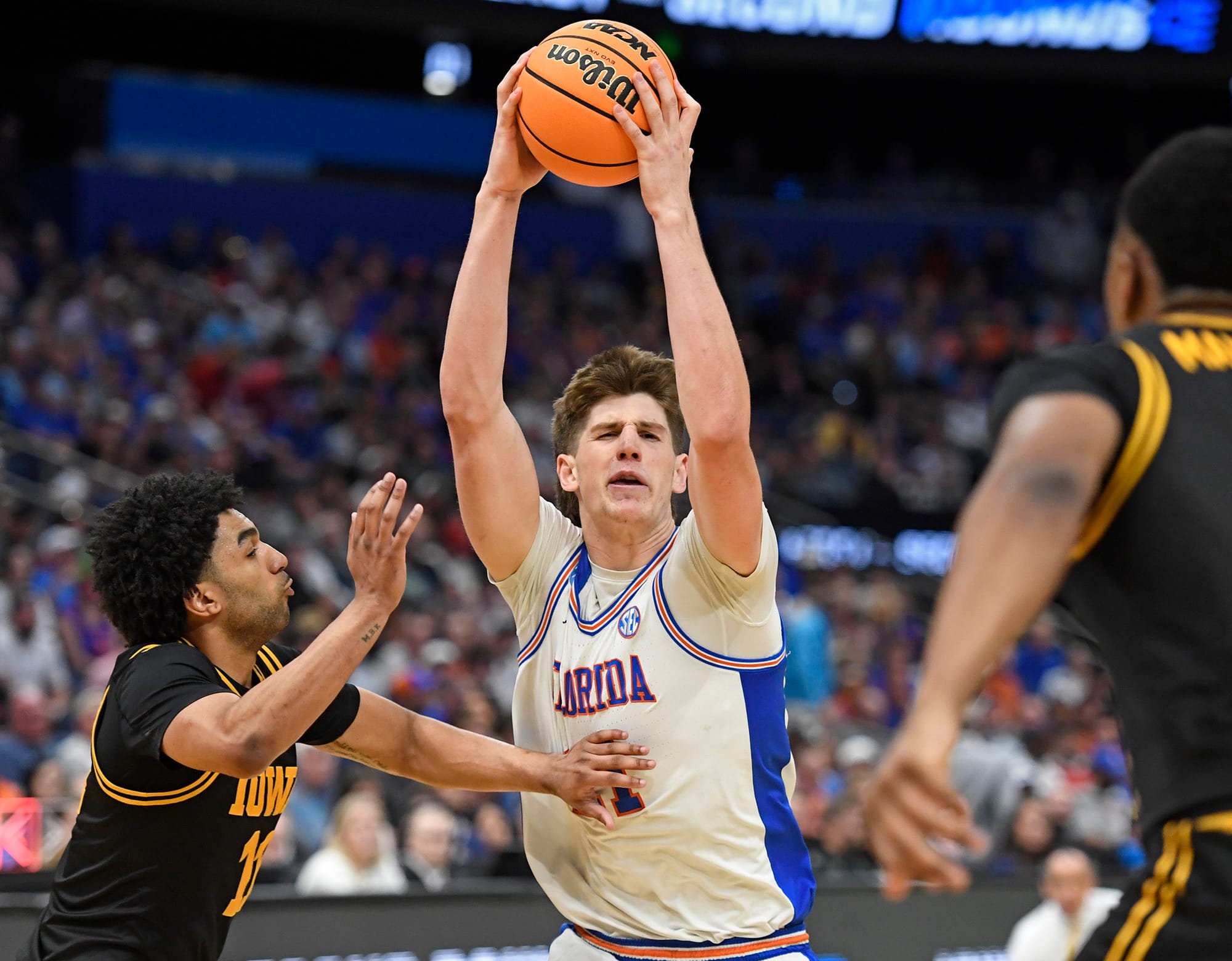
One pair of size-15 shoes: Condon, who has a similar focus as Chinyelu when the ball goes up: “Hit a guy as hard as I can,” Condon said, subbing in a different I.D. than “guy,” a bit of Australian foul language.
Aside from the slang, Condon also brought over an eye for the ball. Having grown up playing Australian football, Condon said the sport unexpectedly helped with his rebounding skills. “In footy you have to go up and predict how the ball is going to fly,” he said. Not being scared to shoulder an opponent, seeing where the ball is going and when to leap for it translated to the hardwood, where Condon has hauled in 762 career boards for the Gators.
One of the craftiest players on the boards is Haugh, finding ways to add his two feet, also size-15, in the lane. Hartman said the senior’s speed and quickness allows him to grab boards without using as much raw strength as players like Chinyelu. In his career, Haugh has hauled in 586 rebounds, 213 of those offensive.
“My goal is to out-work the other guys around me,” Haugh said. “You’re not always going to be the tallest guy, so you need to be smart and want it more.”
Haugh said he processes the game in angles, sort of subconsciously, when the ball goes in the air. Besides the coaching, Florida’s players still have a gift for an innate feel for the game, making the rebounding prowess that much easier to achieve.
“Regardless of who we’re playing against, we feel like our frontline can dictate the terms against anybody,” Hartman said.
The two-pronged approach developed by Safir and Hartman under the guidance of Golden has transitioned the Florida Gators into a program defined by rebounding. Every time players like Haugh, Chinyelu and Condon take the court, coaching through complex statistics mixed with the need for a fierce mentality turns the three into the greatest benefactors of a system Golden and Co. have built through the years.
The three seniors will grace the court for one more run at a national championship, likely headlined by rebounding excellence, and the ultimate proof of concept for Florida’s staff’s work. Another chance to be relentless, another chance to jump and grab a ball.