Catalyst For A Championship
Florida's first football national title grew out of one of the most painful losses in program history. The lessons the Gators took from that defeat fueled the 1996 team that won it all and established a standard that shaped the program.
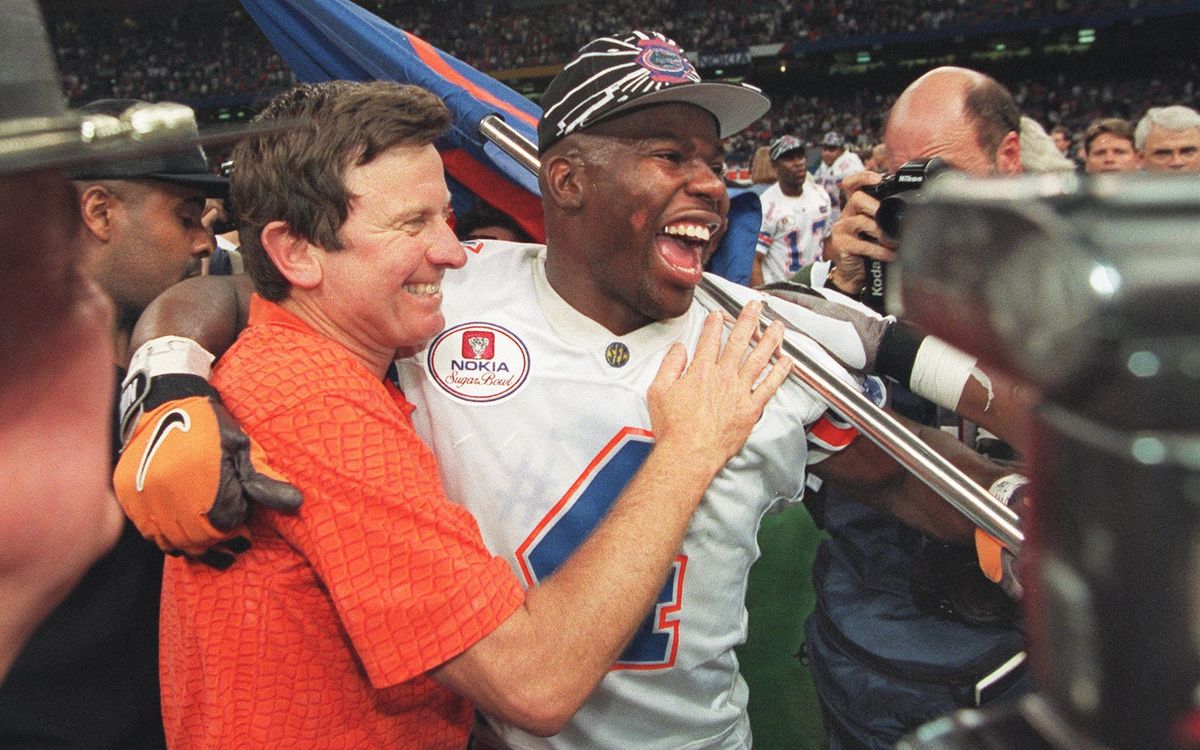
The flight home was unusually quiet.
Linebacker Johnny Rutledge, then just a freshman, looked around the cabin during the four-and-a-half-hour flight back from Phoenix following Florida’s demoralizing season-ending loss to Nebraska in the Fiesta Bowl in January 1996. He watched fellow linebacker James Bates walk up and down the aisle, stopping at each row to check on his teammates as the Gators headed home to Gainesville.
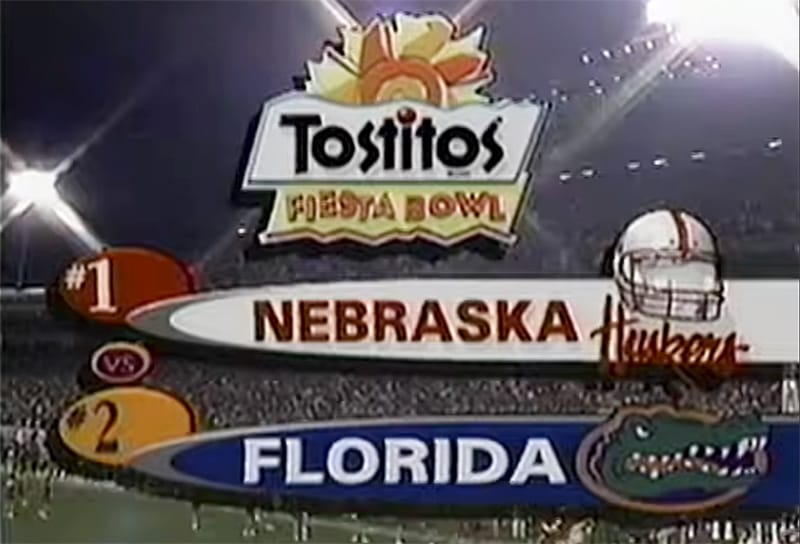
He noticed teammates who had spent the season convinced they were good enough to win it all. UF had come within one game of the program's first national championship. Steve Spurrier's 'Fun 'n' Gun' Gators went 12-1 in 1995, won the SEC and stormed through an undefeated regular season before meeting the No. 1 Cornhuskers in Tempe, Arizona, with a chance to make history.
There are many emotions athletes feel after a loss. Some get angry. Some find inspiration. Others search for answers. The Gators didn’t outwardly appear to be doing any of these things.
“At that moment, I think we all realized the type of effort and focus championship teams needed to have,” Rutledge said. “We were a confident bunch. You don’t get a loss like that out of your system. It stays and lingers.”
Rutledge said the reality of the loss settled in during the flight back. But when the Gators returned to Gainesville, they were humbled and hungry. He also knew most of the roster would be back. The talent to win a national title was already there. Now, they understood what it would take.
The Huskers delivered that lesson in brutal fashion. Florida's 62-24 loss became an integral part of the program's journey to its first national championship. What the Gators learned that night would fuel a championship run and shape the program's culture.
“Leading up before [the game], we thought we were there,” said defensive back Fred Weary, who was a sophomore in 1995. “We walked into pretty much a desert storm trap out there with Nebraska.”
Florida kept pace with Nebraska early, but the game quickly slipped away. The Huskers scored 29 unanswered points in the second quarter while their bump-and-run defense effectively contained future Heisman-winning quarterback Danny Wuerffel.
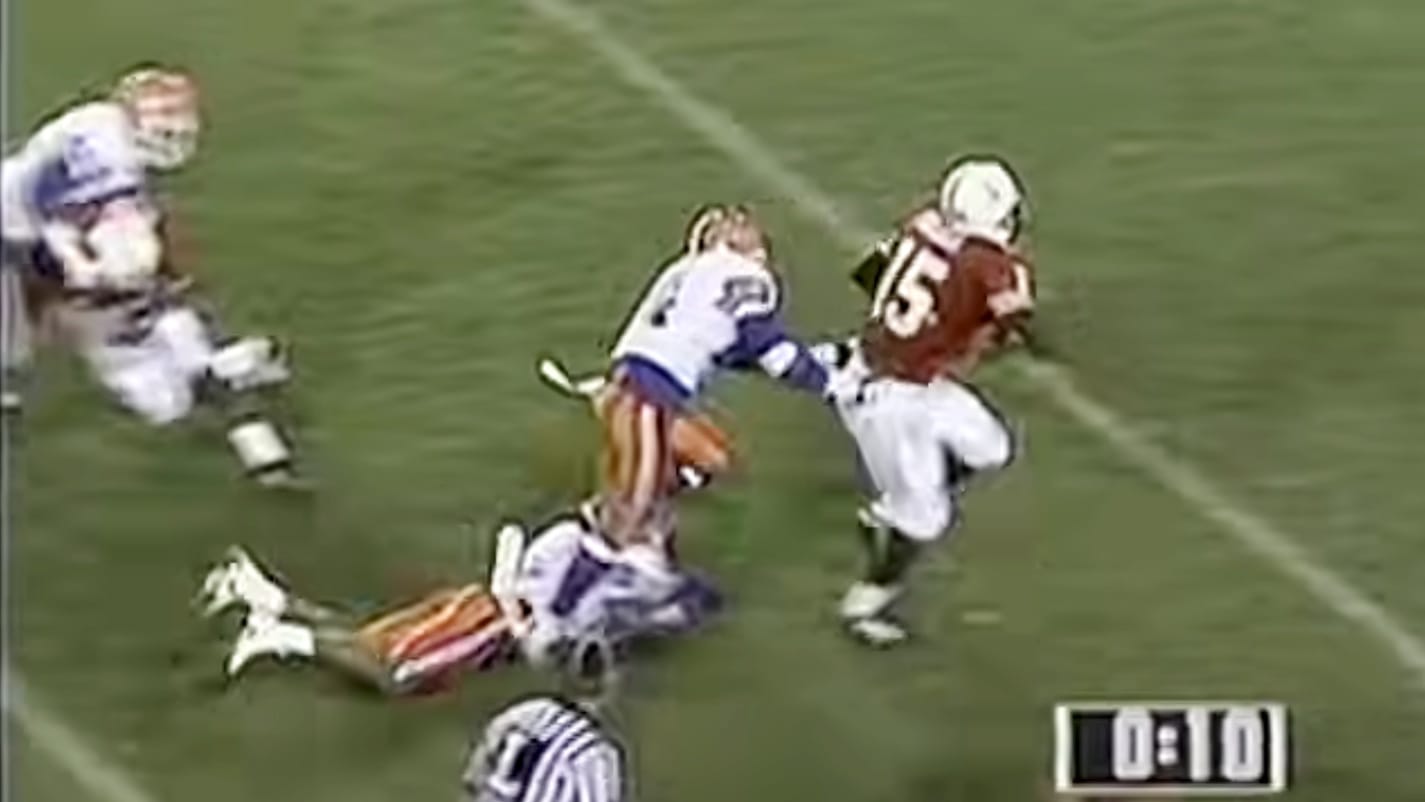
The game’s defining moment came in the third quarter. Quarterback Tommie Frazier made a 75-yard touchdown run. Nine Gator players were able to make contact with Frazier, but not one was able to stop him from getting to the end zone.
“We were just physically outmatched all across the board,” Weary said. “When you get beat like that, it’s basically like … 'Y’all thought you were playing college ball until you ran into us.'”
The loss lingered after their plane touched down in Gainesville. The pain stuck with them. Highlights were difficult to avoid and the stark disappointment of the 38-point blowout loss weighed heavily on the players. Back on campus, Weary said he barely left his dorm room for two weeks.
“That definitely left a really sour taste,” Wuerffel said. “But I think losing that game really brought us together for the next year.”

What came next? The Gators turned the sting of that loss into fuel for one of the greatest seasons in program history. The lessons from that cold night in Arizona followed them through the spring, summer and fall of 1996, helping the team accomplish what no UF team had done before: win a national championship.
Florida began implementing change immediately. Building strength in the weight room, for one, was a priority. But the team looked at more than just its physicality. It rebuilt the defense that was exposed by the Huskers, bringing in Bob Stoops to be defensive coordinator. Florida’s offense was one of the nation’s best in 1996. The goal was to create a defense that could stand beside it.
Stoops quickly set about changing both the scheme and the mentality of the defense. One of the biggest changes he made was implementing a bump-and-run defense. He also challenged them to trust in their abilities.
“I’m going to tell you the technique and where you need to play it,” Weary remembered Stoops yelling at practice. “But you’re the athlete. I can’t tell you how to be an athlete.”
The changes weren’t limited to the field. The Gators’ mindset changed, too. The Fiesta Bowl loss showed how far they still needed to go – and they were forced to figure out what it would take to actually earn that elusive, first title.
“Part of [Spurrier’s] goal that year was to keep us grounded, to not get caught up in media and in rankings and to just really stay focused,” Wuerffel said. “He talked a lot about staying focused and not getting caught up in all the hoopla.”
The Gators entered the 1996 season ranked No. 4 in the preseason Associated Press poll. But a 35-29 win over Peyton Manning and second-ranked Tennessee in Week 4 vaulted the Gators to No. 1, where they remained for most of the season.
Their continued dominance came less as a surprise to Spurrier and more as an expectation. Spurrier's swagger had long been one of his defining traits, and it rubbed off on the '96 team. But after the loss to Nebraska, confidence alone wasn't enough. The Gators understood that talent and belief had to be matched with preparation and discipline.
For Bates, that edge was part of why Florida remained dominant.
“He was just one of the most confident people I’ve ever been around,” said Bates, a senior and one of the leaders on the '96 team. “He’s competitive and he was cocky and he backed it up. It was contagious, we just all picked it up and we never ever thought we were gonna lose a game.”
They carried that mentality with them throughout the season, whether it was against Southwest Louisiana or another SEC power. Georgia was no exception, and the team’s meeting before the game was about as brief as it gets.
“Alright, fellas. Georgia. Saturday, scoring 50,” Weary remembered Spurrier telling them.
Florida scored 47.
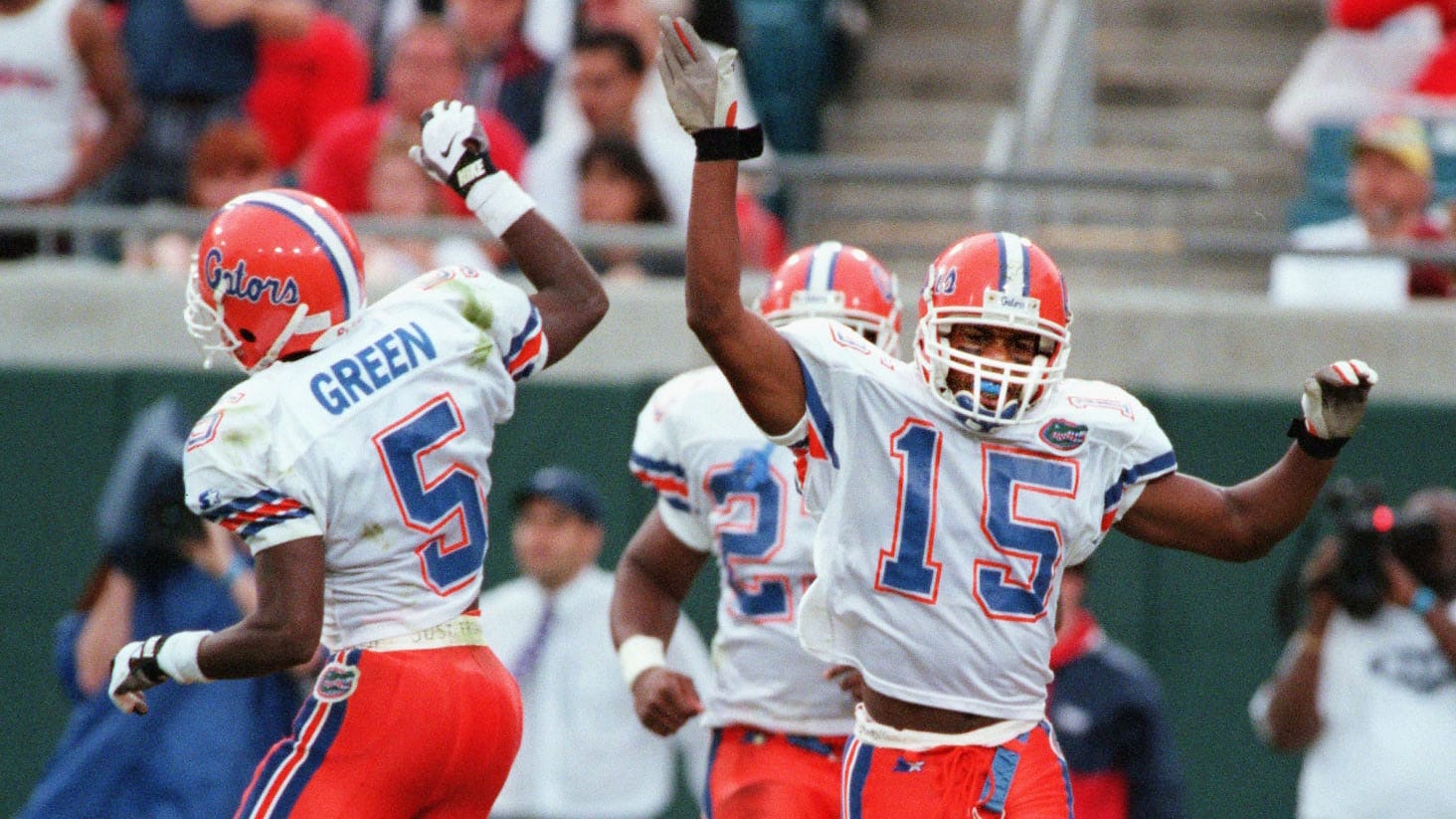
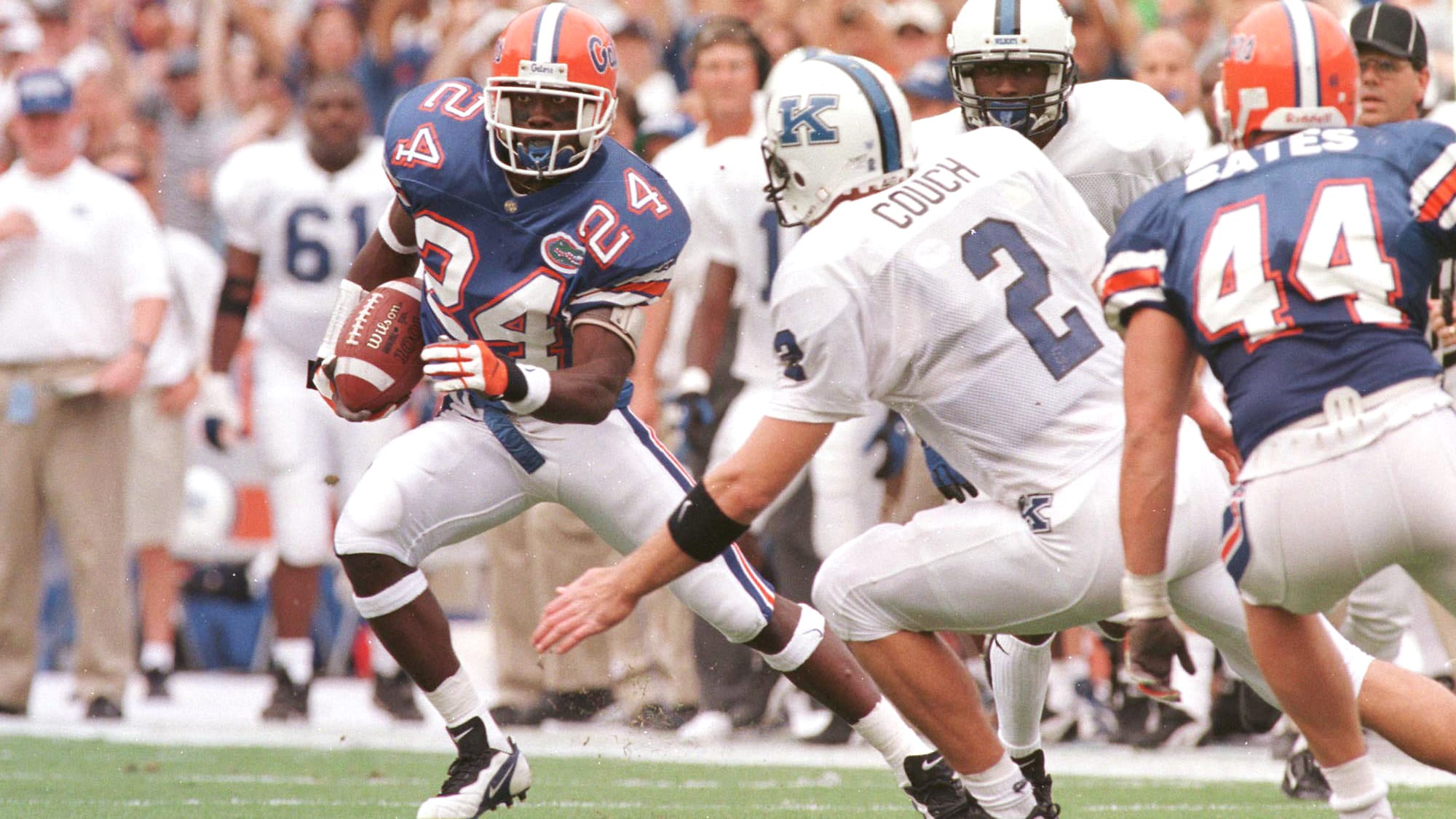
The Gators rolled through the rest of the conference too, demolishing Kentucky 65-0, No. 12 LSU 56-13 and No. 16 Auburn 51-10. By the end of the season, they’d finished another 8-0 campaign in SEC play while averaging 46.6 points per game and scoring 76 touchdowns.
Inside the locker room, however, there wasn’t a focus on what any of those wins or stats meant.
“We never really got a chance to get too far ahead of ourselves,” said Ike Hilliard, one of the Gators’ star receivers alongside Reidel Anthony. “Coach Spurrier wouldn't allow that. He has a unique way of keeping everybody on the ground.”
But the regular season wasn’t without adversity. In Florida’s regular-season finale, the team traveled to Tallahassee for its annual matchup against No. 2 Florida State.
The stakes were historic. Both teams entered the game undefeated for the first time in the rivalry’s history.
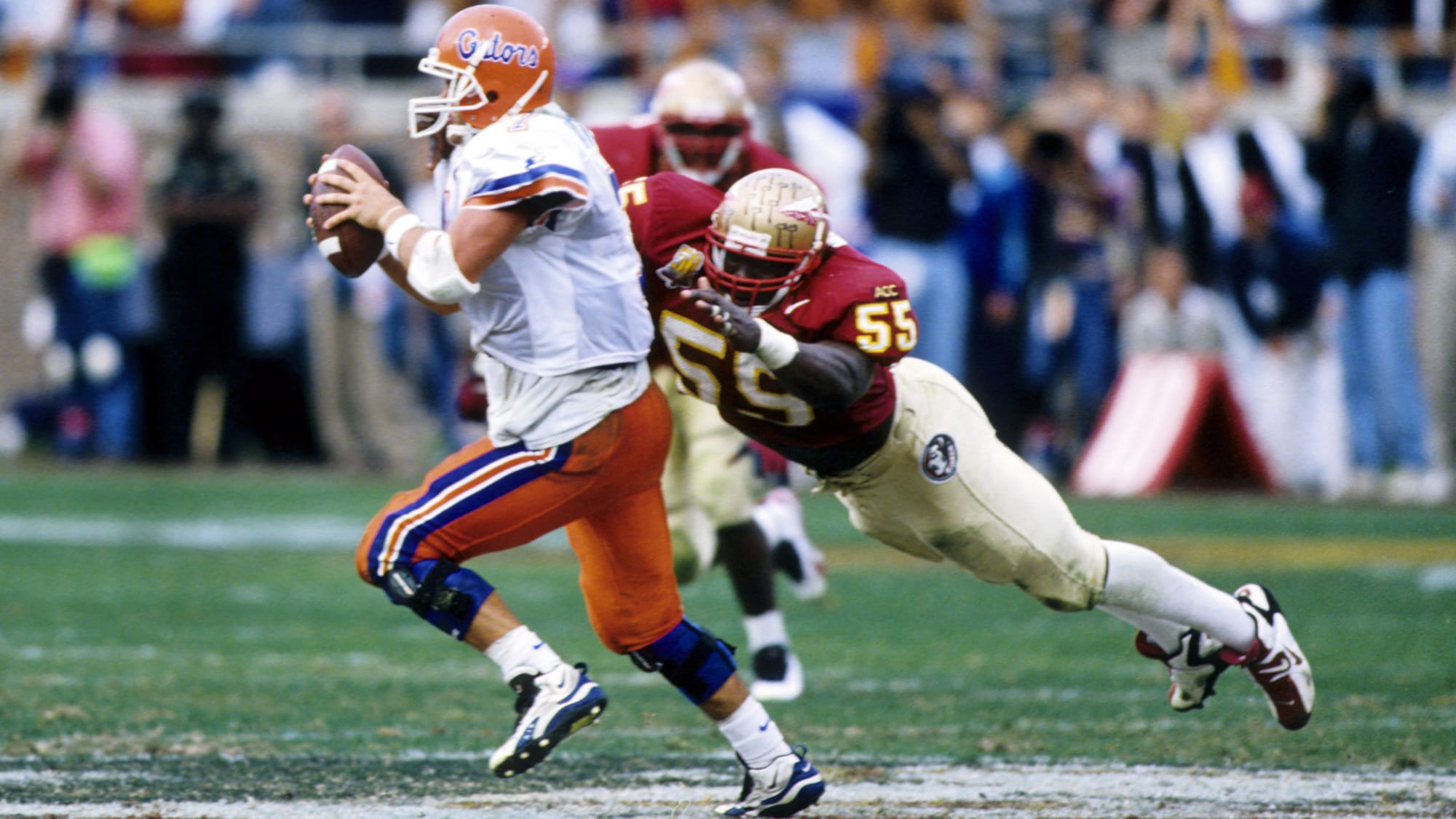
The Seminoles sacked Wuerffel six times and intercepted him three times in a punishing 24-21 win. As FSU fans rushed the field at Doak Campbell Stadium, the Gators’ undefeated season was over ... and their championship hopes looked lost, too. Florida dropped to No. 4, and its road to a national title now relied on help from others.
But those pieces, somehow, started falling into place.
The week after its loss to FSU, Florida faced No. 11 Alabama in the SEC Championship Game. Hours before kickoff, the Gators gathered in their hotel to watch the Big 12 title game between unranked Texas and No. 1 Nebraska. When the underdog Longhorns upset the ‘Huskers 37-27, the room erupted. Nebraska’s loss suddenly reignited Florida’s hope of getting back in the title conversation.
“I would have hated to have been a regular guest there at the hotel,” Bates said. “I would have been scared for my life. All of a sudden you’ve got these 300-pound dudes running up and down the hall in their underwear, hugging, screaming and yelling.”
That was the first step in Florida’s path. But the job wasn’t done yet.
Later that night, Florida beat Alabama 45-40 for its fourth consecutive SEC title, clinching a spot in the Sugar Bowl – and a rematch with FSU – while rising to No. 3 to keep its national championship hopes alive.
Even still, one more obstacle remained in their way — No. 2 Arizona State.
The night before the Sugar Bowl, the Gators once again gathered in the rooms of a small Holiday Inn just outside of New Orleans to watch the Rose Bowl. They knew one more upset was all they needed.
Bates remembered the moment Ohio State beat the Sun Devils, knocking down the last domino before the rematch with the Seminoles would become a de facto championship game. Their New Orleans hotel room, similar to the scene in Atlanta, erupted. Offensive guard Zach Piller jumped onto his bed in celebration when Ohio State scored the go-ahead touchdown, splitting his corduroy pants from belt loop to zipper.

The Gators had learned a few lessons from their previous outing against the ‘Noles. To better protect Wuerffel from the countless hits he took in November, Spurrier installed a shotgun formation. It worked. Wuerffel threw for 306 yards and three touchdowns – all to Hilliard – and, this time, UF was in complete control.
Florida rolled to a 52-20 rout, the largest margin in Sugar Bowl history at the time. The win secured the No. 1 AP ranking – and, at long last, the first football national championship in school history.
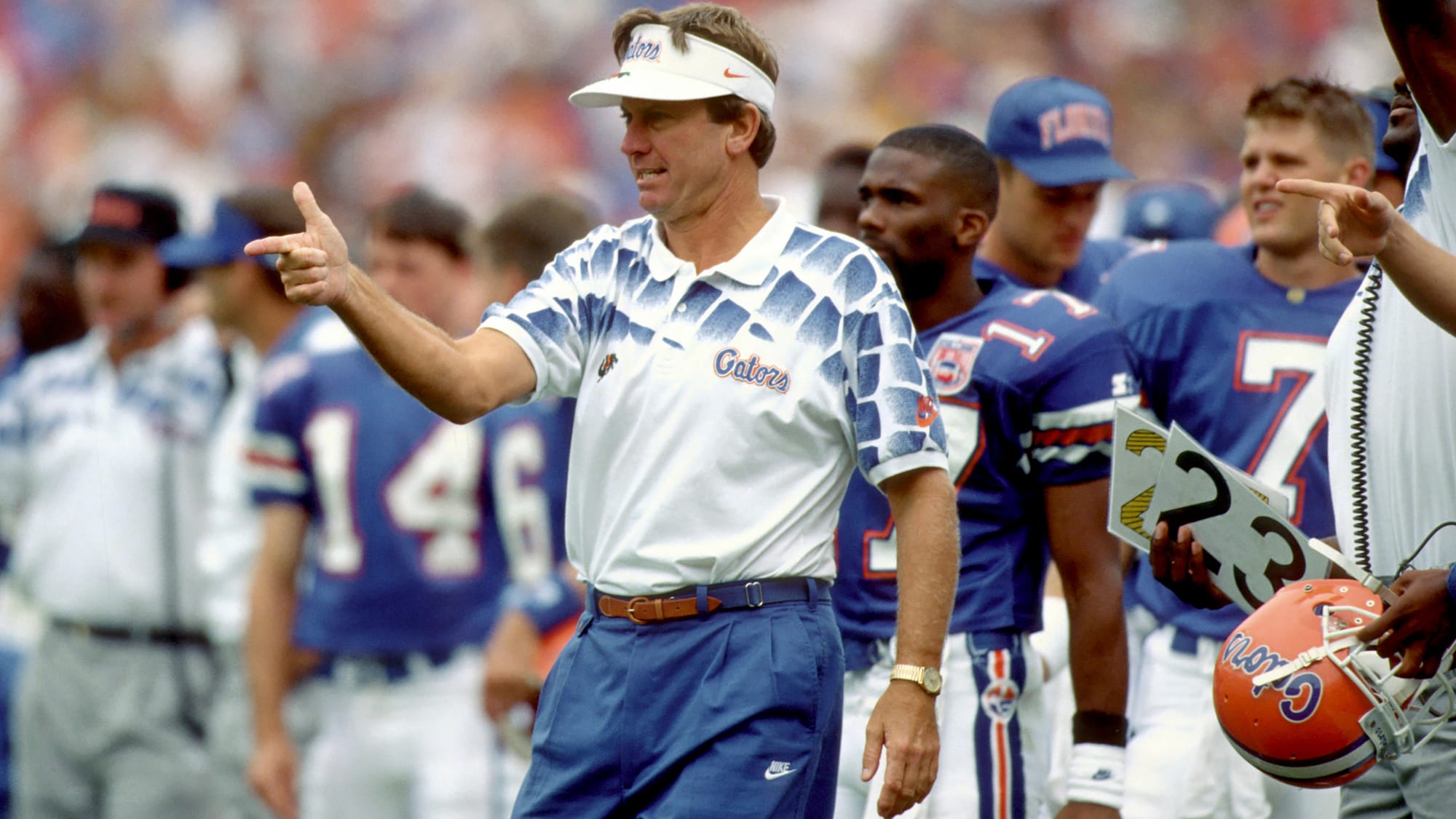
As Florida celebrated a victory that would secure its first national championship, Spurrier turned to ABC color commentator Lynn Swann and delivered one of the most memorable lines of his career: “Swanny, God has smiled upon the Gators.”
Three decades later, Spurrier’s words still echo.
“[It was] beyond exuberant,” Weary said. “It was redemption in a sense, for some of us, too, because we were just there the year before and we got it handed to us. And then, we reversed it that year. It was fulfillment, excitement, it was everything.”
Yet the memories from that season extend beyond the title. Players still fondly remember the bus rides to and from games, the hours spent in the locker room between classes and practice and the time they spent with each other in Yon Hall.
“The preseason magazines say who’s going to be the best, who’s ranked No. 1, who’s returning here, who’s returning there, who transferred in,” Bates said. “The one thing that the people writing articles could never put their finger on, no matter how hard they tried, is how much does this team care about one another? How much are they willing to fight for one another?”
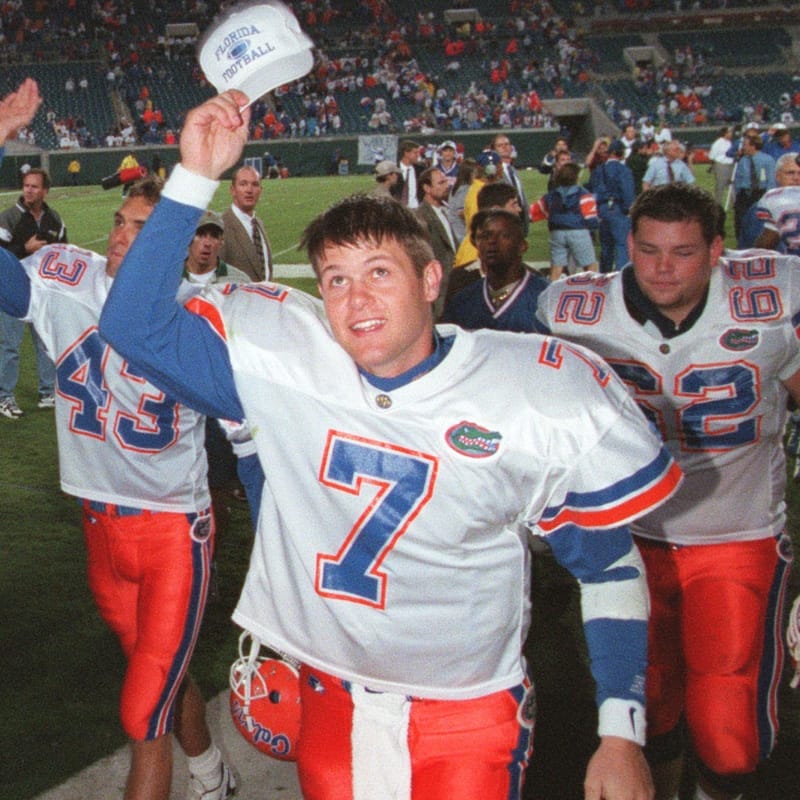
For the ‘96 Gators, that answer was evident every Saturday.
The reminders of Florida’s 1996 title team still are present around campus, from the bronze statue of Wuerffel outside Ben Hill Griffin Stadium to the “National Championships: 1996” sign next to the Bull Gator. But its influence also lives in the standard it set for Florida football.
Those standards were forged, in part, a year earlier on a quiet flight home from Arizona. Twelve months later, the Gators had turned disappointment into redemption.