A Long Quest To Bring The Rays Home
After two decades of stalled talks and fading hopes, the Tampa Bay Rays finally have a stadium deal ... in Tampa. At the center of it stands a former UF baseball player who never stopped fighting for the city he was raised in, fueled by his love for the game — and the father who taught it to him.
Sometimes, winning a fight takes 16 years.
When that’s the case, what's waiting an additional 12 tedious, exhausting hours over two days for your dream to finally flutter to life?
These were the thoughts of longtime Hillsborough county commissioner Ken Hagan last Friday as he sat through the final debates and commentary sessions inside two court-esque wood-boarded, microphone-laden meeting rooms, surely following hours upon days upon weeks upon years of previous dispute, and watched as the Tampa City Council and Hillsborough County Commission came to a conclusion. It was one that was once believed to be foreign to reality.
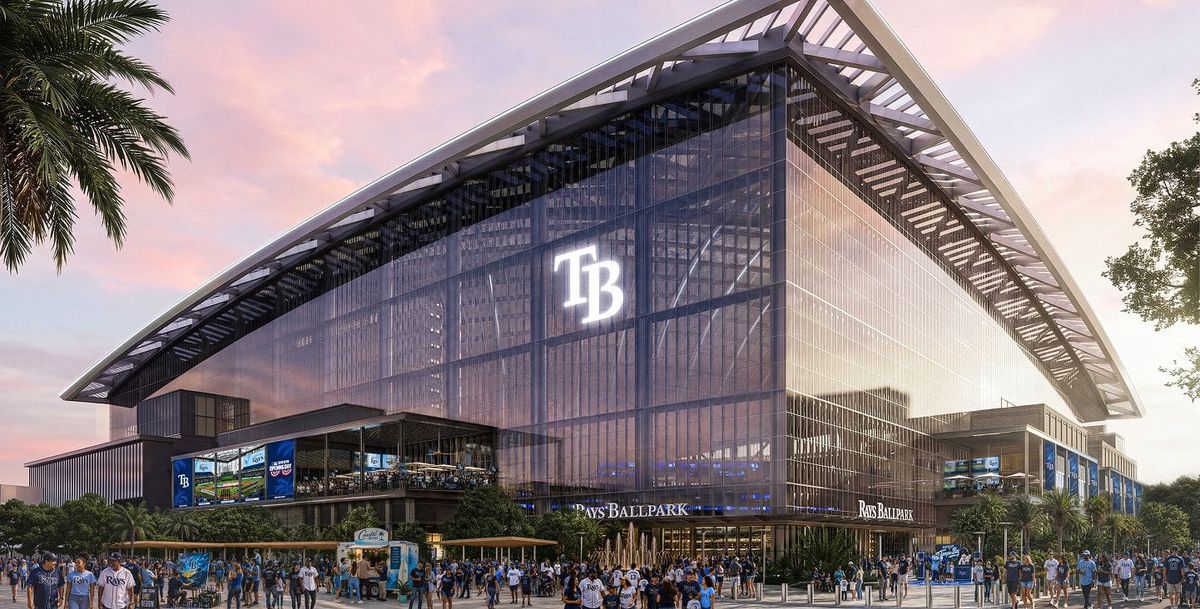
The Tampa Bay Rays, who’d spent the entirety of their “Tampa” baseball existence in St. Petersburg since 1988, would get the votes needed to pave the way for a new stadium across the bay in a $2.3 billion deal — moving closer to where the vast majority of the region's fans reside while, ideally, attracting new ones.
There's still some work to do. The Rays will need backing from Tampa’s next mayor as they attempt to build a new ballpark on Hillsborough College’s Dale Mabry campus. But with last week’s city and county votes, they’ve cleared two of the biggest hurdles.
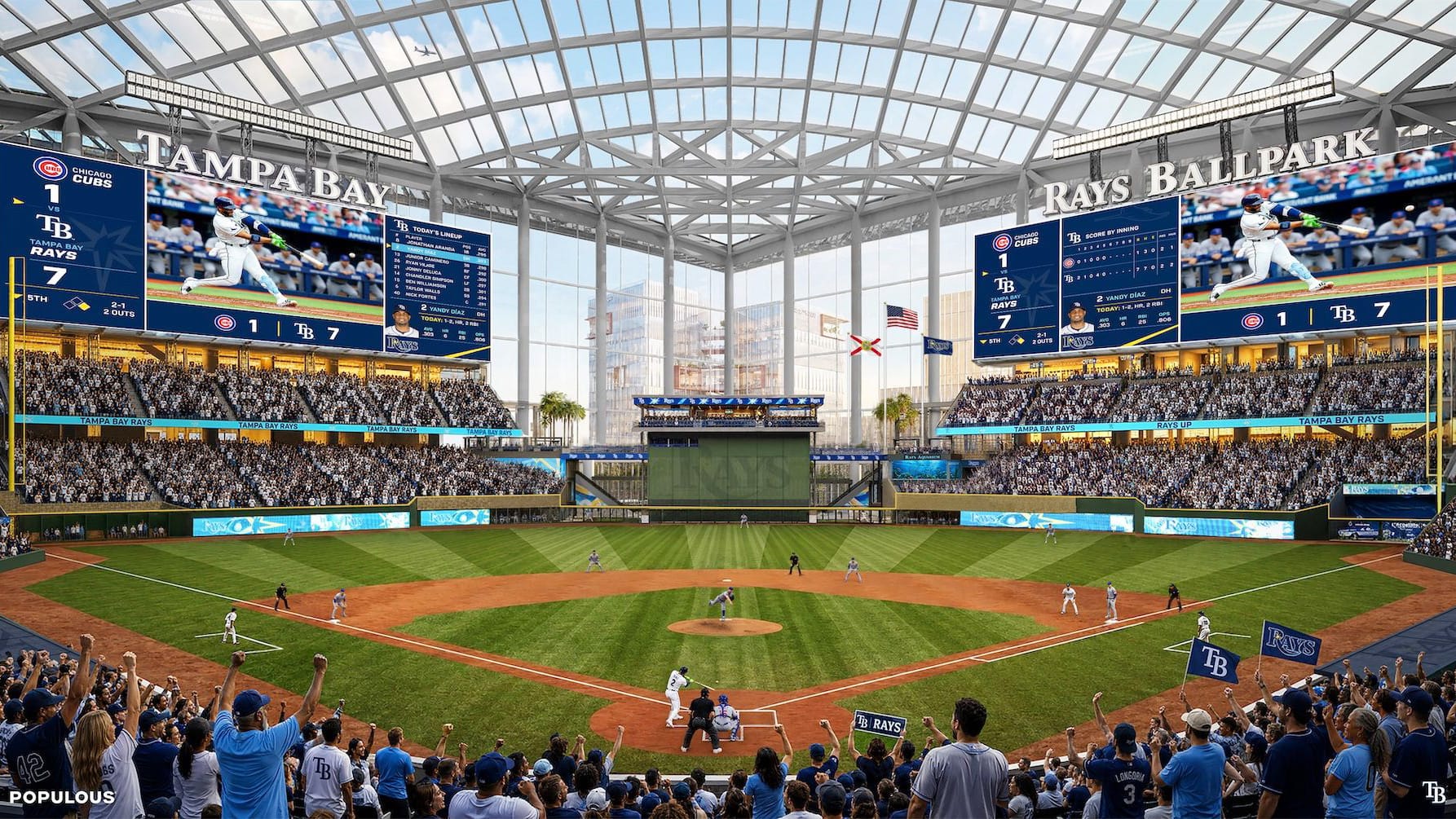
Some celebrated, championing the “live, work, play” mantra for the stadium’s proposed mixed‑use district and the Hillsborough College revamp that would come with it. Others deemed it the Rays’ “forever home,” a subtle marketing plea after years of relocation fears and complaints about their outdated, often‑empty predecessor. Politics knifed through the underbelly of every conversation, with a pair of the voting stakeholders vying for a bid to become Tampa’s next mayor. Each argued with those to their right and left over how this allotment — roughly 40% of that $2.3 billion — would be paid for by the county and city, a familiar theme after two decades of stalled negotiations. And each, after a summer of contentious haggling — the closing stretch of many similar years — wondered how this iteration of meticulous agreements ever came to fruition.
In these halls, Hagan looked on. He’s a former UF baseball player, even if only briefly, and his bond with the university remains unmistakable: he has been a football season-ticket holder since 1990 and has a daughter currently on campus. One of his dogs is, fittingly, named Gator. But his ties to Tampa, and, even more so, the sport he cares for so deeply, remain stronger.
He was the man who dragged all sides to this middle ground: a 5-2 county commission vote and 4-3 city council agreement after a nine-hour session a day earlier in favor of the move to Tampa. The one who’d worked for the better part of two decades to make his Rays stay home.
The man, now pushing 60, balding and aged by this war, resting in the center of his culminating moment, amid a swirl of former UF alums and Floridians, watching as his dreams sprang into reality.
I. Live
There was a time, half a century ago, when a boy just couldn’t get an at-bat.
For all he did, the Forest Hills Little League team didn’t see much need for him in the lineup. So he and his father, the bigger Ken, would spend nights at the field tossing and swinging. Maybe it was Orange Grove Park, though the younger Hagan can’t remember all too well.
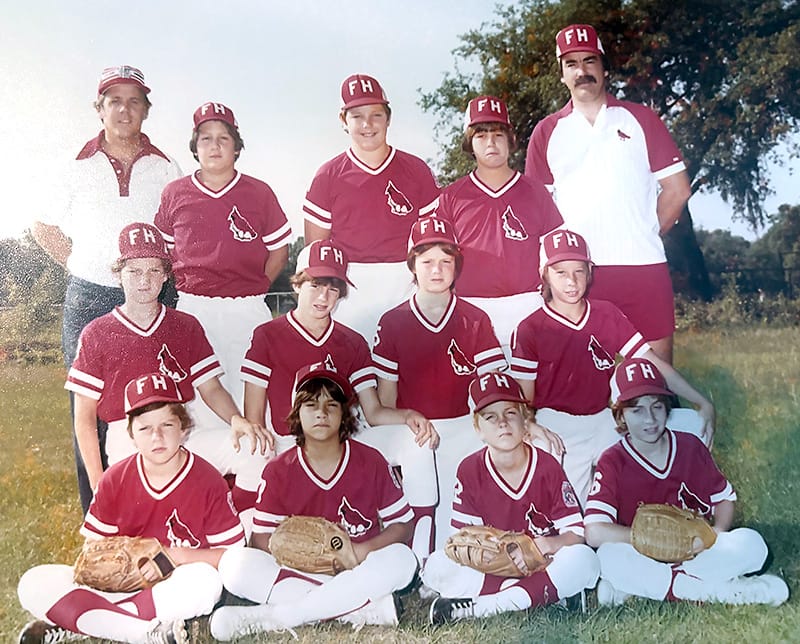
After a few weeks, he found himself at the bottom of the lineup. With some more late-evening sessions, he was soon in the cleanup slot. He realized, quite promptly, he liked it there. So the pair just kept throwing the ball around, whether in the park on weekends or the garage on weeknights.
“For him, for that, I’m eternally grateful,” Hagan says now. “I wouldn’t be who I am if it weren’t for my father and his love for baseball.”
His family didn’t have much money, though, so the younger Ken — roughly 6 feet and a burly 180 — wound up at Hillsborough Community College in the late ’80s, still swinging the bat there. At that point, it was essentially all he was known for, a heavy hitter who could “clean the bases” but rarely exercised any defensive aptitude so much he alternated positions weekly, landing wherever his manager could hide him best.
But the bat — and a stat line he scarcely remembers beyond a simple analysis: “pretty good” — was enough to live a dream. He then transferred to the University of Florida, joining its baseball team for the 1998 season, when the school earned its first College World Series appearance — though Hagan had only just two hits in six at‑bats all season.
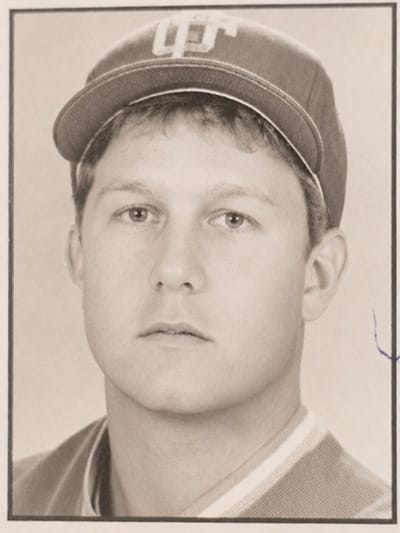
“But Kenny was there for it all,” says Johnny Wiggs, one of the Gators’ top pitchers in ‘88, who recently retired after 20 years as Santa Fe College’s baseball coach. “He always wanted whatever was best for the team. Even if he wasn’t playing, he was always trying to get things done.”
The elder Hagan played in the Colt League World Series (15‑ and 16‑year‑old competitive baseball) with future big‑league managers Tony La Russa and Lou Piniella. He went to the ballpark any free night he could. Yet, as it does for so many, the sport left him behind as he needed to support his family.
So watching his son?
“One of my greatest joys as a father,” he says.
Hagan didn’t know what would come after his time at UF. “Baseball is in the Hagan blood,” his father continues. “It wasn’t just a game for us; it was everything growing up.”
But with graduation, baseball was no longer a feasible path. He took to accounting, but after watching the 2000 election play out in Florida, he began to believe he could be “of use” in politics. By 2002, he was elected as District 2 County Commissioner on the Hillsborough County Commission, a board he has never departed by finagling term limits by bouncing between single-member and countywide districts.
A lifelong Republican, he bounced between projects as often as positions around the diamond, a crucial swing vote accumulating power across the neighborhoods he grew up playing in.
Then he found his thing.
II. Work
Hagan hasn’t slept in weeks, he says. “I’m keeping my family awake. Feel kind of bad.”
After years of failed deals and months of negotiating their most recent ‘final’ attempt to secure the Rays’ future in the region, it seemed in early August that Tampa and Hillsborough were nearing an agreement with the team for a new complex near Raymond James Stadium and Tampa International Airport.
Concerns of relocation had bubbled for years, including the most recent ones to Orlando – about 100 miles west on I-4. And with the Rays under new ownership, they were bound to boil up once more.
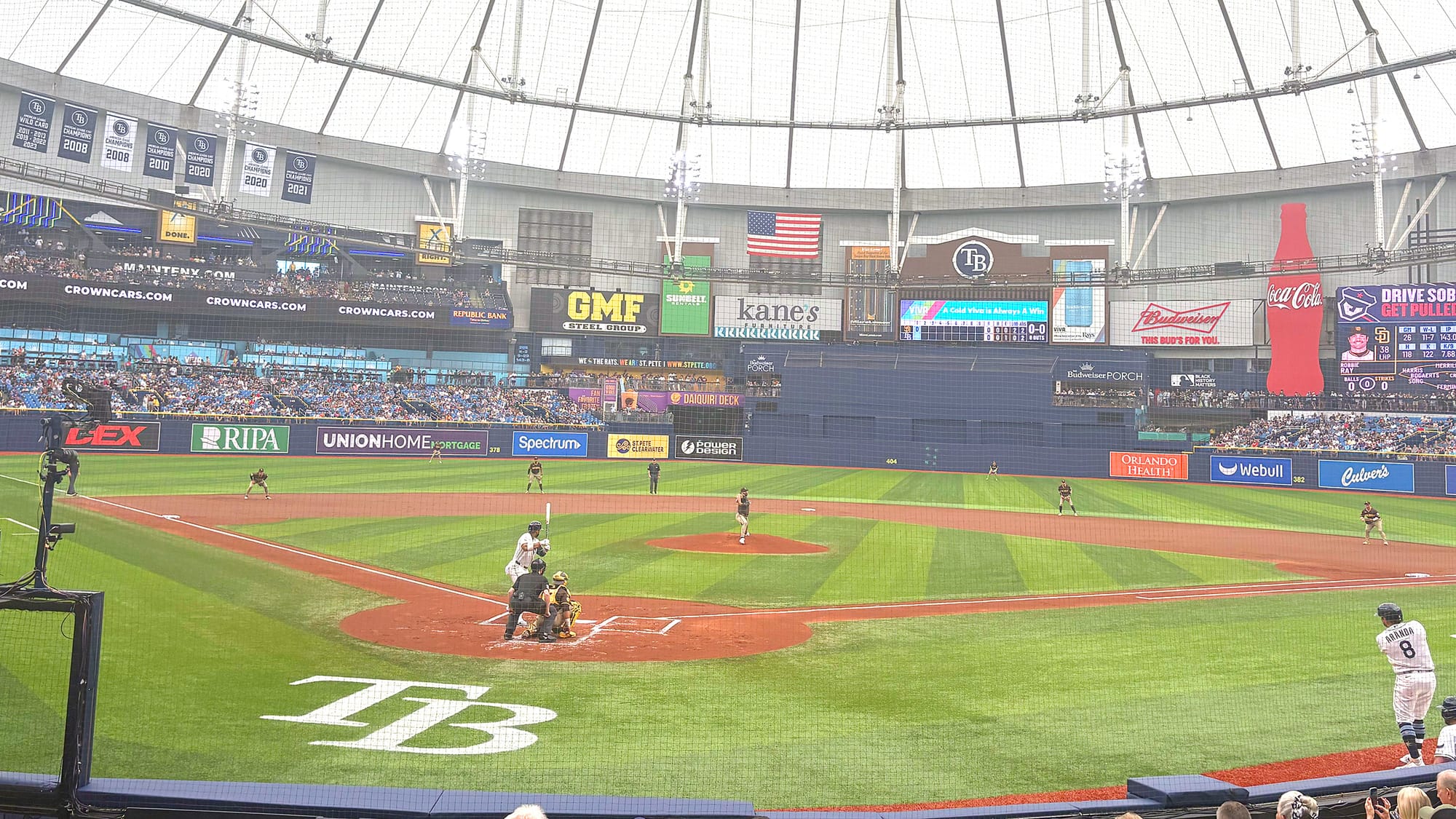
In 2026, Tampa Bay has the third-worst attendance among MLB teams despite having the best record in the American League, the latest addition to a decade-plus run in the league’s bottom five. St. Pete, though, has the smallest population living within a 10-mile radius among MLB teams. When Hagan first became involved in negotiations in 2010, only roughly 200 St. Petersburg residents were season-ticket holders. Despite multiple recent playoff runs and AL East titles, including a World Series appearance in 2020, stands often have scores of empty seats, so much so that the team has closed the stadium's 300 level for all but few select nights.
So the semblance of a deal wasn’t close enough, Hagan says, having tirelessly watched similar agreements shred as his team — his father’s team — perpetually remained across the Howard Frankland Bridge.
St. Petersburg began construction on Florida Suncoast Dome, the building now known as Tropicana Field where the Rays currently play, in 1987. This was of the ‘if you build it, they will come’ variety, hoping to attract an MLB team — the area unsuccessfully tried to lure the Twins, Mariners, White Sox and Giants, among others — with an already-in-place property. It took eight years until they won an expansion bid, and at that point, the stadium had largely been used as a temporary home for the NHL’s Lightning. A Wall Street investor named Stuart Sternberg bought the team in 2005, and by 2007, whispers (and, soon, public announcements) came out that the Rays wanted a new venue. A two‑decade struggle ensued, and until this summer, the only product was a bi‑yearly wave of futuristic stadium renderings, now laid to rest in the Oakland Athletics Hall of Excessive Architecture Firm Checks. The A's, when they couldn't get their stadium deal done in Oakland, announced their forthcoming move to Las Vegas in 2023.
Nobody in Tampa wanted to see a similar result. But after years of proposals bottoming out, it became difficult not to feel the tension building.
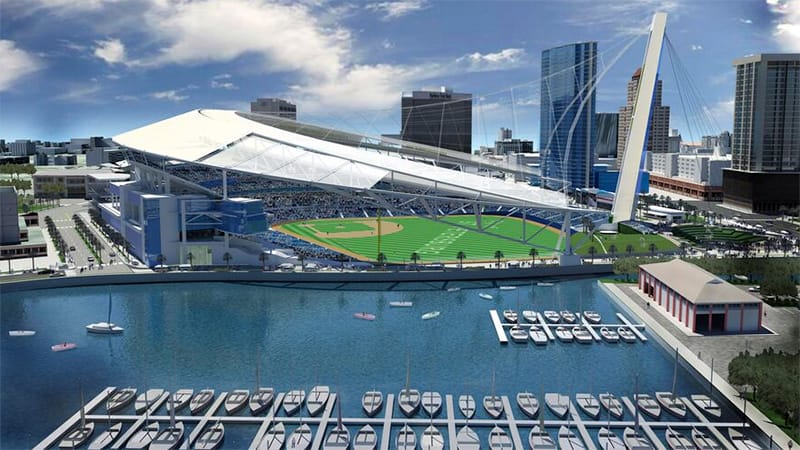

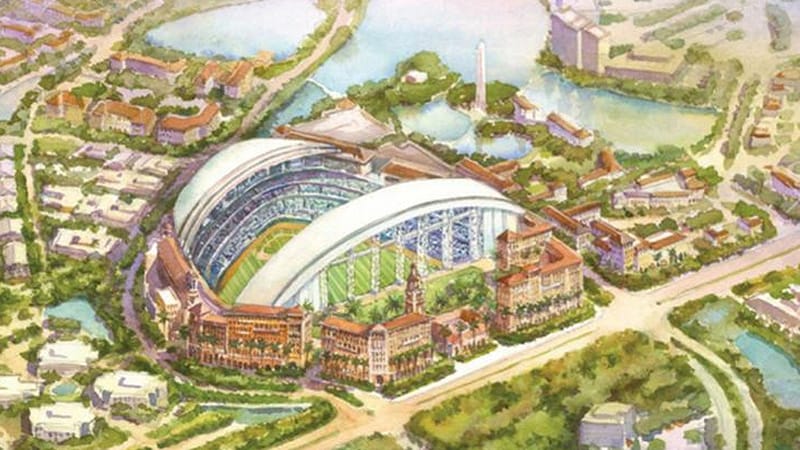
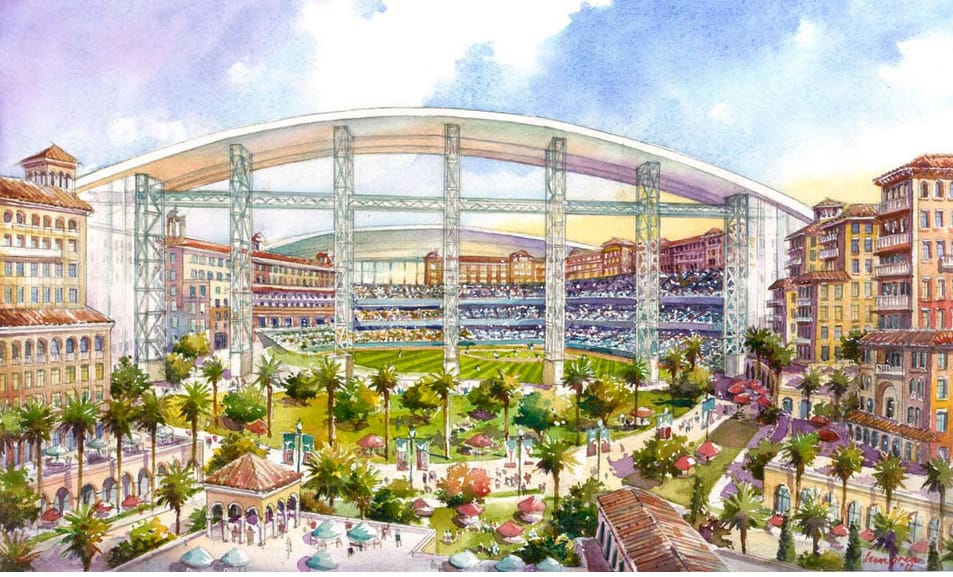
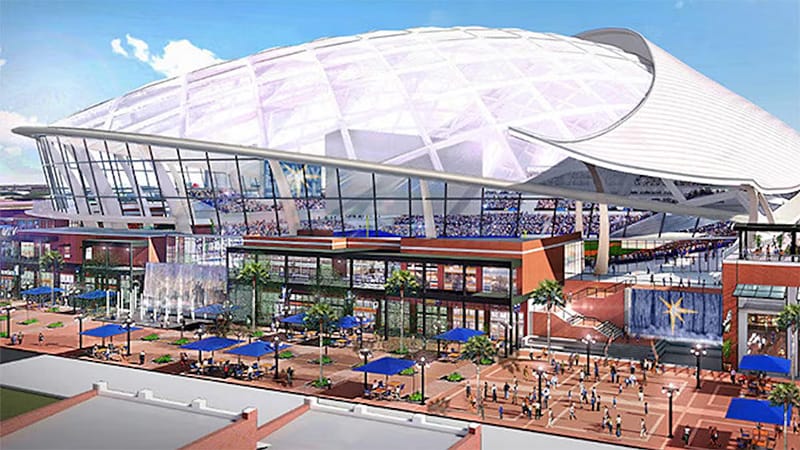
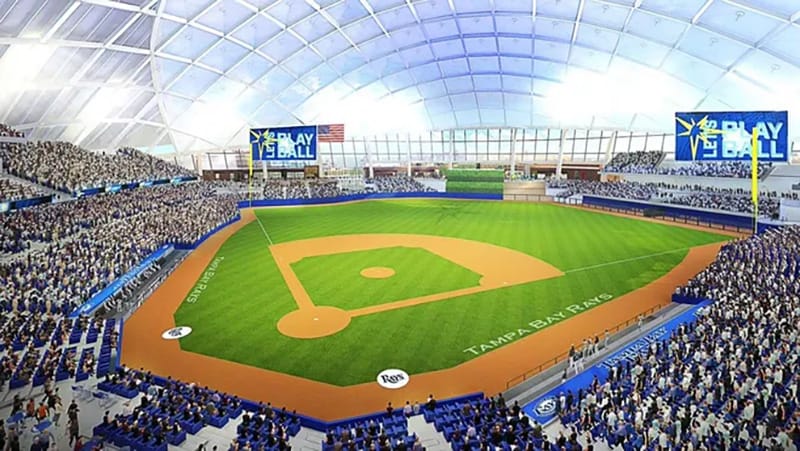
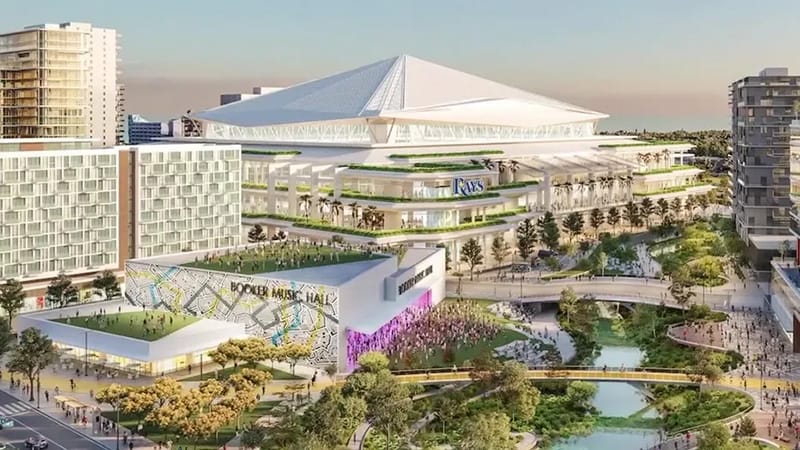
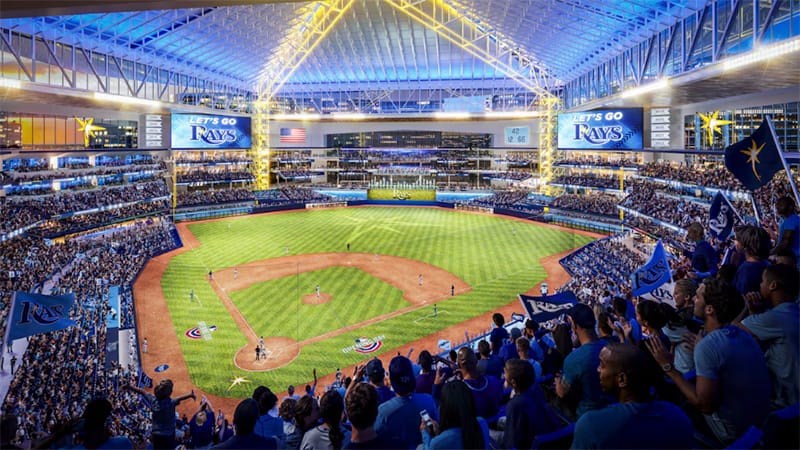
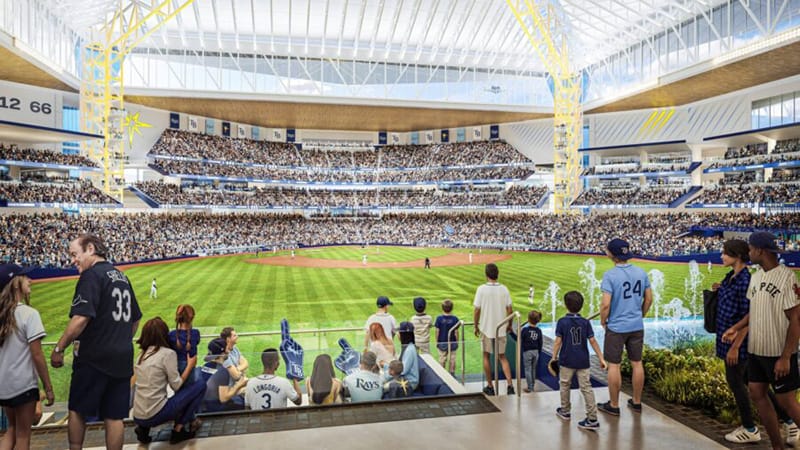
Dare to dream: Stadium projects for the Rays have come and gone before. The Rays have released myriad renderings for ballparks set to built on the St. Pete waterfront (2007), Carillon (2010), Ybor City in Tampa (2018) and most recently the Gas Plant District (2023) back in St. Pete.
First, the “A Baseball Community” group, otherwise known as the ABC group, was formed in 2009 to find the Rays a new venue. Then the team got into a spat with St. Pete over the terms of its agreement, which, as of 2010, didn’t allow it to search for new locations outside the bounds of St. Petersburg.
“That’s when I knew this is what I was meant to do,” Hagan says. “I started examining properties around the county. Then we looked at the finances to determine what other people were doing and how we could make this beneficial for everyone.
“I didn’t know, though, that it’d take 15 years.”
He worked up the county commission in 2014 to find a deal, pushing the Rays to illegally discuss possibilities behind closed doors while keeping limited records. They settled on Tampa’s Ybor City, and produced yet another wave of mocks. Yet no one knew who would pay for the projected $750-million-or-more venue. He reportedly passed information to a developer who also happened to be a campaign donor, prompting a FBI investigation.
The deal fell through.
“That was a low point,” says Bill Carlson, one of two Tampa City Council members running for mayor in 2027. “Then came the Montreal stuff.”
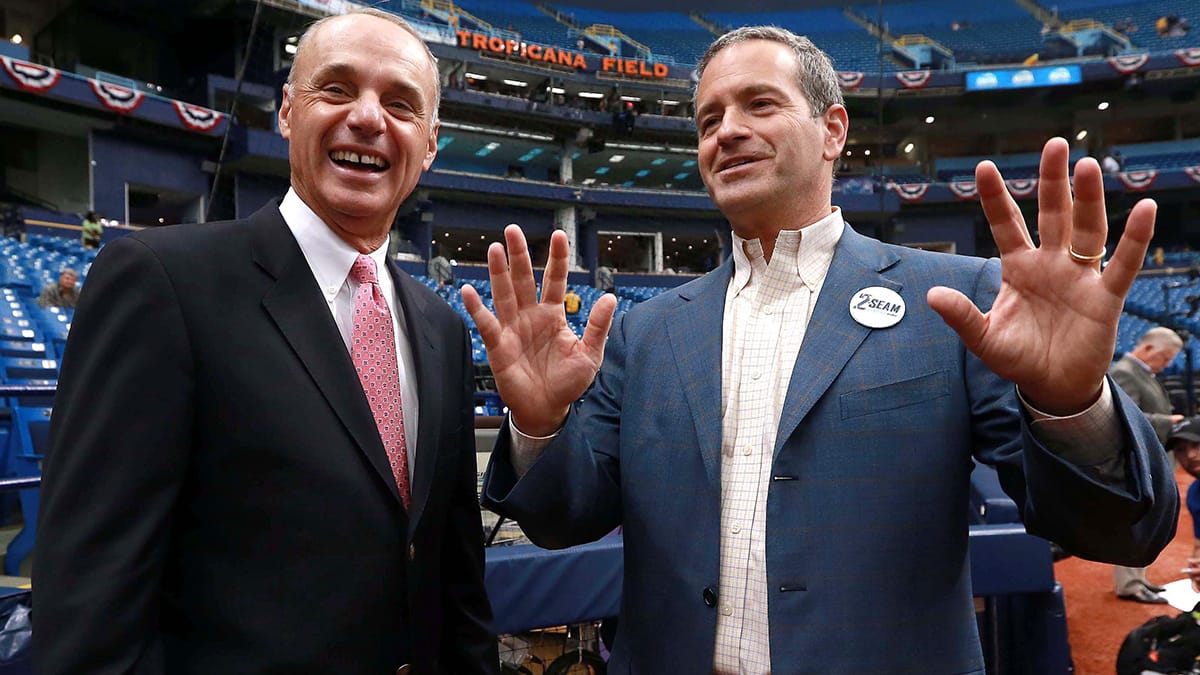
Sternberg announced in 2019 that he wanted the team to split home games between the Tampa region and Montreal, a bid to spark fan attendance and general engagement. For some time, the Canadian crowd expressed intrigue. But St. Pete said it wouldn’t help fund a new stadium if only half the games would be in town.
“The sooner we can provide jobs and affordable places to live to our residents, the better,” former St. Pete Mayor Rick Kriseman said at the time. “And the sooner the Tampa Bay Rays make their desires known, the better.”
And for years, much of the same cycle of faulty deals and bickering occurred, all while Hagan continued to push proposals forward, each to soon unravel. The Canadian Taxpayer Federation bought a billboard overlooking Tropicana Field reading “Dear Rays, Montreal won’t pay for your new stadium. Sincerely, taxpayers,” before MLB’s executive council shot down the possibility of a two-city deal. He kept his head down. Florida Gov. Ron DeSantis weighed in arguing to avoid the use of public funds in building sports stadiums, a 21st-century fad. Hagan, once more, remained silent.
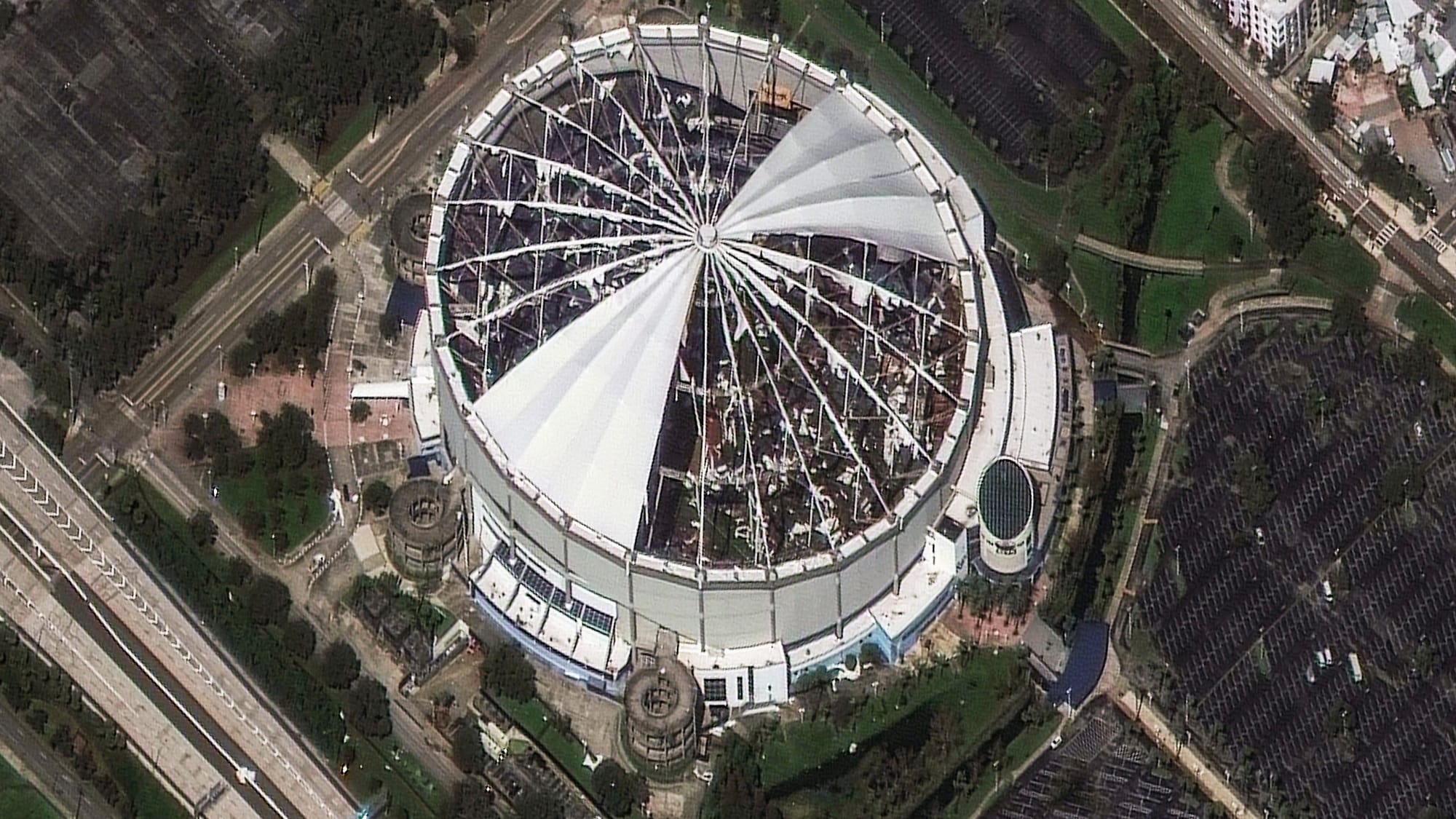
But when the Rays were sold to a new group led by developer Patrick Zalupski, a UF Board of Trustees member, in 2025 — a year after the Trop's roof was torn off in Hurricane Milton, leaving the team to play at the rival Yankees’ spring training facility for a season as the stadium was repaired — Hagan resurfaced.
Conversations buzzed, a new property — Hillsborough College’s current campus, which is next door to Steinbrenner Field — lined up with stakeholder demands. The school agreed to have some of its property torn down and moved to make space for the stadium and an entertainment district.
All that needed to come together, as always seemed to be the case, were the finances. As of a late-May memorandum of understanding, any deal likely wouldn’t have passed as is, failing to secure the necessary votes among the Tampa City Council for its portion of funding. At the time, $100 million would have been required from the city’s Community Redevelopment Agency, which was the true hitch.
“Tampa Bay residents shouldn’t have to pay for a sports franchise,” says Lynn Hurtak, another UF graduate and city council member who ultimately still voted against the agreement last week. “Countless studies show that these deals and properties don’t provide a strong return on investment. … We have bigger, real issues to worry about for our constituents.”
Three months later, when the deal resurfaced before the city council, that had been transformed into an $80 million loan, which would only be used in developing the mixed-use district. What happened in the meantime?
“Lots of sleepless nights, negotiations, work-from-the-office weekends,” Hagan says. “But that’s how you get one of these things done.”
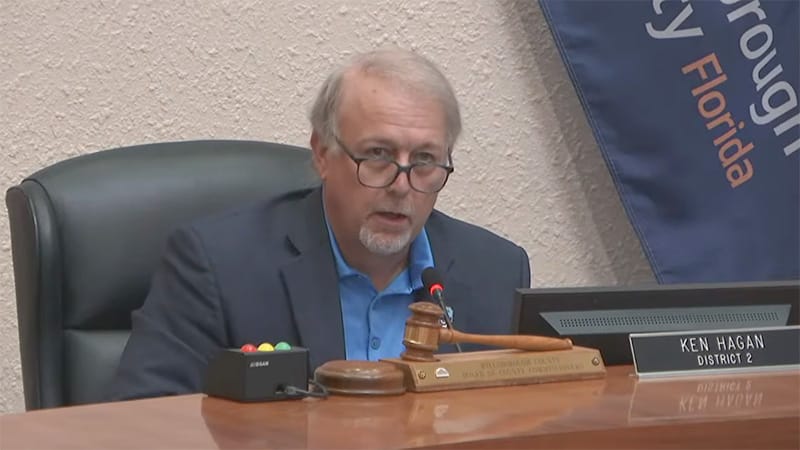
He tried to avoid being directly involved in talks, but would still have members text him so he could weigh in promptly. Carlson also was critical in guiding these reforms, too, swinging from a ‘no’ to a ‘yes’ in the crucial 4-3 vote last Thursday. Why’d he change his mind? “Hagan and the Rays were willing to talk,” he says.
“Thoughtful, committed, and firm on the premise that any deal had to be a win for everyone while serving interests that transcend baseball. That’s exactly who he was over the past year,” Rays CEO Ken Babby says of Hagan in an email. “Without Commissioner Hagan, the Rays and our entire region are not where we are today.”
III. Play
When Hagan first campaigned for the county commission, his father knocked on doors every day. They found it similar to throwing in their garage, putting in the silent work to achieve something distant. It was a competition.
Every night, when they’d each get home from designated routes intended to miss no house in his district, they’d sit on the couch and put on the Rays game. The hours would drift away, time rolling in a fashion only a baseball diamond knows how to warp. He didn’t want those moments to ever end.
So he fought. At times, the moral and legal lines fogged en route to securing any ground he could. But he spent countless weeks taking calls with other politicians, surveying properties, each night driving home past the HC campus.
“No other politician either cared enough or had the courage to do this,” he says, balancing his words with those from his final comment at the county commission’s podium on Friday: “Dad, we did it.”
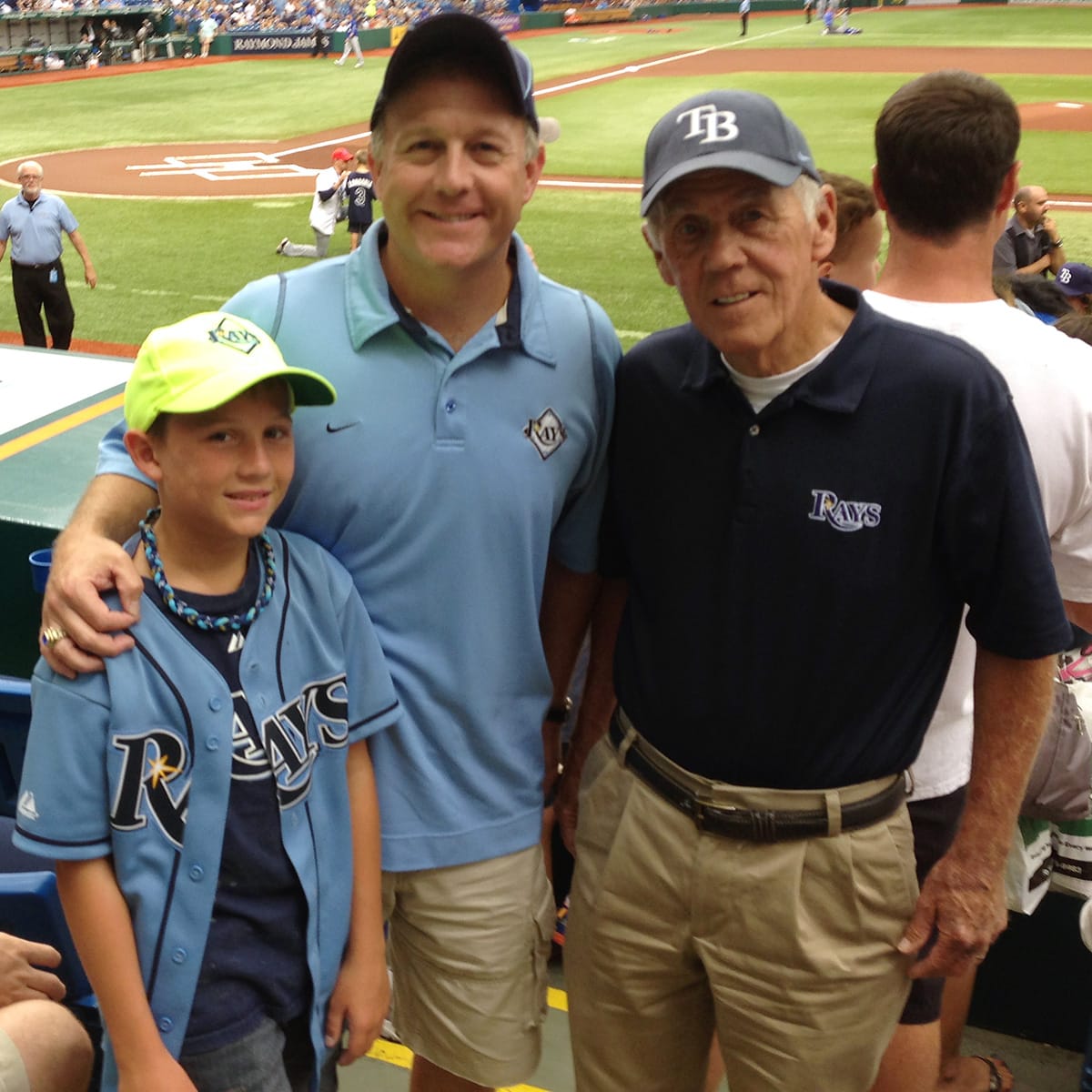
This summer, his father had taken to texting him every morning asking when a deal would be done. He said it was close, “but you never know,” something he’d learned over the years. Then came Friday morning, and when his phone pinged, he looked down and smiled, he says.
After 16 years, he had a different response.
"To see Ken finalize this deal brings everything full circle for our family,” the elder Hagan says. “When I look at all Ken has accomplished with the Rays, I see the exact same boy who used to hit off the tee in our garage until his hands were blistered.
“As a father and a lifelong baseball fan, words can’t describe how proud I am of my son. He didn't just build a ballpark; he secured the future of baseball in our hometown.”
The pair plan to spend a spring evening in 2029, each with a glove, watching some baseball.