Titus. Thaddeus. Dad.
The longtime WWE star and former Florida football player has been a man of many roles over his career. With his sons now playing at UF, he's watching his best project unfold.
Titus Bullard slammed his helmet to the turf. His team had just given up a touchdown, and the standout defensive player – then still a preteen – was furious. Before he could react again, his father, Thaddeus Bullard, emerged from the sideline.
He walked onto the field, pulled Titus from the game and told the coach his son was done for the day.
“I was just embarrassed at that point,” Titus said. “I love playing the game of football, so that hurt even more.”
Though not a fond memory for Titus, that afternoon was a microcosm of the determined, respectful, no-nonsense mentality Thaddeus instilled in his sons.
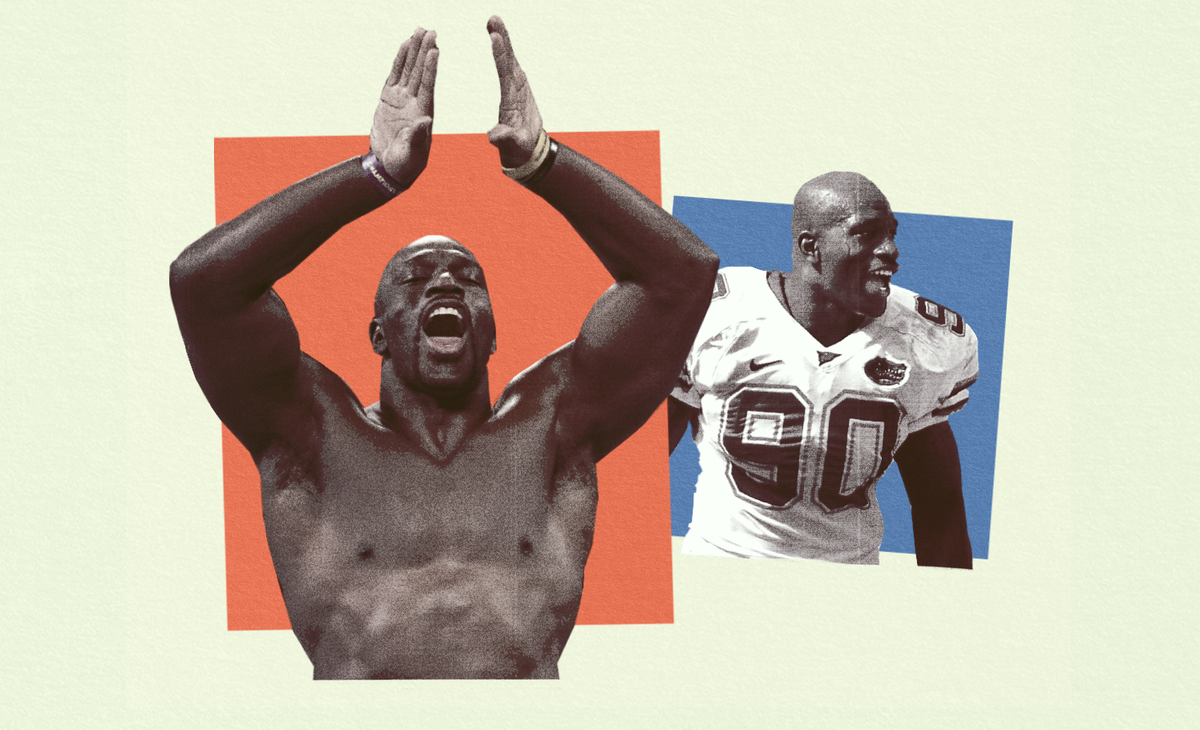
Thaddeus Bullard, now 49, has done — and seen — a little bit of everything. The former Florida defensive end, who played for the Gators from 1996-2000, has worn many hats over the years.
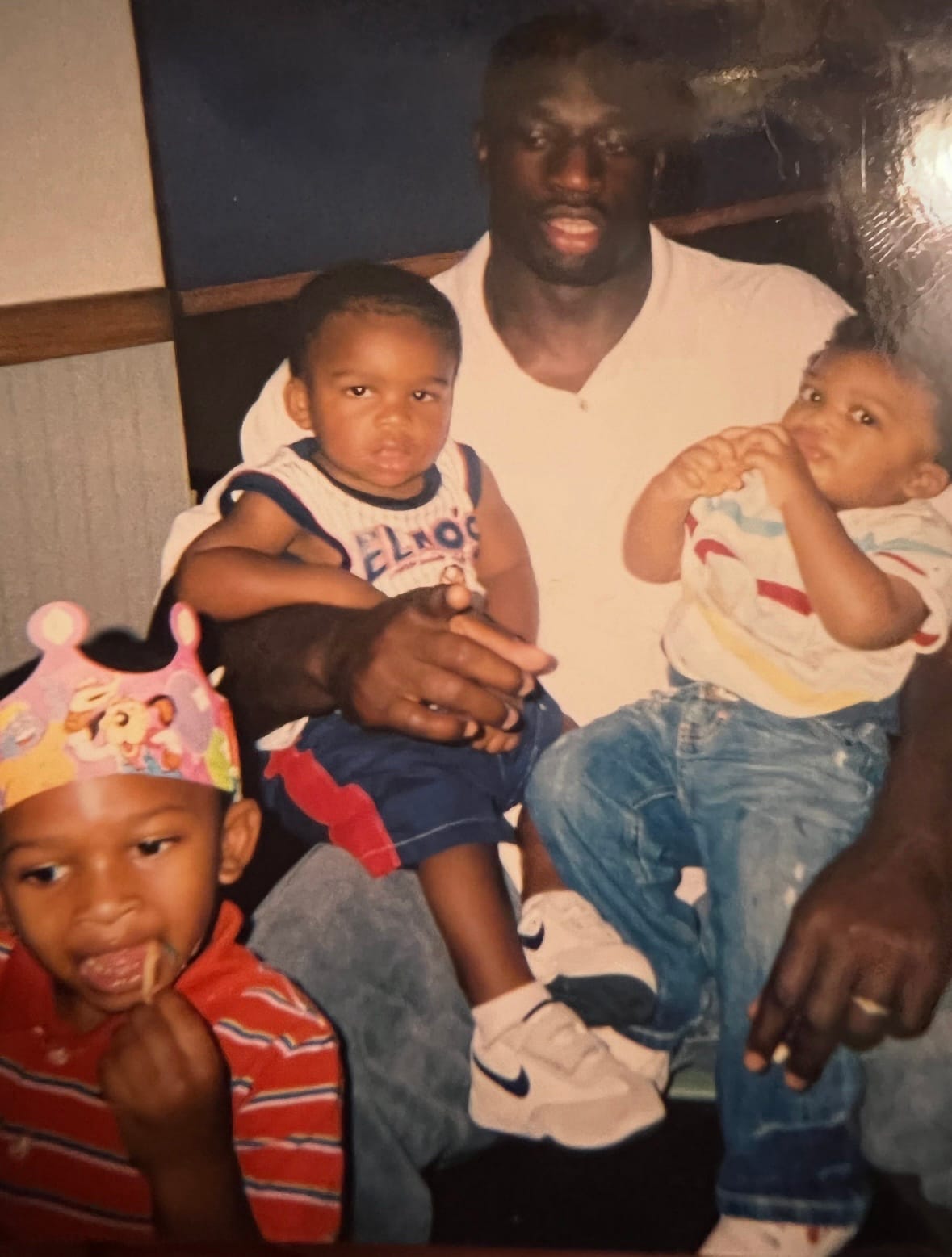
You may know him as World Wrestling Entertainment (WWE) superstar Titus O’Neil. Longtime Gators fans remember him as Thaddeus, the burly 6-foot-4, 263-pound pass-rushing specimen from Live Oak, Florida. To Titus and TJ Bullard, he was simply ‘Dad’.
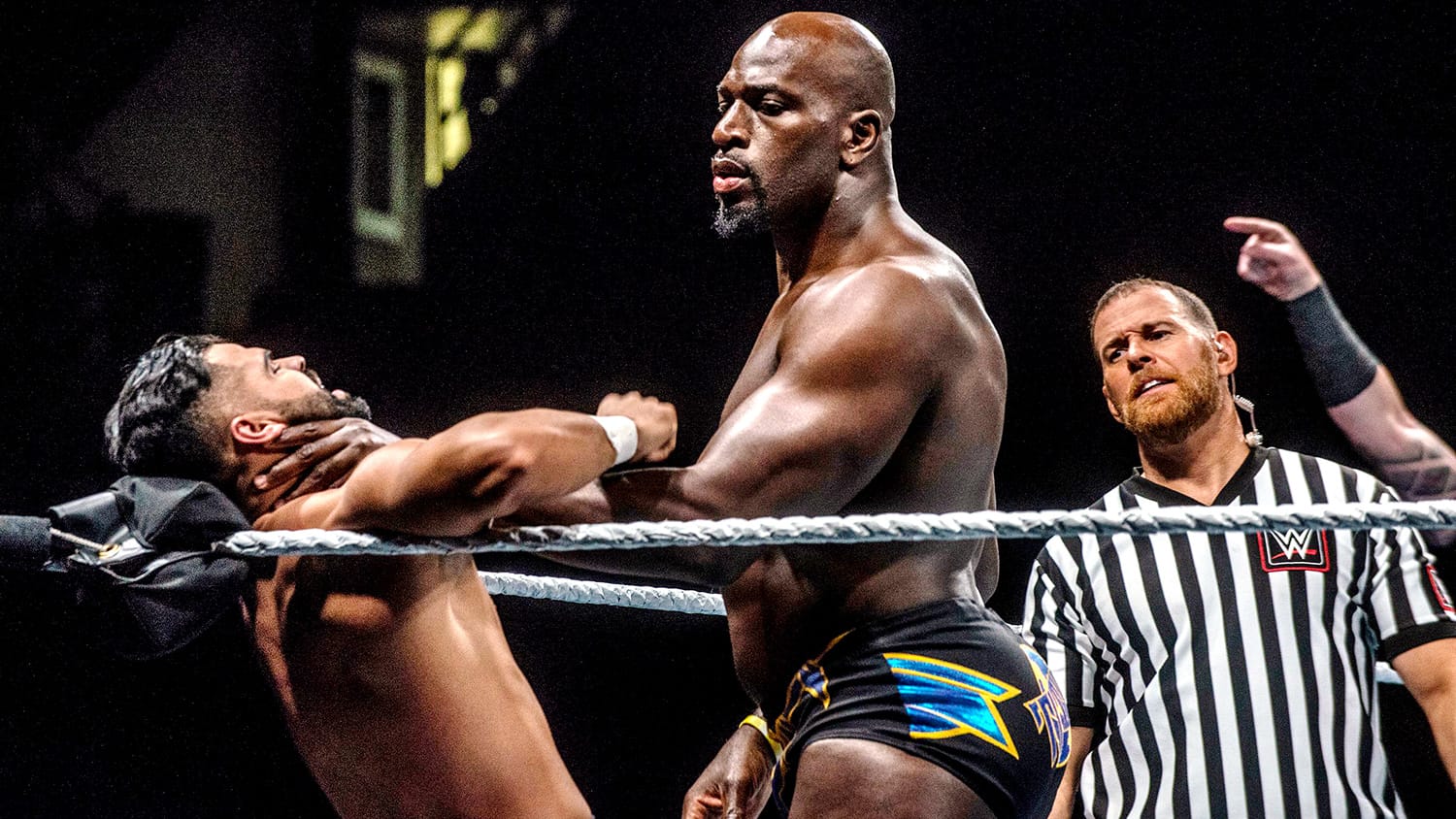
Nearly six years removed from an in-ring role, Thaddeus said a majority of people, especially those who don’t know him personally, still call him Titus. To those who watched him wrestle, he was a larger-than-life character brimming with confidence. He prefers to be recognized as Thaddeus, though he understands the “happy medium” between people who know him personally and those who can’t separate the person from the persona. As he put it: You wouldn’t call Denzel Washington by the name of a character he played.
“From an identity standpoint, they both kind of meld with each other,” he says. ”But from a day-to-day standpoint, I mean, I’m not walking around with underwear, boots and baby oil on and body slamming people for a living.”
Thaddeus built himself up as a player and wrestler, and now he sees his legacy taking shape in his children. Thirty years after he arrived at UF, both of his sons now play defense for Florida, shaped by his lessons.
Titus, a junior, is a versatile pass rusher – just like his father. His older brother TJ is a fifth-year inside linebacker who transferred from UCF for his final collegiate season. TJ said his family ties led him to Florida; his cousin, sophomore linebacker Myles Graham, also plays for the Gators. For Titus, his familiarity with UF coaches Mike Peterson and Bam Hardmon, who played alongside Thaddeus at Florida in the late ‘90s, helped solidify his decision.
For both, playing at Florida is a dream come true.
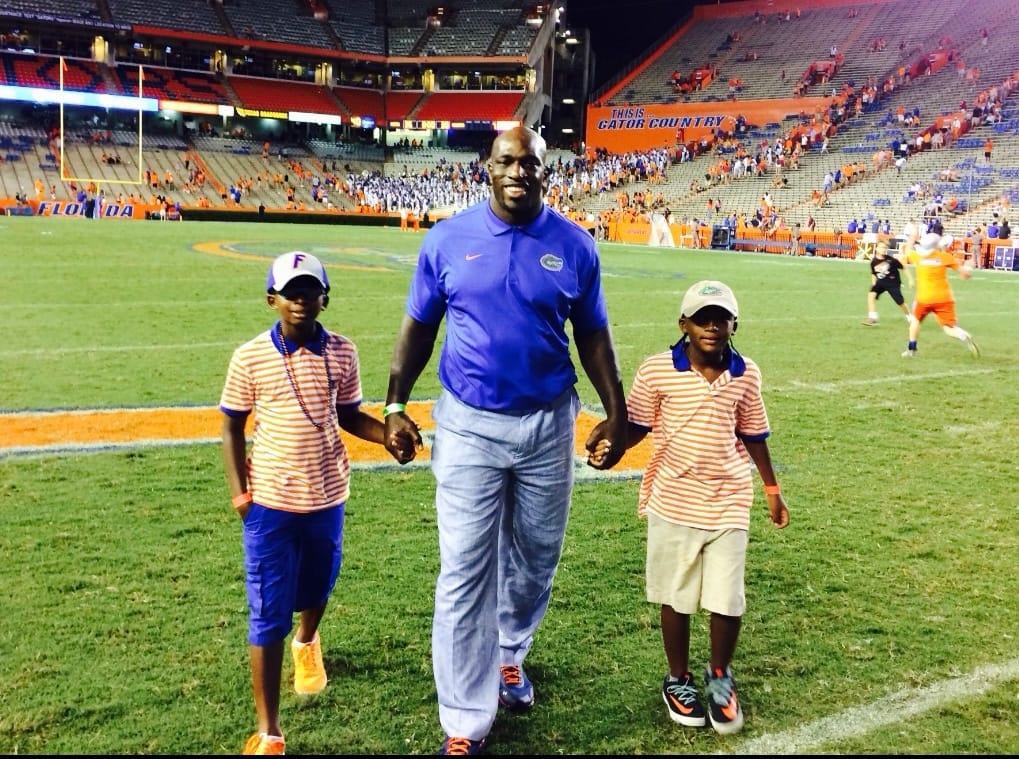
Titus said he has core memories of attending Florida games as a child, including watching his father serve as Mr. Two Bits in 2014. TJ said he wore Gators clothes as a baby, and now everything has come full circle.
“I didn’t want to be anything else but a Gator,” TJ said. “Florida is all I know, and that’s the only school I wanted to go to.”
Their journey has been guided by the values passed down from Thaddeus — the same ones that helped him excel as a selfless philanthropist, a standout wrestling personality and, above all, a father.

Bullard faced adversity from a young age. He grew up in poverty and was labeled by people in his community as a lost cause who would be dead or in jail by 16. The Florida Sheriff’s Boys Ranch in Live Oak — a facility for at‑risk youth — set him on the right path. At 12, he worked on a farm and woke up early every day, building the relentless work ethic he still relies on.
“It’s really all that I knew and it’s all that I still know to this day,” he said. “I still get in and work out first thing in the morning. People look at me and they’re like ‘Man, you must stay in the gym,’ and I really hate the gym. I’ve always hated the gym. But I've never hated to work.”
From stark beginnings to Hall-of-Fame wrestling prestige, Bullard’s journey has been forged by drive, effort and determination. He channeled his motivation into football with little expectation of how it might change his circumstances.
At Suwannee High School, just over an hour northwest of UF, Bullard became one of the nation’s most highly touted defensive line prospects while never playing for a losing team. In fact, he said he’s never played on a team with a losing record. Ever.
Florida head coach Steve Spurrier took notice, and Bullard arrived at UF just in time for the Gators’ 1996 national championship. Though he redshirted and didn’t see the field that fall, the program’s elite talent laid the groundwork for his fruitful career at Florida.
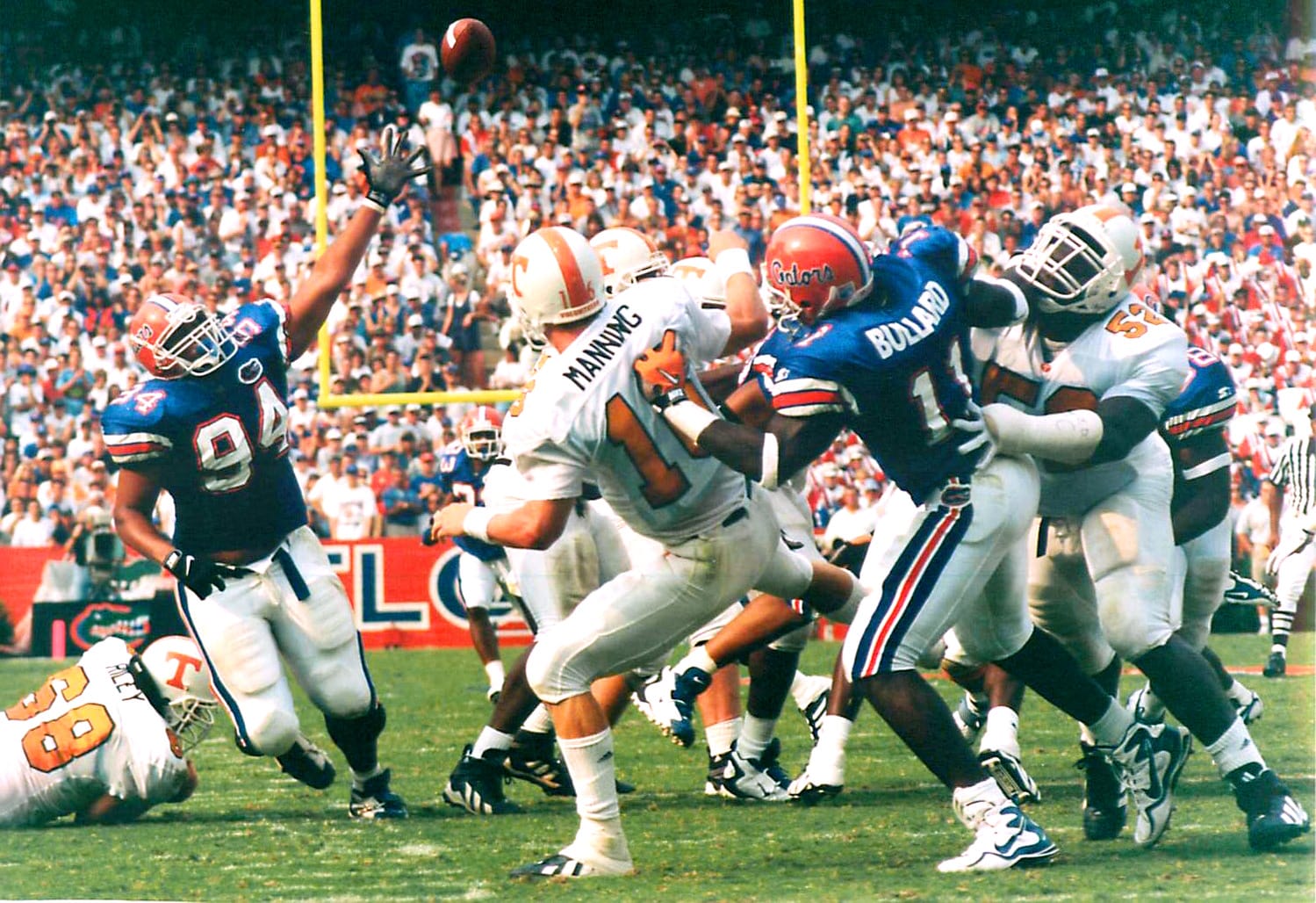
Being immersed in that competitive environment also affirmed his college choice. After the '96 title, the Gators won 39 games during Bullard’s four seasons on the field, including the 2000 SEC championship. Bullard played in 44 games, logging 56 tackles (three for loss), six sacks, 18 quarterback hurries, three forced fumbles and a pass deflection. His drive to succeed — say, running with linebackers, receivers and running backs during practice rather than fellow linemen — helped him make a name for himself.
“I think my work ethic helped me stand out at the University of Florida,” said Bullard, who was also elected Student Body Vice President during his time on campus. “I was not always the biggest or the fastest or the strongest. I was pretty big and I was pretty fast and I was pretty strong, but my work ethic — I just refused to be outworked.”
Following graduation, Bullard went to Jacksonville to try to make the Jaguars roster in 2001, but he tore his ACL during camp. The injury derailed his NFL dreams, and he began to wonder if it was a sign he shouldn’t play football anymore.
One chance encounter changed his trajectory.
About two years later, Bullard met Las Vegas Gladiators owner Jim Ferraro and Arena Football League coach Dave Ewart on a plane, opening the door to a shot in the AFL. Bullard spent the next four years bouncing around the AFL with Carolina, Las Vegas, Tampa and Utah while also substitute teaching, coaching high school football and working at AMIkids — a nonprofit for at‑risk youth he now serves as a spokesperson for — during the offseason.
His good friend and WWE superstar Dave Bautista, whom he met at a gym in Tampa in 2007, encouraged him to give pro wrestling a shot. Then, one day in 2009, all the pieces fell into place as he planned to pivot to a full-time coaching role.
After pursuing head coaching jobs in high school football, Bullard was preparing to approach then‑UF head coach Ron Zook about returning to Gainesville in a coaching capacity. But a spur‑of‑the‑moment decision sent him down a completely different path.
Craving jerk chicken in South Tampa, Bullard stopped by a restaurant called the Jerk Hut … which was down the street from the former Florida Championship Wrestling (FCW) arena. When he called Bautista to say he planned to poke his head inside the arena, the megastar told Bullard to ask for Dusty Rhodes and Steve Keirn, the vice president of creative and the president of FCW, respectively.
The pair took a liking to Bullard and informed former head of talent relations John Laurinaitis, who called Bullard to offer a tryout. What stood out to Laurinaitis was that both Rhodes and Keirn — esteemed veterans with an eye for talent — spoke highly of Thaddeus and advocated for taking a chance on him. “He’s a big man, but he’s also a kind man,” Laurinaitis said. “Those kind of attributes — you don’t see a lot in many different football players who want to become wrestlers.”
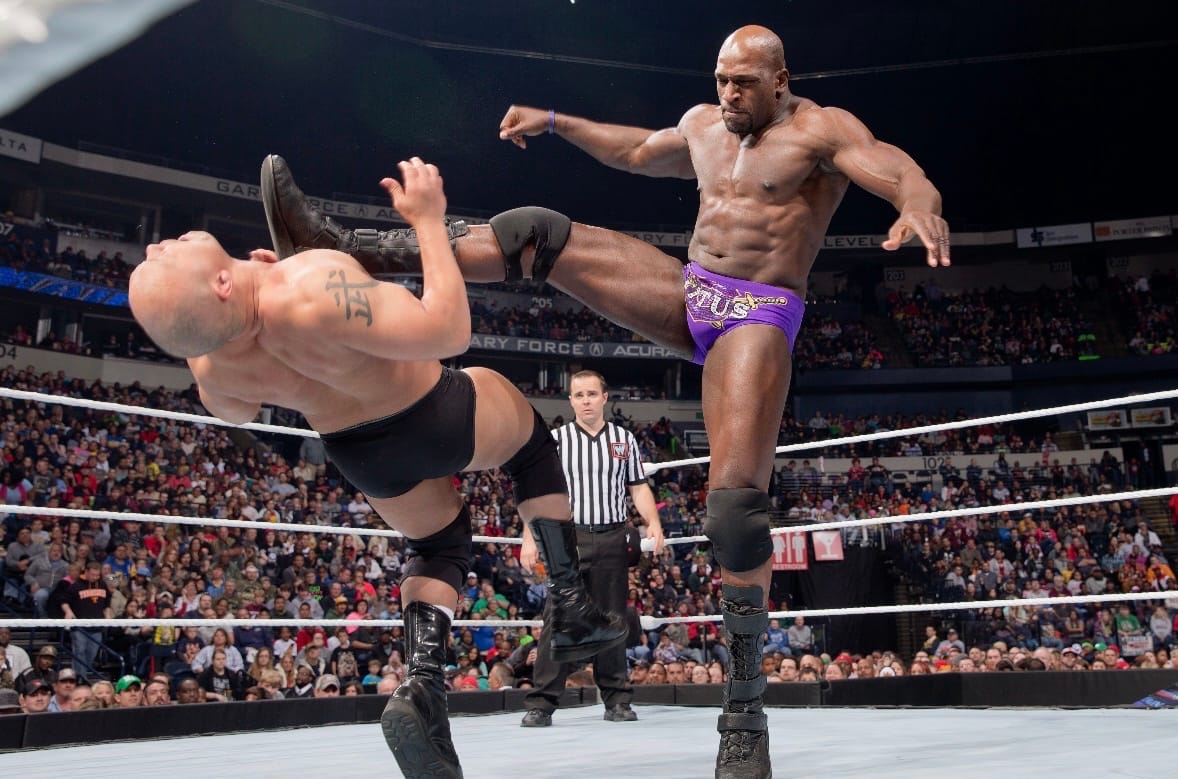
Typically, the tryout process spans multiple months, but with the kids at home and a tight timeline to solidify a career path, Bullard pleaded his case to get started immediately. Laurinaitis granted him an expedited three-day tryout, and Bullard didn’t need to show up for the final two days. He quickly signed a deal with the WWE and began training.
Bullard’s size — WWE listed him at 6-foot-6, 270, a bump from his playing days — turned heads at every event. But it was his personality, charisma and relentless drive that truly set him apart.
Under his new alter ego Titus O’Neil, he became an FCW Florida Tag Team champion, WWE Tag Team champion and the inaugural WWE 24-7 champion. He also received the 2020 Warrior Award for his philanthropic efforts, which earned him a spot in the WWE Hall of Fame.
“Some guys can have all the intangibles to [be] great, but they never get there,” Laurinaitis said. “I really believe it was Thaddeus’ drive — especially, I think, as a single dad.”
In reality, Bullard and his engaging in-ring personality were never all that different.
TJ and Titus believe their father’s wrestling persona was authentic, blending humor and toughness. In their eyes, Thaddeus was always true to himself. Because of that, he cared about being a father more than a wrestler.
“He’s a character, but he’s also supposed to play this tough guy,” Titus said. “I think he plays both in the WWE and in real life. … We’ve been through a lot, but at the end of the day, he’s still going to make you laugh.”
For Titus, his father’s mentality — the mindset of “just keep going” — is what he looks up to. That attitude reverberates through Thaddeus’ career, both in football and WWE. Titus even recalled a story about Thaddeus breaking a sled in practice after getting upset with a defensive line coach.
But to Thaddeus, his work ethic and drive to succeed isn’t just a mentality, they're ingrained in his identity. Even as he approaches 50, he still struggles to balance rest and recovery because he’s always on full go, he said. People often ask him, “Man, do you ever sleep?”
“If there was anything that I would say that I brought to the table then, and what I bring to the table now, it’s my work ethic,” Thaddeus said. “It's literally the makeup of who I am.”
TJ said his competitive nature and powerful playing style come from his father. Learning to take advantage of leverage, be quick with his hands and disengage blocks effectively were all skills he learned from Thaddeus.
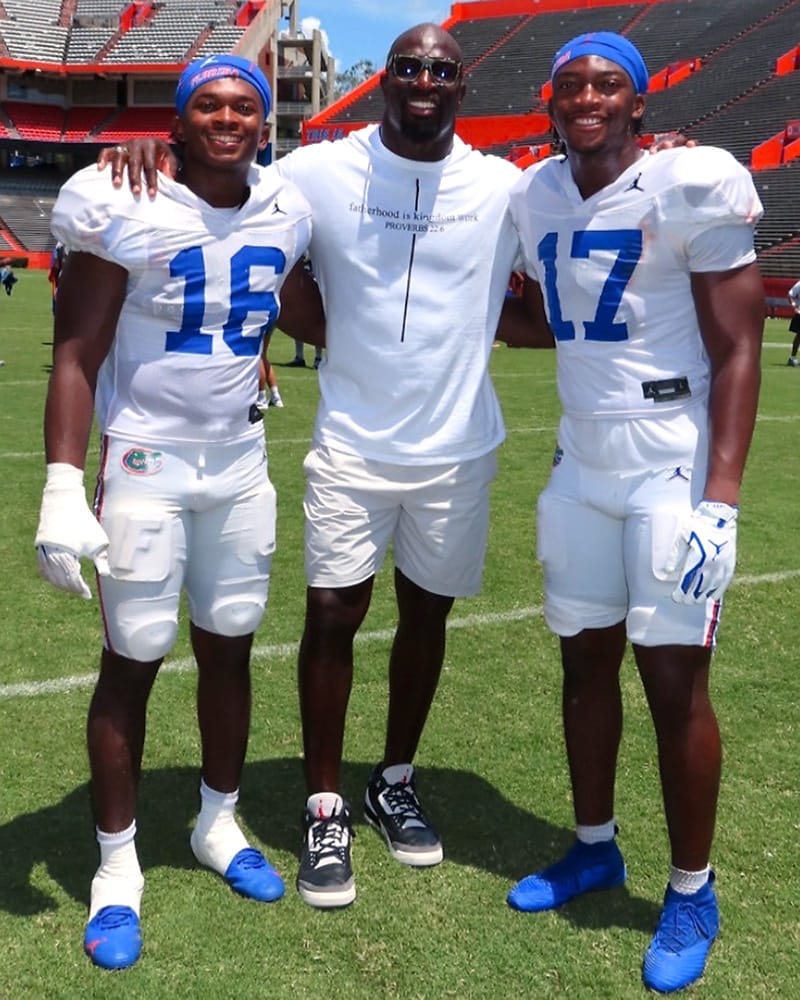
“Being aggressive and being a hammer, not the nail, that’s something I always learned from him,” TJ said. “We’re very competitive people, if we’re playing ping pong, if we’re playing basketball, we don’t like to lose, so that’s a trait I hold near and dear to my heart from him.”
Along with fearless determination, one of the most important traits Thaddeus instilled in his sons was humility. As a kid who grew up with little and was told he wouldn’t amount to anything, Thaddeus’ selflessness now allows him to provide others with the resources and opportunities he never had.
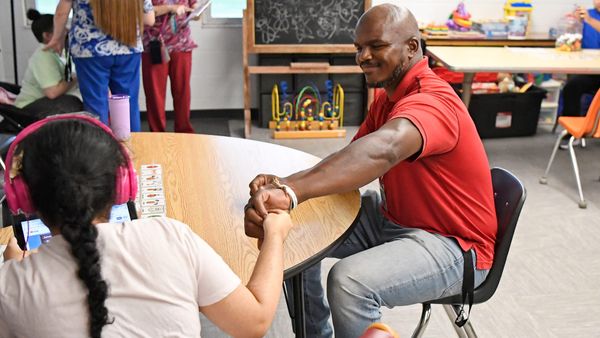
He created the Bullard Family Foundation in 2018, a nonprofit dedicated to providing children and families with moments, resources and programs that build character and better the futures of those in underserved communities. Through his foundation, Thaddeus also runs back‑to‑school drives, distributing more than 30,000 supply‑filled backpacks annually to families in need. In 2021, Sligh Middle Magnet School in Tampa established the Thaddeus M. Bullard Academy in recognition of his philanthropic contributions to the school. Through the Bullard Family Foundation, Thaddeus raised the money to renovate Sligh’s gym, track, turf field and educational programs.
The academy now offers a prosperity center with services dedicated to lifting families out of poverty.
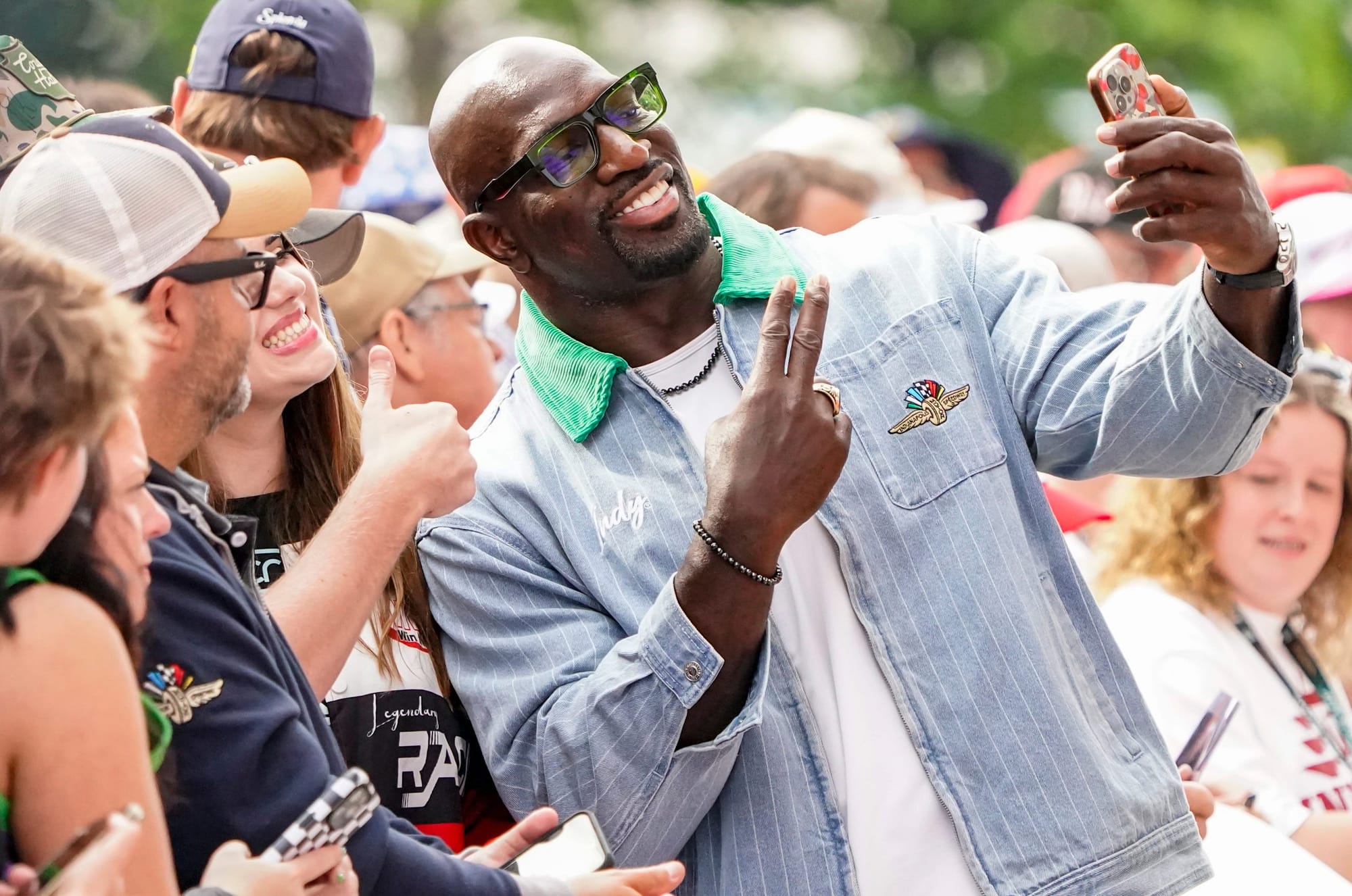
Titus said Thaddeus “respects the CEO just as much as the janitor,” and that mindset has helped him stay grounded, treating everyone with the same respect regardless of status.
Now, Thaddeus carries that outlook into his roles at AMIkids, the Bullard Family Foundation and as WWE’s Global Ambassador, representing each organization through community events and outreach campaigns.
“I’m out here selling the opportunity for people to get involved in changing people’s culture and the trajectory of their lives,” he said. “And that’s what other people did for me.”
Through it all, Thaddeus has never missed a Father’s Day weekend with his kids.
He’s kept that same down-to-earth attitude, striving to be a compassionate, understanding individual — as a wrestler, philanthropist and father.
“I was very hard on my kids, but I was very loving with them,” he said. “I was very hard on my kids because I wanted them to see the realities of life. Both of my boys are amazing human beings, and I tried to, instead of telling them how to be an example, I tried to live out that example.
“And that example came with flaws, it came with shortcomings, it came with how you treat people, even when they don’t treat you well, and, most importantly, how you be a good human.”