Dr. Cade's Other Inventions
Everyone knows Gatorade, but its inventor tried many other things that didn't quite have the same impact.
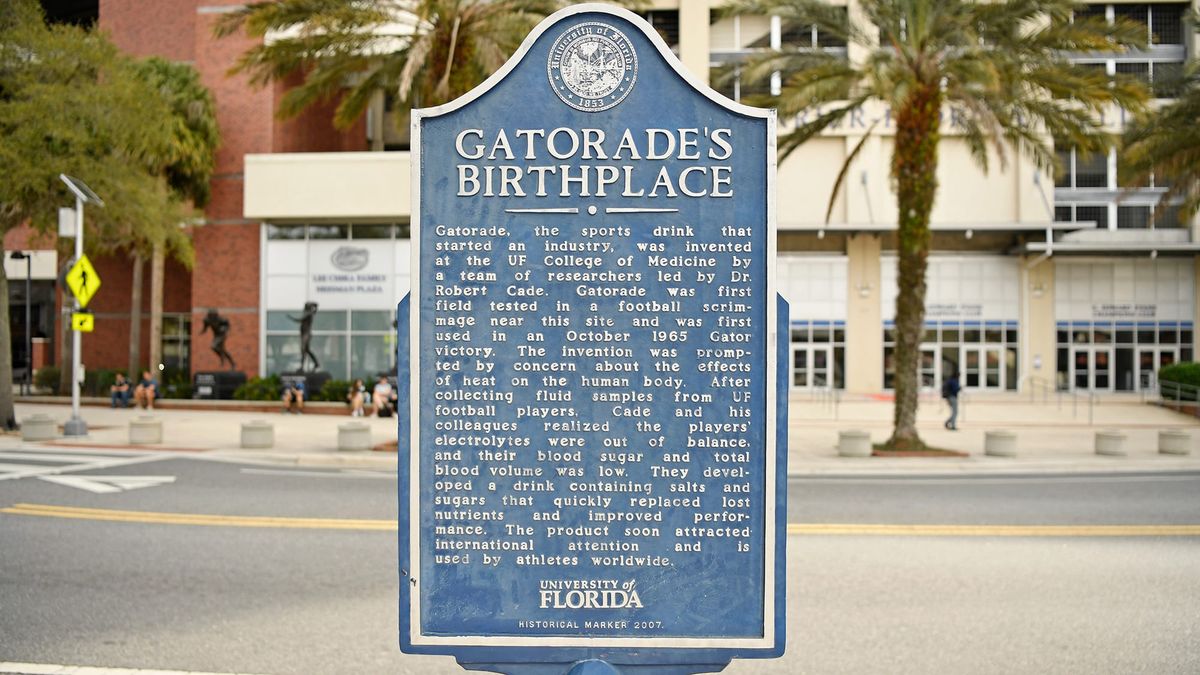
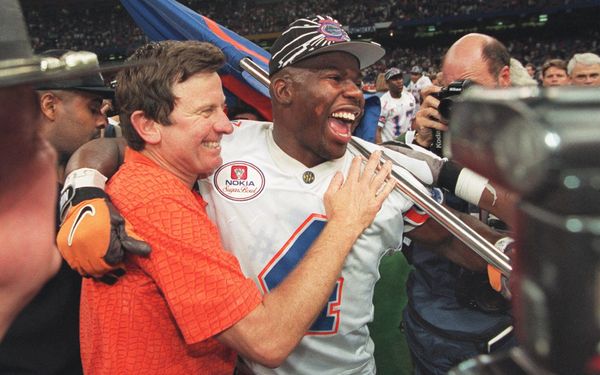
At the height of Steve Spurrier’s playing days in 1965, the Florida football team faced a serious hydration problem. Players were cramping, losing more than 10 pounds a game. Urinals lay dry. So the Gators turned to science. A team of UF professors, led by Dr. Robert Cade, created a drink to help replenish lost electrolytes.
“The original recipe was not that tasty,” Spurrier once said. “One of the players actually asked Dr. Cade, ‘Why don’t you put a little Kool‑Aid in it?’”
And with that, Gatorade was born. Sixty years later, the brand brings in more than $7 billion annually and has produced more than 65 flavors. But Gatorade was far from Cade’s only creation. Here are three of his other inventions — some ahead of their time, others perhaps not fully thought through.
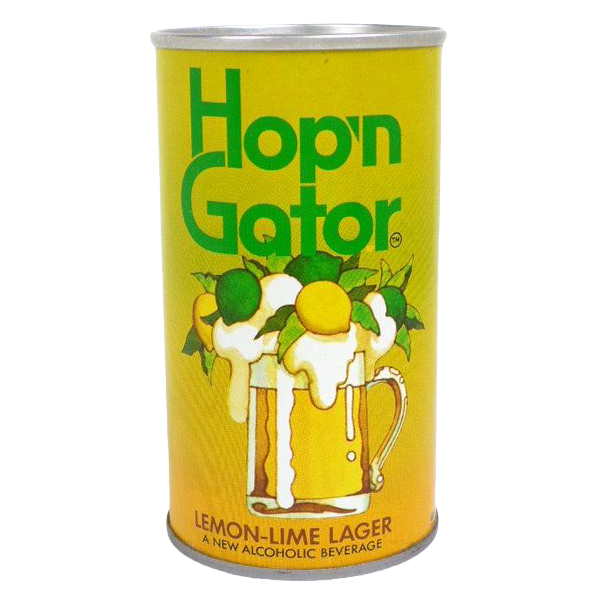
Hop ‘n’ Gator
Only four years after Cade’s breakthrough came a sharp deviation from Gatorade’s original athletic mission: alcohol. Cade marketed Hop ’n’ Gator as the perfect blend of energy drink and booze — a functional, fun, electrolyte‑infused alcopop.
With time, most came to believe it was purely beer and lemon-lime Gatorade mixed, though it was marketed as having 25% more alcohol than regular beer. After surviving a slew of boycotts and lawsuits, it was discontinued in 1975.
Gator Go
Gatorade was developed to help athletes during exercise, but Cade sought to create a counterpart to help athletes store protein before physical exertion. Gator Go, a milk-based, protein-infused experiment, was meant to help athletes maintain weight and energy, especially after injuries like a broken nose or jaw, according to the New York Times.
It sold in vanilla and chocolate options for as little as ¢20 across UF’s campus, though its 10-day shelf-life made it a hard sell. A slew of companies purchased the Gator Go formula, including the U.S. military, but gave up on production by the 1980s.
Hydraulic Concussion Helmet
One of Cade’s later ideas attempted to tackle a problem that still plagues football at every level: head injuries. His solution was a hydraulic helmet with a plastic outer shell and eight tiny oil‑filled bags lining the inside to absorb impact. The helmets were tested during Florida practices, and Cade even let someone strike him over the head with a bat used to kill lab rabbits — just to prove the design worked. Still, it never met the standards for in‑game use.
Some of Cade’s other ideas stretched even further: an organic foam meant to protect crops from frost … which was made with human blood. Others included X‑raying pecans, canning mullet and designing hemispherical cans — because, as he liked to say, there’s always more in a can.
Like many great inventors, Cade needed only one breakthrough to define his legacy, and Gatorade was more than enough. The effort he poured into that project alone — including jogging seven miles with a catheter in his arm to collect blood samples — speaks for itself.
This story appears in the Spring 2026 print issue of Grandstand Magazine. Click here to see the full issue in its original print format.